I have a Swedish Mauser (Obendorf 1900). I currently have some Privi Partizan ammo for it. My first time out I was not impressed 2-3 inches at 50 yards. Didn't even try 100 yards. (iron sites & old eyes didn't help). Would a better brand of ammunition help or maybe the bedding in the old gun might need replacing>.

You are using an out of date browser. It may not display this or other websites correctly.
You should upgrade or use an alternative browser.
You should upgrade or use an alternative browser.
How critical is ammunition to accuracy?
- Thread starter MaxMan
- Start date


GunnyGene
Hawkeye
It does matter. Even from bullet to bullet in the same box due to minor variations in powder load, and/or projectile, etc. I've never shot Privi, so I don't know how good or bad their process controls are. I have found that premium ammo from suppliers such as Underwood are considerably more consistent in MV and overall performance than many high volume less expensive producers. Variation is just a fact of life in high volume production of just about anything, but some producers are noticeably better than others at controlling it.I have a Swedish Mauser (Obendorf 1900). I currently have some Privi Partizan ammo for it. My first time out I was not impressed 2-3 inches at 50 yards. Didn't even try 100 yards. (iron sites & old eyes didn't help). Would a better brand of ammunition help or maybe the bedding in the old gun might need replacing>.

Yaworski
Hawkeye
What he said. If you can, try a couple different brands of ammo and see if things change.

I hand load. I find there is a “sweet spot” where my gun, the amount and kind of powder with a particular projectile come together, giving me the accuracy I desire. Then there was the time I was shooting all over the place with my Charter Arms Bulldog, and I aimed dead center of my steel torso. I touched off the second round from that cylinder. It felt like I was shooting a .44 mag, and not the .44 Spcl. I went to shoot again, and the trigger wouldn’t pull. That is when I noticed the top strap was missing, along with 2/3 of the cylinder, but I nailed the target where I was aiming! lol I only had one cartridge left from that loading. I took it apart and dumped the powder.
gramps
gramps

contender
Ruger Guru
Accuracy is a relative term.
And it can be complicated at times.
Yes,, ammo is but one component of accuracy.
The gun itself, the ammo, the shooter, all are important.
If the gun has issues,, no ammo or shooter ability will fix it.
If the shooter isn't doing things correctly,, well, you can easily get mixed results.
But the ammo as noted above can have a "sweet spot" for accuracy in a particular firearm. That's what most handloaders strive for.
If the gun has bedding issues,, that can be corrected fairly easily. If the barrel is worn out,, a replacement is necessary.
A shooter is also a variable factor. I've seen many a target by a shooter claiming to be "good" yet,, put them against a real shooter & they would be very embarrassed.
Handloaders, (vs a reloader,) strive to find an ammo that matches the firearm. They make the brass as uniform as possible. They select several different bullets, powders, & primers & start building test ammo to try out in that one gun. They may build 50 or more different combinations of components to find what truly is accurate in a firearm. Then they will zero in on what they can do to fine tune that ammo & gun to achieve it's full potential.
The 2-3 inches at 50 yds would not be acceptable to me by MY standards. Maybe somewhat in a handgun, but again, that depends upon a few other factors. But a rifle,, not so much.
And older gun like the Swedish Mauser you mentioned should still be capable of 1-3 inches at 100 yds if it's not shot out, rusted out or other gun issues.
And it can be complicated at times.
Yes,, ammo is but one component of accuracy.
The gun itself, the ammo, the shooter, all are important.
If the gun has issues,, no ammo or shooter ability will fix it.
If the shooter isn't doing things correctly,, well, you can easily get mixed results.
But the ammo as noted above can have a "sweet spot" for accuracy in a particular firearm. That's what most handloaders strive for.
If the gun has bedding issues,, that can be corrected fairly easily. If the barrel is worn out,, a replacement is necessary.
A shooter is also a variable factor. I've seen many a target by a shooter claiming to be "good" yet,, put them against a real shooter & they would be very embarrassed.
Handloaders, (vs a reloader,) strive to find an ammo that matches the firearm. They make the brass as uniform as possible. They select several different bullets, powders, & primers & start building test ammo to try out in that one gun. They may build 50 or more different combinations of components to find what truly is accurate in a firearm. Then they will zero in on what they can do to fine tune that ammo & gun to achieve it's full potential.
The 2-3 inches at 50 yds would not be acceptable to me by MY standards. Maybe somewhat in a handgun, but again, that depends upon a few other factors. But a rifle,, not so much.
And older gun like the Swedish Mauser you mentioned should still be capable of 1-3 inches at 100 yds if it's not shot out, rusted out or other gun issues.
NikA
Hunter
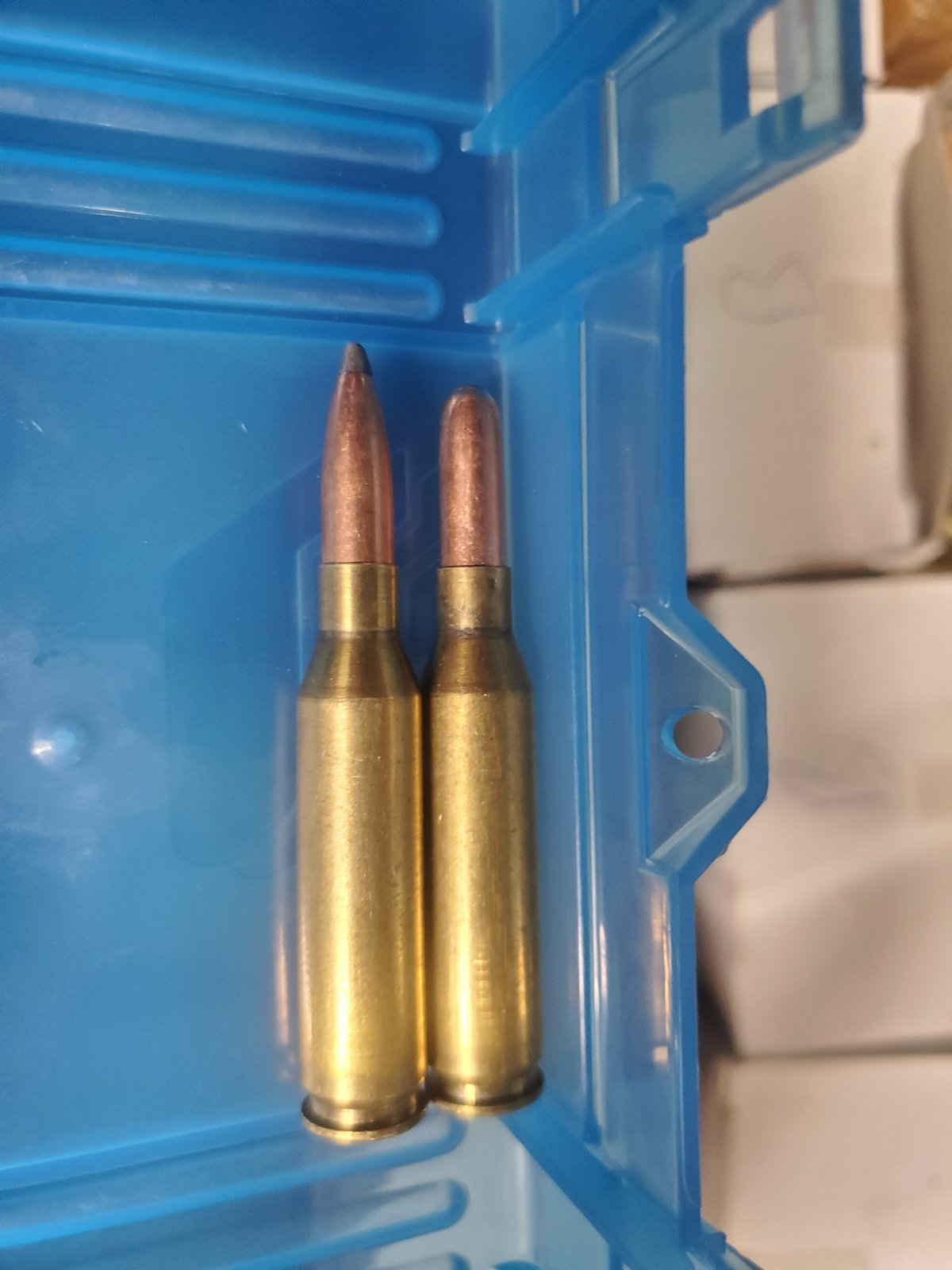
Important note on these pre-WWI military rifles: the original bullet design was a heavy roundnose design that necessitated a long throat. Firing modern spire point ammunition in these often leads to subpar accuracy due to the bullet jump to the rifling. Military accuracy standards were pretty lax (4-5 MOA at 100 yards), so don't expect great performance without a little work on the right bullet/headspace combination for your particular example.





As an Amazon Associate we earn from qualifying purchases. Product prices and availability are accurate as of the date/time indicated and are subject to change.
OP
Heavy Round nose. T Like the bottom one right?Important note on these pre-WWI military rifles: the original bullet design was a heavy roundnose design that necessitated a long throat. Firing modern spire point ammunition in these often leads to subpar accuracy due to the bullet jump to the rifling. Military accuracy standards were pretty lax (4-5 MOA at 100 yards), so don't expect great performance without a little work on the right bullet/headspace combination for your particular example.

Last edited:
Ammo is usually the weak link in the equation. I handload for my rifles and you can watch the groups change in size when working up a ladder. I don't load for max velocity, but rather for accuracy, although the tightest groups are usually in the 90% and above range relative to max. I would absolutely try different ammo before giving up on the rifle.
GunnyGene
Hawkeye
I'll just add a footnote to what others have said. A Chronograph would be very helpful to determine muzzle velocity variation for your rifle and ammo. Prices vary. If you decide to do this, shoot 5 round groups, allowing the barrel to cool for 3 or4 minutes between shots and run a dry patch thru it to clean out the loose stuff. That will avoid introducing variation due to barrel heating. Then run another 5 round group rapid fire to see how barrel heating effects variation in MV.
Last edited:
OP
Turd you would pick the $2 a round one  But a l.east its not the $ 4 a round Lapula.
But a l.east its not the $ 4 a round Lapula.
Your gun may have not done well with a specific load, but I would not blame this manufacturer. When ammo was at its scarcest, I bought a lot of Privi Partizan and have found it to be on par with any equal-level domestic ammo.I have a Swedish Mauser (Obendorf 1900). I currently have some Privi Partizan ammo for it. My first time out I was not impressed 2-3 inches at 50 yards. Didn't even try 100 yards. (iron sites & old eyes didn't help). Would a better brand of ammunition help or maybe the bedding in the old gun might need replacing>.
1st step would be the barrel, looking in it does not do much. A borescope is needed. Muzzle crown inspected. Maybe cleaning really well with an over sized brush and bore cleaner with copper remover. Me, I have a borescope you likely don't. Without that, give it a top tier barrel cleaning. Go back to the range and shoot groups at 25 yds. Not 1, 5 shot group, shoot several and see if it is better. Use the same ammo. Like mentioned, a battle grade rifle that old maybe only able to shoot 5 inch groups at 100 yd with the best ammo and shooter.
Then it might be how much time and money do you want to use to maybe get slightly better. Bottom line prove the barrel is good 1st before throwing any money at it.
Then it might be how much time and money do you want to use to maybe get slightly better. Bottom line prove the barrel is good 1st before throwing any money at it.
NikA
Hunter
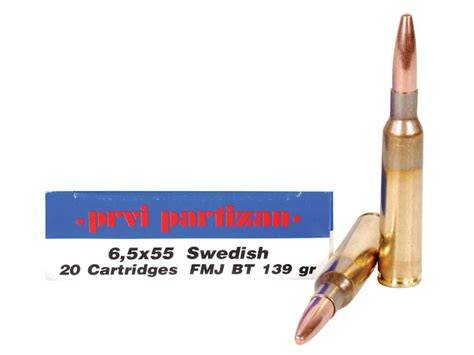
Heavy Round nose. T Like the bottom one right?
Even more rounded and elongated. The ones in the picture below aren't 6.5 Swede but it gives the idea; the round nose bullet should be loaded nearly as long as the spitzer. The original 6.5 Swede military loading was a 160gr round nose bullet, changed in 1941 to a 139gr spitzer. All the original (1896 and 1896/38) Mausers should shoot better with the round nose ammo due to throating differences. 1938 short rifles were generally set up for the m/41 round and may prefer spitzer bullets.
Looks like Norma might be the only manufacturer that currently has the old style bullet in their line up.
Old cartridges like this really benefit from handloading. 6.5 Swede is easy compared to 8mm Austrian where the round nose bullet needs to deform to properly engage the rifling in the original cartridge design.
Attachments
Last edited:
OP
Let's see now. Hey dear, let's give up your art studio once a month so I can try to load ammunition.
Rich/KY
Bearcat
Did you de-copper the barrel before you took it to the range. A lot of surplus rifles have a lot of built up copper fouling that doesn't help accuracy. Also slug the bore, a good many 6.5 rifles have bores in the .266-.268 range whereas most modern ammo uses the .264 bullet. If the throat was cut for the longer 160 gr bullet there is a bit of jump before the bullet hits rifling and is not well supported, and a BT shape means it is possible that the bullet is not kept aligned to the bore. If trying another brand get a load with a flat based bullet, it may help. FWIW the current military loading is a 139 gr FMJ BT but not sure if it was the original loading from the early 1900's.
OP
The de coppering is something I haven't tried. I guess I can get a compound on line to do the. Slugging the bore, I understand that, but do I go to a gun smith for that.? I know my Carcano needs .268 bullet as most current ammunition for the rifle used .264. The throat being cut, how is that measured? Thanks.
DGW1949
Hawkeye
The "3-B's of accuracy" are Barrel, bedding, and bullets.....Any one of those can be as critical as the other two, so yeah, ammunition matters....You can take it from there.
DGW
DGW
NikA
Hunter
The de coppering is something I haven't tried. I guess I can get a compound on line to do the. Slugging the bore, I understand that, but do I go to a gun smith for that.? I know my Carcano needs .268 bullet as most current ammunition for the rifle used .264. The throat being cut, how is that measured? Thanks.
The only way I know of to check how the throat is cut is to use a low temperature alloy like cerrosafe to make a casting and measure.
You can slug the bore yourself but if there are an odd number of grooves it may be difficult to measure accurately.
Last edited:
gjgalligan
Blackhawk
[H1]How critical is ammunition to accuracy?[/H1]
Well, without ammo you can't shoot so I guess it is pretty critical.
Well, without ammo you can't shoot so I guess it is pretty critical.
pisgah
Buckeye
Clean that bore first -- and I mean CLEAN. It's a job that has taken me a month on some surplus Mausers, and while it has not always been the complete answer it almost always improves the situation, regardless of the brand of ammo.
OP
Gigalligan. Thanks. I wondered why it had so little recoil. and the target didn't have a single hole. I just thought I was missing it.[h1]How critical is ammunition to accuracy?[/h1]
Well, without ammo you can't shoot so I guess it is pretty critical.
Similar threads


- Replies
- 37
- Views
- 625


