Electrolysis to clean cast iron ???? UPDATE

Joined
Nov 5, 2007
Messages
11,832
City & State/Province
Dallas, TX
My daughter and I have been wanting to do a science experiment to clean old cruddy cast iron.

All over YouTube and Instagram people use electrolysis tanks to get the cast iron clean.

So I finally found a good and dirty cast iron pan. It's coated to gunk. But it's an old Wagner Ware pan which I found at the thrift store.

My question is about the battery charger. Which one do I need? A 12 volt but how many amps? Is there anything else to look for? Is a more expensive charger better than a cheap one?

I don't know a lot about electricity. And I'm looking on Amazon for a charger and they have all different prices and features. And anywhere from $27 to $99.
 
Last edited:
My daughter and I have been wanting to do a science experiment to clean old cruddy cast iron.

All over YouTube and Instagram people use electrolysis tanks to get the cast iron clean.

So I finally found a good and dirty cast iron pan. It’s coated to gunk. But it’s an old Wagner Ware pan which I found at the thrift store.

My question is about the battery charger. Which one do I need? A 12 volt but how many amps? Is there anything else to look for? Is a more expensive charger better than a cheap one?

I don’t know a lot about electricity. And I’m looking on Amazon for a charger and they have all different prices and features. And anywhere from $27 to $99.
I suggest looking for one with 6v capability; you may then experiment with an additional variable. More expensive may well have a switch for a choice of amps. Start low and slow. Iirc, my old Fisk has a timer, too, but its setting on top of a 392E with more stuff on top...
 
You may want to consider a DC power supply instead of a battery charger. An example is :

KORAD KD3005D - Precision Variable Adjustable 30V, 5A DC Linear Power Supply Digital Regulated

But you can search for a best DC power supply for electrolysis which will give a range of options.

A digital power supply will allow you to adjust and control voltage and/or amperage to be a little more scientific with your experiment/project. Disadvantage is it isn’t as handy as a battery charger after you’re done with your science project…
 
As a longtime treasure hunter with a metal detector,, I've used electrolysis to clean stuff. I've even put on a short presentation on how to build one cheaply for my club.

I've used an old AC battery charger for the power, and it never mattered what the amps were. What will happen is the amount of time it may take to clean an object.

Don't fret over the details.
I used an old battery charger that was no longer needed for whatever it had been for. I remove the plug,, split the wires, and put alligator clips on the wire ends.
 
As a longtime treasure hunter with a metal detector,, I've used electrolysis to clean stuff. I've even put on a short presentation on how to build one cheaply for my club.

I've used an old AC battery charger for the power, and it never mattered what the amps were. What will happen is the amount of time it may take to clean an object.

Don't fret over the details.
I used an old battery charger that was no longer needed for whatever it had been for. I remove the plug,, split the wires, and put alligator clips on the wire ends.
My old chargers all have 'gators on the working ends of the wires.
 
As an Amazon Associate we earn from qualifying purchases. Product prices and availability are accurate as of the date/time indicated and are subject to change.
It needs to be a manual charger the electronic ones will detect something wrong with the battery and shut down.

It works on rust, not sure it will work on the greasy patina on an old pan.
 
That battery charger may not be the best choice. I've just used the small chargers or power adapters for small electronics such as radios etc.
 
I used a converter from a small computer power cord. Perfect for your use. There are some websites that go into great detail on this procedure, and I've seen everything from small hand tools to old '50s era car bumpers, (they used a welder for the power supply there!). Makes sure your positives and negatives are correct, and you must set up sacrificial anodes of some type. Smaller anodes will gunk up a bit, larger ones may be better. I used a large plastic garbage can (Rubbermade type) and placed several iron rebars around the edges, connected by wire to complete the circuit (using anodes) back to the power source. Apparently this works best by 'line-of -sight' from the power source to the part being cleaned, which is why you may need to 'surround' the part. Washing soda (sodium carbonate) is a trigger that helps the process. Baking soda can be used as well, just gives up perhaps 3% -5% efficiency, from what I've read. Baking soda can also be heated in the oven at 350 degrees for about 40 minutes to convert it to washing soda, if I recall correctly. Time is your only variable, depending on your power source. Find a website with details and photos, it's worth the read!
Also to consider: I remember my mom had inherited a cast iron skillet from her grandmother, who cooked with grease every day over a wood stove, then later over an electric eye. The bottom was so caked up that it slanted about 15 degrees to one side. We went camping and my Dad built a nice campfire, then let it die down into coals that evening. He placed the skillet into the fire and let it sit overnight. The next morning we pulled it from the fire pit, waited for it to cool, and washed it in the creek. t looked like a brand new skillet! We could even read the logo on the bottom. As long as the heat is steady, fairly even and not too hot, I see no issues. Just let it cool down naturally and it should be fine.
 
It needs to be a manual charger the electronic ones will detect something wrong with the battery and shut down.

It works on rust, not sure it will work on the greasy patina on an old pan.
I'll give it a try and let you know how it works.

@RC44Mag I'm sure sandblasting would work, but I don't have a sandblaster. But also I don't want to degrade the factory name stamped in the bottom. Wouldn't a sandblaster sort of round over the edges and smooth out the details? I don’t know but that’s just my guess.
 
Make sure the charger you get will work as some chargers need some battery voltage to turn on...I have one of those. I think those are Cali compliant so you don't get to see a spark if you short the alligators...
 
Make sure the charger you get will work as some chargers need some battery voltage to turn on...I have one of those. I think those are Cali compliant so you don't get to see a spark if you short the alligators...
I was just going to mention this. The new "smart" battery chargers will not work because they're looking for a voltage on the other end of the wire.

A benchtop variable power supply is your best bet (and handy for a variety of uses). Something like this:

https://www.amazon.com/Adjustable-Switching-Regulated-Adjustments-Jesverty/dp/B09YSJQWRG
 
Pretty sure you can just use a battery then hook the smart charger to the battery. But I haven't tried that yet.

For cast iron pans, my Dad would put his in a campfire occasionally. They looked brand new after. Be careful not to over heat it. Definitely don't dip it in water after!

I cleaned one of mine by accident I forgot it was in the oven and did a self cleaning cycle. The pan caught fire in the oven. It also looked new after.

I’ve also used wire wheels to clean pans.

I think the collectors use ez off oven cleaner to clean cast iron pans, but I’m afraid of that stuff.
 
Pretty sure you can just use a battery then hook the smart charger to the battery. But I haven't tried that yet.

For cast iron pans, my Dad would put his in a campfire occasionally. They looked brand new after. Be careful not to over heat it. Definitely don't dip it in water after!

I cleaned one of mine by accident I forgot it was in the oven and did a self cleaning cycle. The pan caught fire in the oven. It also looked new after.

I've also used wire wheels to clean pans.

I think the collectors use ez off oven cleaner to clean cast iron pans, but I'm afraid of that stuff.
I did change the order to a manual charger.

And yeah, I too do NOT like ez off oven cleaner. But I will give it a try if the electrolysis doesn’t work for some reason.
 
I'll give it a try and let you know how it works.

@RC44Mag I'm sure sandblasting would work, but I don't have a sandblaster. But also I don't want to degrade the factory name stamped in the bottom. Wouldn't a sandblaster sort of round over the edges and smooth out the details? I don't know but that's just my guess.
I get it, not everyone has one. I don't own one but I know guys who do, you likely might. I was just throwing it out there
Side note, They make different media for different jobs. You could start with walnut shell which is soft to sand, alum oxide and up the ladder so likely wouldn't damage the item. Good luck and let us know how you make out.
 
I think the collectors use ez off oven cleaner to clean cast iron pans, but I'm afraid of that stuff.
Whenever I buy a used cast iron pan, I clean it with EZ Off. I do it in the driveway so I don't get gassed. Fresh cast iron and fresh seasoning.

I've never tried electrolysis, I generally use white vinegar to remove rust. On Youtube there's an Italian guy who does gun stuff and has concocted his own rust remover that works better than the commercial products.
 
I guess I'm going to have to go on YouTube to figure out what you guys are talking about..... seems like I remember something about electrolysis from back in high school but I thought it was for putting a coating on something not taking it off?
 
I guess I'm going to have to go on YouTube to figure out what you guys are talking about..... seems like I remember something about electrolysis from back in high school but I thought it was for putting a coating on something not taking it off?

In electrolysis, you have your rusty piece of metal, a piece of donor iron and electrical charge going through a washing soda solution. The charge induces the rust off of your good piece of metal and transfers it to the donor metal. That's the simple version.

I've been tempted to try it myself on an old Smith but I'm assuming that the process will remove all finishes. That's what is holding me back.
 
It will be interesting to see how the carbon and fatty buildup responds to electrolysis. I get/understand the corrosion and metal ions part of it but the other crud is going to be different.
 
Thanks for all the comments, it's very helpful.

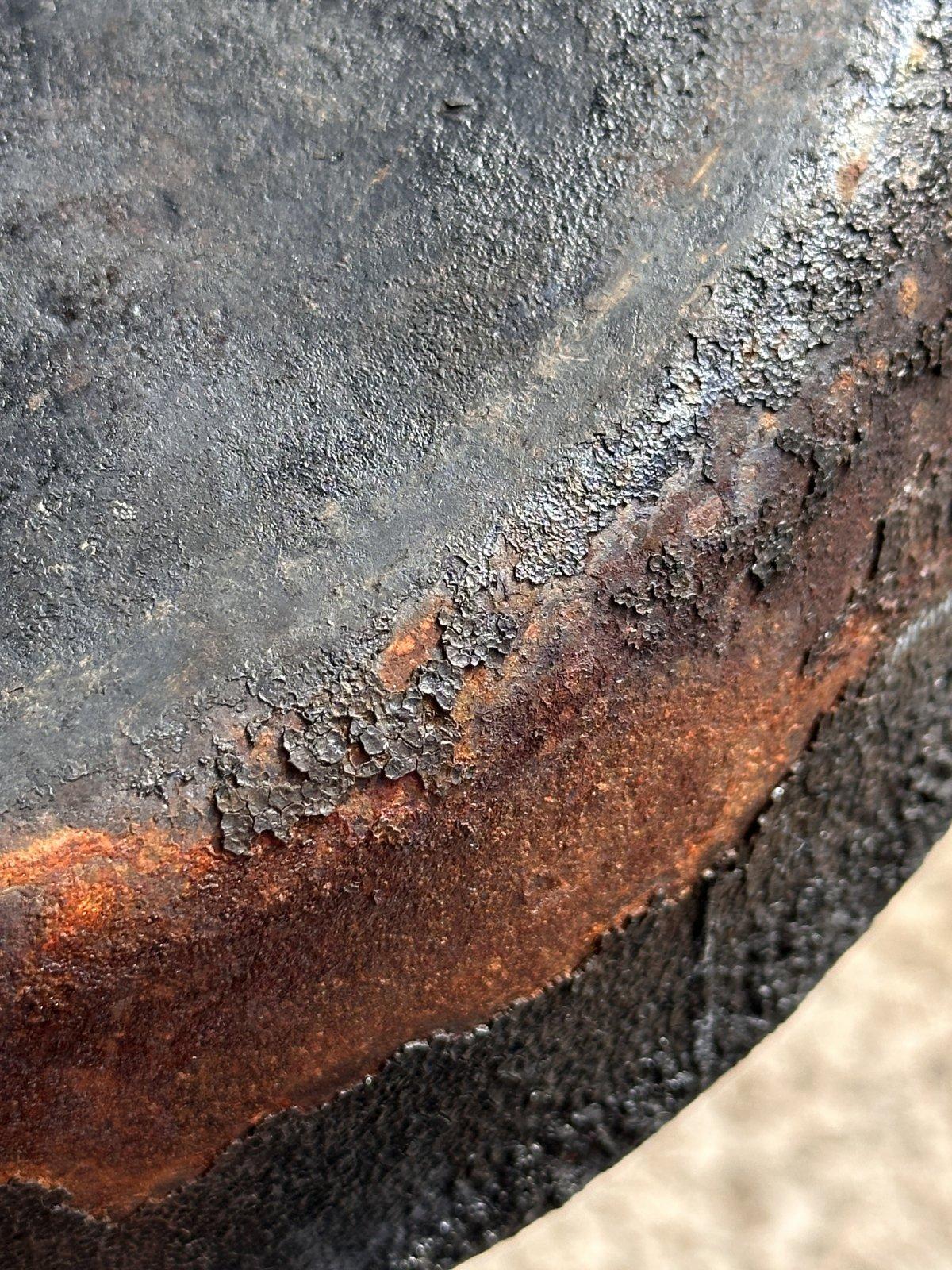
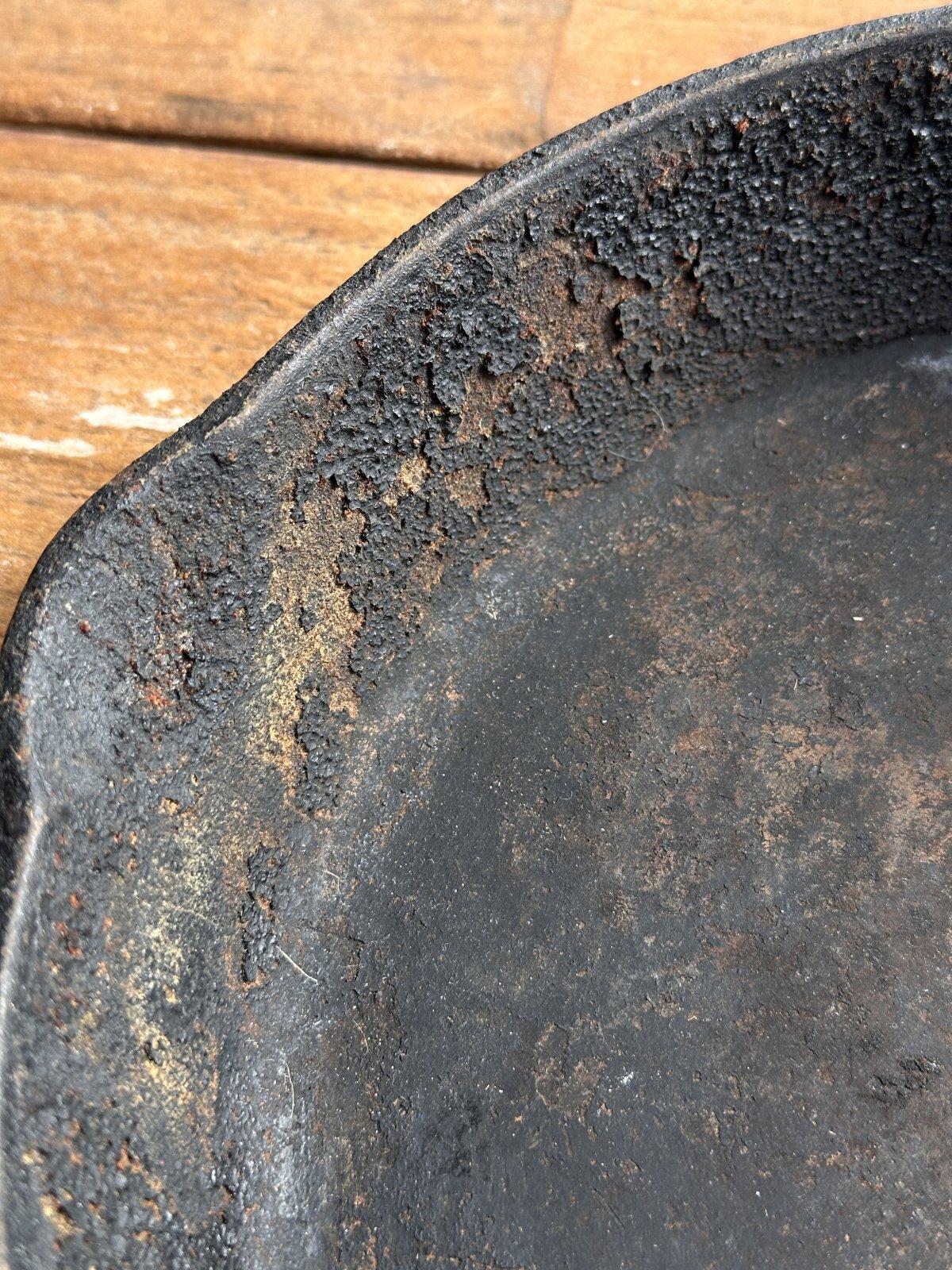
For starters, here are some before pictures.

I realize a lot would scrape off with a good washing and scrubbing. But like I said, it's the electrolysis that my daughter and I want to try.

So I'm not going to try and wash it first. Later yes, if the electrolysis doesn't work. And yeah, I didn't think about the non rusty bits, if they will come off or not.

I have used vinegar to get light surface rust off of other cast iron. It actually works very well. I've even used a drill and wire brush with some success too. But we will see!

IMG_3466.jpeg


IMG_3458.jpeg


IMG_3465.jpeg


IMG_3461.jpeg


For the record, this pan was $10 at the Galveston Goodwill. Thrift stores are going crazy with their prices.
 
That looks like a Wagner Ware chicken fryer. Nice. I have one, use it almost every day as a big skillet.

All that crusty stuff is seasoning that is starting to peel. I'd clean it with EZ Off and get all that crusty seasoning off before I attacked the rust. Season it well and it will last another hundred years.

If you're experienced with cast iron, ignore the next comment. Always heat your cast iron gently. Start out with a low heat until the pan warms up. Hitting a cold pan with high heat can warp the bottom and you'll have wobble.

BTW, I paid $35 for mine on eBay a couple years back. You got a deal. My original chicken fryer cracked and I had to search for a replacement.
 
What about baked on carbon on the outside of a cast iron pan? The inside is nice and seasoned but I think cleaning the outside may help it to get hot quicker. I read that putting it in a hot fire would bake off the carbon but didn’t want to risk cracking the pan. Has anybody tried that.
 
My Dad always put my Mom's in the fire. Never seemed to hurt them.

It will clean the outside but you will loose the seasoning inside too, it will look new and be susceptible to flash rust.
 
Last edited:
UPDATE:

So it worked: I used the electrolysis twice. The first time it got the majority of the rust and some of the crud off. I think it just loosened the crud build up which was on top of the rust.

Then I got some EZ OFF oven cleaner and used that twice, letting it soak for about 30 minutes each time.

All in all, with the battery charger, I think I'm in this pan about $75 or $80. Definitely not worth it, except for the experience. And plus my daughter saw how electrolysis works.

I probably won't even use the pan. I like Carbon Steel much better than cast iron. And this pan is old and the quality isn't there compared to the good quality cast iron these days. Like the "Smithy" brand for example. Of course they cost a whole lot more.

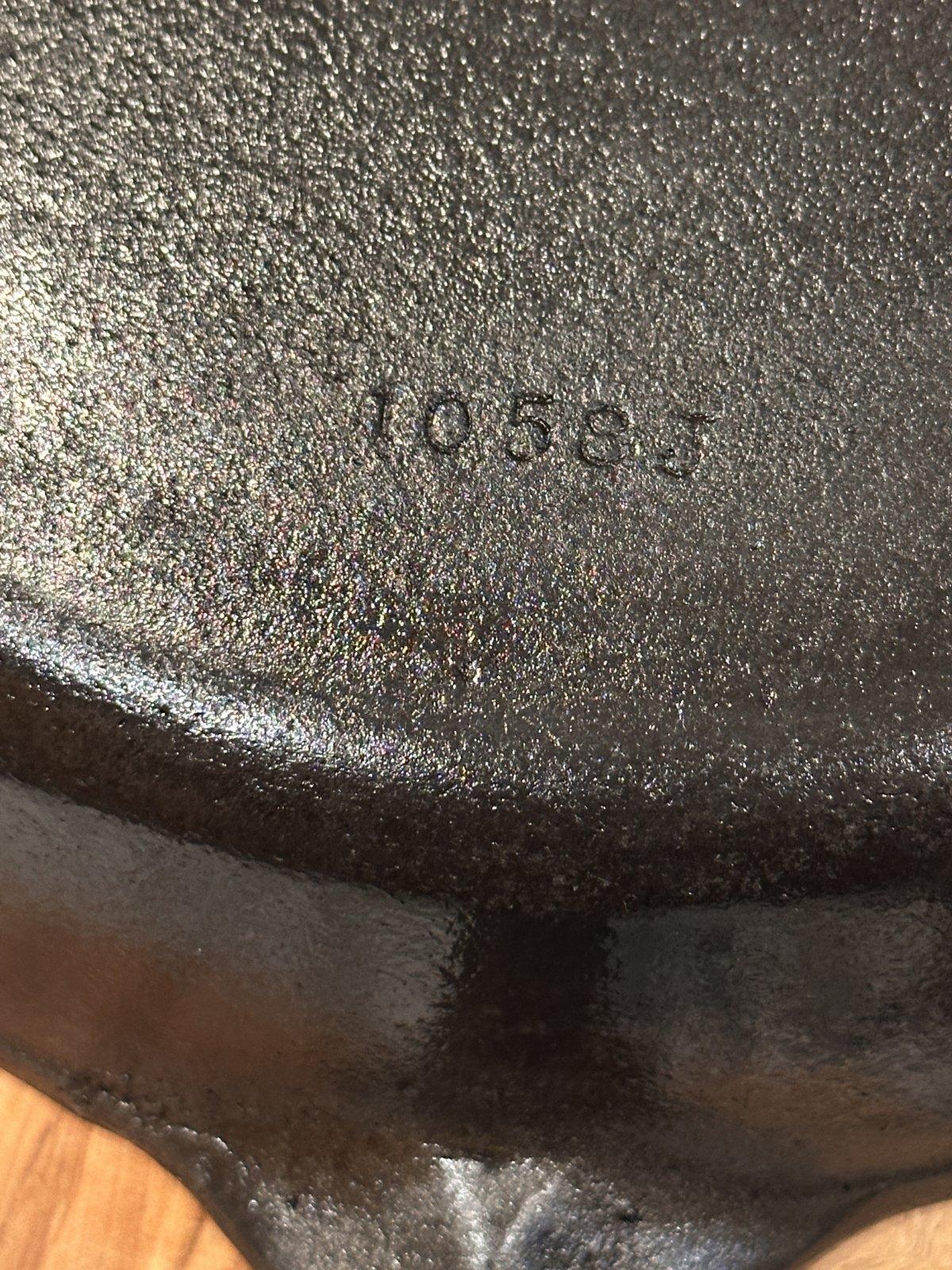
Here are some pictures, hopefully in chronological order.

IMG_3519.jpeg

IMG_3520.jpeg

IMG_3527.jpeg

IMG_3590.jpeg

IMG_3591.jpeg

IMG_3596.jpeg

IMG_3602.jpeg


The last few pictures show a mostly clean pan. I'm going to try and chip away some of the black spots without scratching the pan.

But you can see some of the casting flaws in the old pan. And that is definitely a crack in the handle. It's also thin for cast iron. I don't think it will ever be a favorite pan.
 
Kevin, you dun good - it's not far from being a usable pan. Although you said you probably wouldn't use it, I would try it out on a few different foods and see how it does. It could become a favorite pan for certain specific foods. I have cast iron that I only use for specific cooking and once seasoned and used that way they work great.
 

Latest posts

Back
Top