Curse You Red Baron

Joined
Sep 1, 2003
Messages
8,265
City & State/Province
Richmond Texas USA
Hey Guys.
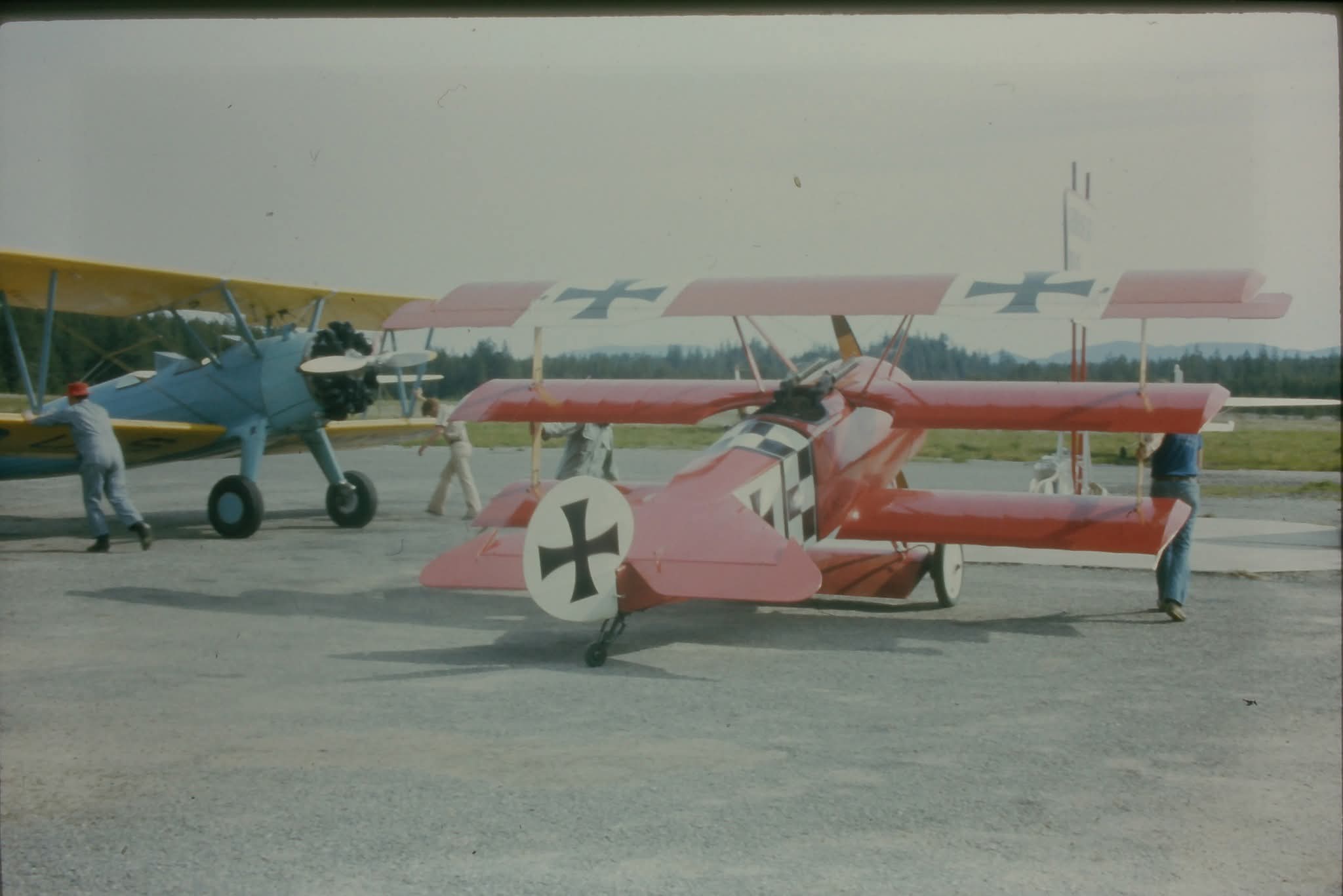
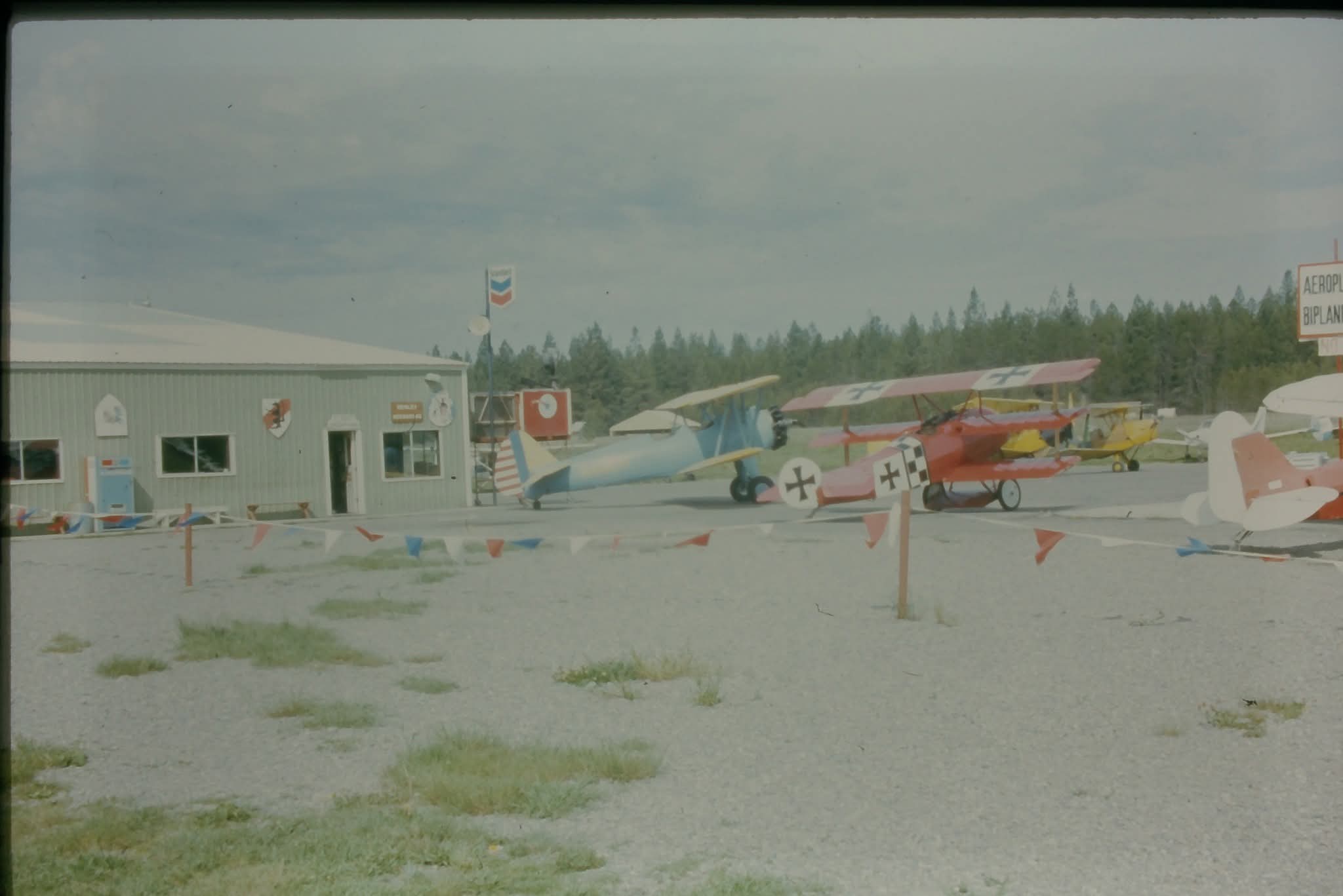
I was going thru some old pictures and came across this one of the Fokker Dr.1 Triplane that two friends of mine built. They built it from 1978-1980 and kept it in my hangar for 2+ years. The engine is a 165HP Warner. It was sold and shipped to a Count in Italy that had a son going thru AF pilot training. For some reason they were not able to get the Italian paperwork so it came back to the USA and is now in the Cavanaugh Museum in Dallas. It has been in several movies Poncho Barnes being one of them.

The picture was taken by a friend at our Civic Club in 1981
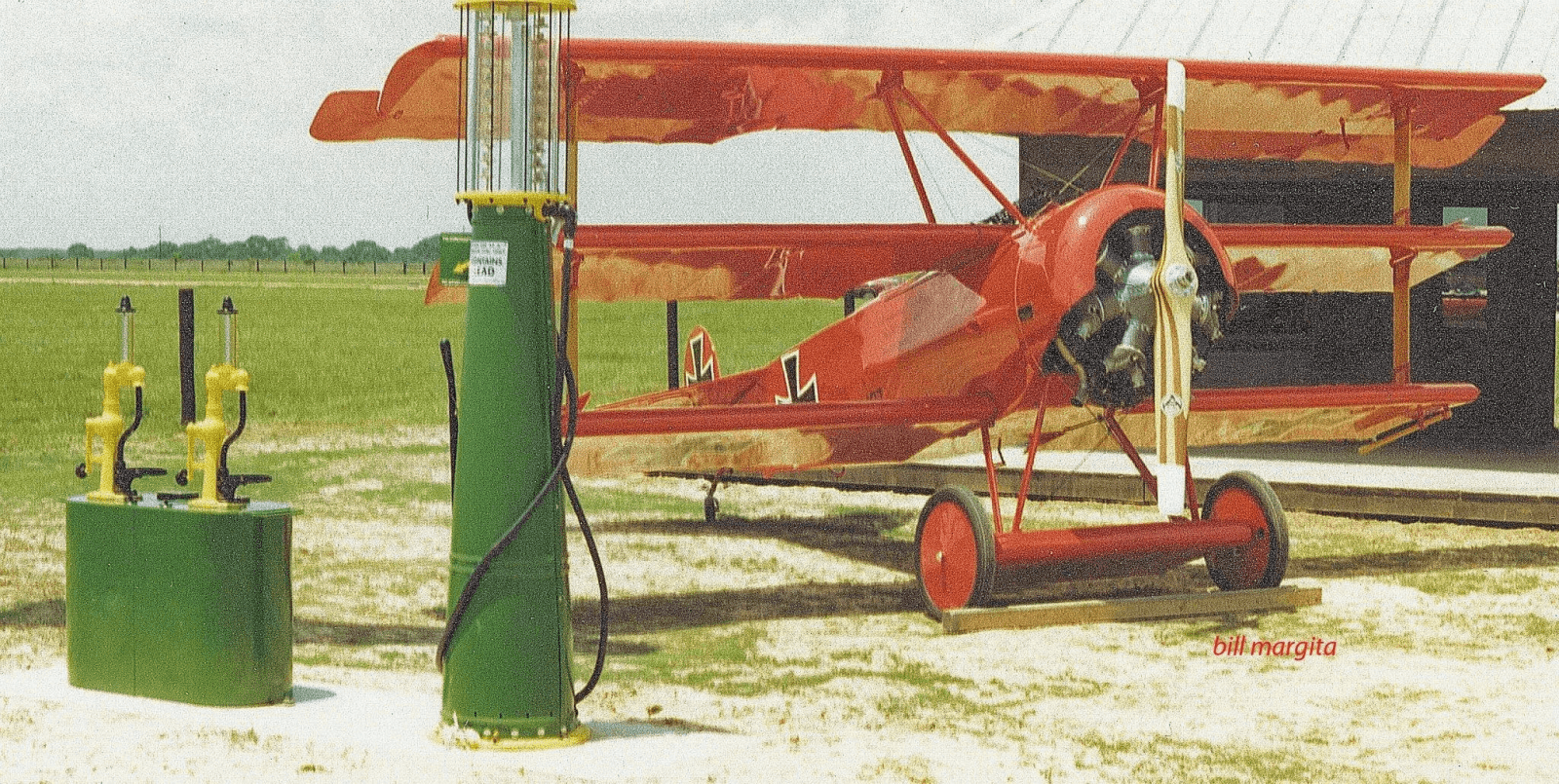
1700099818944.png


INFO from the museum


The Fokker Dr.1 is one of the most famous and recognizable fighter planes of World War One. The Dr.1 (Dr standing for Dreidecker or 3 wings) was designed by Reinhold Platz and was ordered into production on July 14, 1917, in response to the success of the British Sopwith Triplane earlier in the year. The first production model of the Dr.1 was delivered personally by Tony Fokker to the Red Baron, Rittmeister Manfred von Richthofen, and shortly after that in August of 1917 it made it's first appearance in combat.
dr1.jpg

Pilots were impressed with its maneuverability and soon scored victories with the nimble triplane. In the hands of an experienced pilot, the Dr.1 was a formidable dogfighter. The three wings produce tremendous lift which, combined with its small size and weight, meant it could out climb and out-turn almost any opponent. The Dr.1 was not for the inexperienced pilot. On landing, rudder effectiveness virtually disappears when the tail drops below the horizontal position; that's why ax handle skids were bolted under the bottom wings, saving many pilots from an otherwise disastrous ground loop.

Wing design flaws caused several crashes and led to withdrawal of the Dr.1 from service in October of 1917. Although the wing design was improved, the introduction of the more advanced Fokker D.VII (also on display) meant the end of the Dr.1.
dr1_2.jpg

Only 320 Fokker Dr.1s were produced and no original examples exist. The Fokker Dr.1 on display is a full-scale reproduction with a more modern Warner radial engine, as well as a tailwheel versus the traditional tailskid. The aircraft is painted in the color and markings of the plane flown by Baron Manfred von Richthofen, the infamous "Red Baron". Von Richtofen scored the final 21 of his 80 victories in the triplane. He was Germany's highest scoring ace of World War One.
 
Dave,
No I never flew it. But we did some dogfights and simple formation aerobatics together. Our dogfights were low and slow, a lot of the drivers would pull to the side to watch. My Starduster could out turn and out climb so I would always win. Good times a long time ago
I'm kind of surprised you could pull a tighter turn. I'm not sure I'd want to be low and slow in that thing, suspect to a "modern"
pilot it could be scary! I'm guessing they didn't really hammer it too hard having built it. It would be something to travel back in time and
see what a good pilot could do with one when their life depended on it. Thinking you'd not only have to worry about stall/spin
but also structural failure. Add that to somebody trying to kill you at the same time while you were possibly freezing to death and
or hypoxic....
 
Hey Guys.
I was going thru some old pictures and came across this one of the Fokker Dr.1 Triplane that two friends of mine built. They built it from 1978-1980 and kept it in my hangar for 2+ years. The engine is a 165HP Warner. It was sold and shipped to a Count in Italy that had a son going thru AF pilot training. For some reason they were not able to get the Italian paperwork so it came back to the USA and is now in the Cavanaugh Museum in Dallas. It has been in several movies Poncho Barnes being one of them.

The picture was taken by a friend at our Civic Club in 1981

View attachment 33351

INFO from the museum


The Fokker Dr.1 is one of the most famous and recognizable fighter planes of World War One. The Dr.1 (Dr standing for Dreidecker or 3 wings) was designed by Reinhold Platz and was ordered into production on July 14, 1917, in response to the success of the British Sopwith Triplane earlier in the year. The first production model of the Dr.1 was delivered personally by Tony Fokker to the Red Baron, Rittmeister Manfred von Richthofen, and shortly after that in August of 1917 it made it's first appearance in combat.
dr1.jpg

Pilots were impressed with its maneuverability and soon scored victories with the nimble triplane. In the hands of an experienced pilot, the Dr.1 was a formidable dogfighter. The three wings produce tremendous lift which, combined with its small size and weight, meant it could out climb and out-turn almost any opponent. The Dr.1 was not for the inexperienced pilot. On landing, rudder effectiveness virtually disappears when the tail drops below the horizontal position; that's why ax handle skids were bolted under the bottom wings, saving many pilots from an otherwise disastrous ground loop.

Wing design flaws caused several crashes and led to withdrawal of the Dr.1 from service in October of 1917. Although the wing design was improved, the introduction of the more advanced Fokker D.VII (also on display) meant the end of the Dr.1.
dr1_2.jpg

Only 320 Fokker Dr.1s were produced and no original examples exist. The Fokker Dr.1 on display is a full-scale reproduction with a more modern Warner radial engine, as well as a tailwheel versus the traditional tailskid. The aircraft is painted in the color and markings of the plane flown by Baron Manfred von Richthofen, the infamous "Red Baron". Von Richtofen scored the final 21 of his 80 victories in the triplane. He was Germany's highest scoring ace of World War One.
Absolutely cool!
 
As an Amazon Associate we earn from qualifying purchases. Product prices and availability are accurate as of the date/time indicated and are subject to change.
I'm kind of surprised you could pull a tighter turn. I'm not sure I'd want to be low and slow in that thing, suspect to a "modern"
pilot it could be scary! I'm guessing they didn't really hammer it too hard having built it. It would be something to travel back in time and
see what a good pilot could do with one when their life depended on it. Thinking you'd not only have to worry about stall/spin
but also structural failure. Add that to somebody trying to kill you at the same time while you were possibly freezing to death and
or hypoxic....
Dave,
The one owner who also built and flew a 180HP Pitts flew the Triplane pretty hard when I was on his tail. The Starduster gives pretty good warning before bad things happen pulling Gs. The stick will shake a little and the left front flying wire will start vibrating. Don't need one of those sissy stall warnings HP and Cubic Inches will win over number of wings ever time ;) ;)
The Triplane is not that great of a airplane especially when landing and any amount of crosswind. But remember it is probably only about 5-6 after real airplanes were being built. Construction wise welded steel tube and full cantilever wings not bad.
While at Old Reinbeck I saw a triplane ground loop and go onto its back. No telling how many landings that pilot had in it.


Post1

Triplane Pilot report by the owner

http://rwebs.net/avhistory/flight.htm
Originally printed in the EAA's Sport Aviation, March 1983 issue. The author is Ed Lansing, who along with Gary Shepherd built the plane.
This article will discuss the flight and primary aerobatic characteristics of a replica Fokker DR-1 Triplane.
The Triplane was constructed by Gary Shepherd and myself over a 2 ½ year period taking 3000 manhours to complete.
The project has been flying since August 1980 in the Houston, TX area and now has 130 hours of flying time on it.
The construction of the project has been described in Jack Cox's excellent article in SPORT AVIATION (December 1980), so there is no need to repeat those details here.
The Triplane has some interesting flying characteristics and this article will attempt to describe them.
Data Sheets and Information
[Note: I have not reproduced the three tables mentioned - Randy]
Refer to Tables 1, 2 and 3 for the so-called "numbers" on a Fokker Triplane. Bear in mind that the project is an exact replica of the WWI original with respect to size, dimensions, rigging, control movements, etc. We tried to build a replica without any compromises in the original configuration. The only modern components we have are a tailwheel instead of the original skid, a Warner 165 instead of the original Oberusel rotary engine, and brakes for the wheels. Otherwise, our replica is the same as flown in the 1917 WWI period.
Taxi and Take-Off
The combination of round cowl, nose-high ground attitude and mid-wing position of one of the wings make the Triplane virtually "blind" on the ground. Lots of S-turns and maneuvering are required. To avoid noseovers we have the brakes set very lightly. They only hold up to about 1200 rpm so braking is marginal and for steering only. Turns have to be planned well in advance.
Gary and I now know why the mid-wing has the half-moon cutouts near the fuselage (so you can see). If you go slow and easy there is really no problem in taxiing and ground handling.
The take-off run is sometimes exciting because you can't see straight ahead at the start. I give it full power, stick all the way back and peek along the fuselage or sight on a cloud for initial direction. The Triplane accelerates very quickly and the tail can be lifted at about 30 mph. Take-off is at around 40 mph after 250 to 300 feet ground run. Visibility is excellent once the tail is up and you can see over the nose. We have a nice rate of climb of 1500 ft./minute at 70 mph so you can fly some tight patterns. In any kind of a crosswind it's best to keep the tail on the ground until speed is reached and then "pop" the tail up into the flying attitude. Take-offs present no special problem other than visibility at the start of the ground run.
Flight Characteristics
The first thing you notice about a Triplane is that it is definitely a "rudder" airplane and you have to keep on the pedals constantly to keep the ball in the center of the slip-skid indicator. The elevator is excellent with smooth, powerful responses at all speeds. The ailerons are somewhat heavy but I consider the roll control good. There is a large amount of adverse yaw since there is little aileron differential. If the ailerons are quickly displaced, the Triplane will yaw 20 to 300 if rudder connection is not applied.
The rudder control tends to be marginal. All turns must be coordinated and the ball really rolls around the cage during a turn. Turns are not very stable and I have to constantly work the rudder to keep them coordinated. Only a slight amount of back pressure is needed during turns, even steep ones.
At cruise speed of 90-95 mph, the Triplane is very nimble, quick and responsive. You can really move it around if you keep on the rudder.
The Triplane tends to fly tail heavy and increasing speed requires lots of forward stick to hold the nose down~ It appears as if the effective center of drag is above the thrust line so the faster you go the more elevator correction is needed to hold the nose down. This is somewhat of an explanation for the familiar "tuck" position of the Triplane at high speed. The horizontal stabilizer is rigged at a plus 90 (leading edge high) but even with this forward stick pressure is needed as speed increases. The high lift wing airfoil shape really wants to pull the plane up. All the wings are rigged at 11/20 angle of incidence.
Stalls occur at about 40-45 mph and the Triplane "mushes" down without a definite nose break. It is a little like a parachute in descending.
General visibility is excellent except for the mid-wing placement. In the traffic pattern you have to "bob" the nose up and down to keep visibility. Otherwise, the cockpit is comfortable, roomy and lots of fun to fly.
Landings
Here is where the real adventures begin. Approaches are made at 70 mph and visibility is excellent over the nose. With its high lift/drag configuration the Triplane really comes down steeply at about 1800 ft./minute in a "glide". I use wheel type landings at 95% of the time since it's the only way to see. I only try full stall landings in a dead calm. Once the wheels are on the ground, I hold the nose up, slow it down, and then pull back the stick to get the tail planted and firmly on the ground. When the 3 wings stall out and the tail starts to come down, the rudder is effectively blanked out and directional control disappears. With the marginal rudder control you are essentially a passenger during the "twilight zone" of transition between flying and rolling. So, when the tail comes down, it's best to be headed in the right direction. Fortunately, the slow landing speed of 40 mph makes for short landing distances. With any kind of a headwind, the Triplane stops in 250 to 300 feet after touchdown.
Crosswind landings are very difficult to impossible to handle. With any kind of crosswind component (3 to 5 mph) these exercises are a real adventure. Before I flew the Triplane, I got lots of advice from the old pros Walt Redfern and Jim Appleby on how to handle this. The consensus on crosswind landing seems to be as follows:
a) Keep it in the hangar if a crosswind is there.
b) Always land into the wind. Land diagonally, off to the side, on taxiways, aprons, etc., to minimize the crosswind component. Our home field has a 200 ft. wide grass strip and most landings are on a diagonal directly into the wind.
c) As a last resort, land on the downwind side of the runway with a wheel landing, slow it down and let it weathervane up into the wind then the tail comes down. With the large wing area and wide fuselage it will weathervane.
My EAA associates in the Houston area kid me by saying with the short fuselage, small rudder, aft CG and large side area, I have "everything working for me" on landings. I now know why the original Triplane has the wing tip skids on the lower wing. However, once the tailwheel is on the ground at low speed, good control returns. The transition zone from flying to rolling is the dicey area. Sometimes you can use cross-control techniques on the landings by using the "down aileron" as a speed brake to help directional control. In summary, every landing is a real experience especially in any kind of crosswind.
 
Post 2
Primary Aerobatics
Gary and I have taken the Triplane to numerous Texas Gulf Coast air shows and we have tried some primary aerobatics with it. Bear in mind that the following comments are from the perspective of private pilots with 600 hours flying time. We do not consider ourselves experienced in aerobatics and we stick to the basics.
Loops — Loops are easy and fun in a Triplane. From cruise condition drop the nose to pick up 110 to 115 mph entry speed. A smooth back pressure of 3 G's produces an amazingly tight loop. With the high drag, it is very easy to control it on the down side coming out. Caution: Keep the ball in the center or it can really come out of the loop cockeyed.
Hammerheads — This is another good maneuver. With entry speed of 110 and a 3 G pull up you go straight up with good control. Rudder kick at the top produces a kind of pirouette rather than a turn and you come straight down. The high drag of the wings ooming down makes exits easy and quarter rolls can easily be done coming out of the Hammerhead.
Rolls — The Triplane can be rolled but this maneuver gets difficult due to the differences in the control sensitivities of elevator, aileron and rudder. The best way seems to be to use high speed entry of 110, nose up 30º, full aileron and hope for the best. Lots of rudder correction is needed to overcome the adverse yaw. Once the roll starts indiscriminate use of the rudder or elevator will quickly stop the roll with some interesting results.
The best rolls seem to happen when you use very little corrections once a roll starts. Big barrel rolls also seem to be better than rolling on a point. Slow rolls are very difficult because of the control sensitivity. The bottom line is, keep it fast and quick with lots of altitude for corrections if you fall out of one.
Split-S — This is another easy maneuver. With its quick response, the Triplane comes quickly around. Sometimes I can build up airspeed to 110 mph, haul the nose up 300, half roll at 80 mph and exit in the opposite direction at entry altitude.
Immelmans — Tough to do because of low speed at the top of the loop. The high lift/drag airfols really slow down at high angles of attack.
Inverted Flight, Negative G's, Tall Slides, Snaps, Etc. — These maneuvers are totally unsuitable for a Triplane. It is not configured to try any of these.
Conclusion
The best description of flying a Triplane is that it is "fun after the first frightening hour". Once you get used to its characteristics and quirks, it does very well, provided you keep within its limitations. It is desirable to stay well inside the flight envelope. It is easy to see why it has the reputation of being quick and nimble. It is also easy to see why WWI airfields were all round or square with the wind sock in the middle. If you always land into the wind, the Triplane is reasonably easy to live with and a lot of fun.
I guess that's why Gary and I went to all the trouble in the first place.
 
Any other replicas you aware of out there? S E 5, Fokker D7. Sopworth Camel. I guess there are still some original Tiger Moths out there.
 
Any other replicas you aware of out there? S E 5, Fokker D7. Sopworth Camel. I guess there are still some original Tiger Moths out there.
There are several WWI replicas around the country
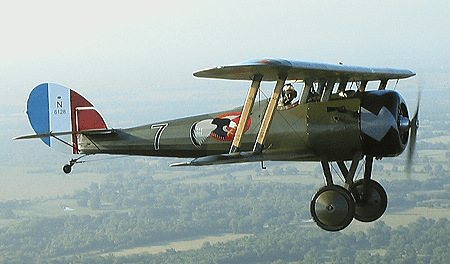
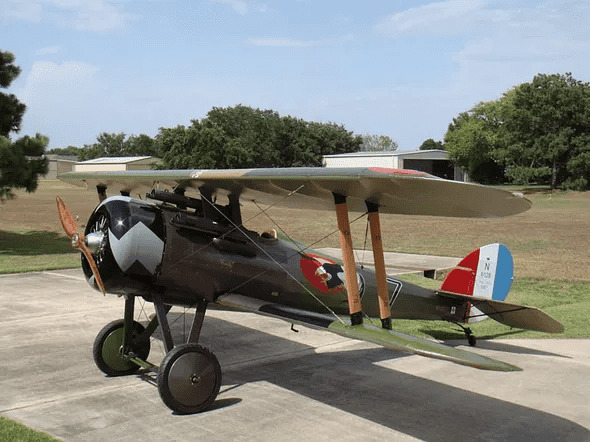
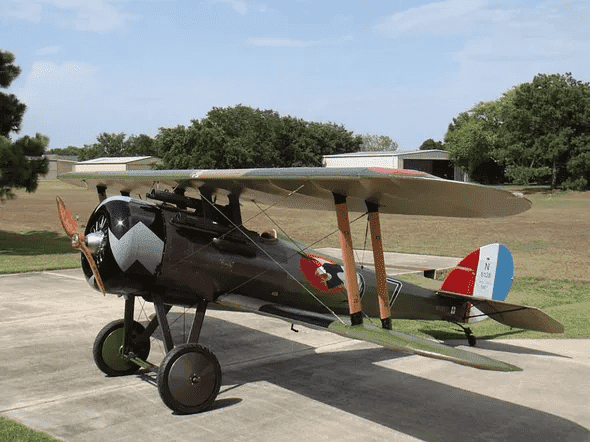
Here is a Nieuport 28 my neighbor, who has now moved to FL., built about 10 years ago

This field is between Houston and San Antonio.
Lots of neat stuff
https://pioneerflightmuseum.org/aircraft/


1700202283028.png


1700201901184.png
 
Any other replicas you aware of out there? S E 5, Fokker D7. Sopworth Camel. I guess there are still some original Tiger Moths out there.
There are several WWI replicas around the country
Here is a Nieuport 28 my neighbor, who has now moved to FL., built about 10 years ago

This field is between Houston and San Antonio.
Lots of neat stuff

https://pioneerflightmuseum.org/aircraft/
1700203205955.png


1700203271926.png
 
Last edited:
In 1980 or 81 my family drove out to Texas to visit my Sister in the Navy. We funded part of the trip by taking a jet start unit my dad repaired after getting it free from Frontier airlines and selling it to a guy in San Antonio. We drove out from our Airport Glacier Park Int'l in Montana. Along the way we stopped to see some airplanes my dad had heard about. One was a red Fokker triplane. I wonder if it's the same one? How many could have been there in that time frame? I may have to look for my old Polaroids.
 
Jim, I'm not an expert on WWI airplanes. Weren't the original Dr.1s powered by rotary engines, not radials? I'd think the repro would be a lot easier to fly with a conventional radial, or (as is sometimes the case), do I not understand the situation? :confused:
 
Jim, Thanks for posting that....really makes you appreciate people that flew combat in one.
I liked that part about being desirable to stay well inside the flight envelope.
Last night I went down the google rabbit hole and found something interesting. Don't
remember the who/where/when but somebody did some design or engineering studies
of the Dr.1 and found the upper wing was producing something like 2.5 times the lift
of the other two and decided that was one of the causes of many structural failures.
Well also apparently some pretty crappy construction.
 
Jim, I'm not an expert on WWI airplanes. Weren't the original Dr.1s powered by rotary engines, not radials? I'd think the repro would be a lot easier to fly with a conventional radial, or (as is sometimes the case), do I not understand the situation? :confused:
Snake,
You are correct all of the WWI round engine planes had rotary engines in them. The rotary gave the most HP for the weight. The inline (Fokker DVII ) and V (Spad 7&13s) engines were heavy and water cooled but most made more HP. The OX-5 in a Jenny weighed 390# and made 90HP and didn't include radiator and piping and was not reliable.
I'm not sure when the first radial went in to production but P&Ws first radial Eng. was the 1340 Wasp in 1927. The first Wrights were around 1923. Lindbergh flew a J-5 Wright which had rocker box covers filled with grease. The previous J-4 had open rockers that needed grease after a few hours. He would not have made it to Paris with the J-4
Here is a rotary powered Triplane at Kingsbury. They have their own unique sound. For power control they have a blip switch that kills the mag. They can also control the number of plugs that fire for amount of power needed along with some fuel control. Not the easiest plane to fly formation with. :)
The Triplane with a rotary being started and run.
https://pioneerflightmuseum.org/aircraft/1917-fokker-dr-1/
3 more rotary Triplanes in PA.
 
In 1980 or 81 my family drove out to Texas to visit my Sister in the Navy. We funded part of the trip by taking a jet start unit my dad repaired after getting it free from Frontier airlines and selling it to a guy in San Antonio. We drove out from our Airport Glacier Park Int'l in Montana. Along the way we stopped to see some airplanes my dad had heard about. One was a red Fokker triplane. I wonder if it's the same one? How many could have been there in that time frame? I may have to look for my old Polaroids.
Do you remember what city the Triplane was in?? At that time the only one I knew of was in my hangar.
 
I've got a soft spot for WW1 aeroplanes. Years ago a fellow in the Tucson area had a Sopwith Pup (iirc) replica with a LeRhone and a functional Lewis Gun. I got to see it fly a couple times.

There was a forum called Canvas Falcon where a lot of replica builders and researchers hung out but it seems to have gone the way of the Dodo.
 
Those are some neat old pictures!!!

Jim, I've never heard of the Cavanaugh Flight Museum. For a while we were members of the Frontiers of Flight Museum in Dallas. Down near Love Field. We went there quite a bit. But I looked up the Cavanaugh Museum, it's currently closed. The website says they are moving to another location.

From their website:

After thirty-one years at its Addison location, the Cavanaugh Flight Museum is closing for moving. All aircraft, educational displays and memorabilia are being moved to the North Texas Regional Airport (KGYI).

At the present time, this location is not open to the public.


I'm not sure where KGYI is. I see Snake45 commented on this thread. I guess he is still right, My Google is broken. :) :) :)
 
And I found it!
33-42-50.7250N 096-40-26.5260W
33-42.845417N 096-40.442100W
33.7140903,-96.6740350
(estimated)
749.3 ft. / 228.4 m (surveyed)
[td]
Lat/Long:​
[/td]​
[td]
Elevation:​
[/td]​
 
Those are some neat old pictures!!!

Jim, I've never heard of the Cavanaugh Flight Museum. For a while we were members of the Frontiers of Flight Museum in Dallas. Down near Love Field. We went there quite a bit. But I looked up the Cavanaugh Museum, it's currently closed. The website says they are moving to another location.

From their website:

After thirty-one years at its Addison location, the Cavanaugh Flight Museum is closing for moving. All aircraft, educational displays and memorabilia are being moved to the North Texas Regional Airport (KGYI).

At the present time, this location is not open to the public.


I'm not sure where KGYI is. I see Snake45 commented on this thread. I guess he is still right, My Google is broken. :) :) :)
They are in the north hangar at Texoma Regional, which is still Perrin Air Force base to us locals. They are in the old alert hangar and really can't be seen from any of the roads around the airport. I didn't get set up in time for any pictures yesterday, but they were flying their Corsair, Wildcat, and TBM. There is at least one A4 SKyhawk that shares the same space with them. Texoma Regional is a nice place to plane spot with an observation deck on the new terminal and sees lots of commercial and some military traffic. There is also an outstanding museum dedicated to Perrin Field, which started as a training base in 1942. They have a few NASA items there also, as the Mercury and Gemini astronauts did their water escape training on Lake Texoma.
 
They are in the north hangar at Texoma Regional, which is still Perrin Air Force base to us locals. They are in the old alert hangar and really can't be seen from any of the roads around the airport. I didn't get set up in time for any pictures yesterday, but they were flying their Corsair, Wildcat, and TBM. There is at least one A4 SKyhawk that shares the same space with them. Texoma Regional is a nice place to plane spot with an observation deck on the new terminal and sees lots of commercial and some military traffic. There is also an outstanding museum dedicated to Perrin Field, which started as a training base in 1942. They have a few NASA items there also, as the Mercury and Gemini astronauts did their water escape training on Lake Texoma.
They are still in the process of getting the museum ready for visitors.
The Pilots of the Corsair and TBM live on an airpark about 3 miles from Son's airpark and they are friends of his.
Lanny flies the TBM and Mark T. flies the F4U. Lanny, who is the chief pilot, has spoken to son about flying with them since they are short of quaffed pilots. He has been invited by the owner to come to the museum and chat about it.
 
Back
Top