Where do you land?

Joined
Nov 17, 2009
Messages
15,200
City & State/Province
Webster, MD.
Jim's story about landing in a field reminded me of an episode with my IP some years ago. On the way back to home field and above I-95 when he reached over and pulled the throttle to idle and said to me: "You just lost your engine. What are you going to do?" I told him that I would attempt to restart it and if unable would look for somewhere to safely land. I-95 was out as the cars were nose to tail and the median was a valley. He suggested that I be looking for a field and I said to him: " There is a field off to our south with a roadway through it and no poles, so no wires, but, I wouldn't head there." He asked me why. I told him: "Because I would simply turn around and land at that air field behind us." Elkton was right there. There was no more conversation till after we were back at home field.
 
Last edited:
I too had my IP do the "lost engine" thing. And since it was Texas,, there were several places to "pick" from for an emergency landing. I picked an opening,,, and made my case for why, and the instructor accepted it. All good.
A few weeks later,,, my IP was doing taxi driver service for a few of the college VIP's,, and was returning home. He was in our general practice area,, and while at 5500 ft, blew a cylinder off the engine. Windscreen covered in oil, etc. He radioed his emergency, opened his window, found an open area, and landed them all safely. We had a fun discussion about it all after that.
But the best part about my IP,, was that not too long prior to his emergency, he'd gotten chewed out by the college for his teaching methods.
See, he believed in being as realistic as possible while still within safety parameters. He taught his students what happened when you were practicing take off/departure stalls, and hit the wrong pedal. (You go into a spin.) It was discovered he was "teaching" spins. Yet,, he wasn't teaching spins,, he was teaching what happens, AND how to recover if you did it wrong. (If you had the altitude.) He got really chewed out.
Yet,, after the real emergency,, they gave him an award, and a slight pay raise. But,, a private company heard about him, and offered him a much better job. He left soon. Keith,, wherever you are,, "Many thanks for the superb instruction I got from you!"
 
So far this is my favorite No Sh!t story.
Last year while I was at Son's house North of Ft Worth Grandson was flying a Carbon Cub to demonstrate to a future buyer around Tulsa OK. area.
Son Trey and I were in the hangar working on the Cub when he gets a call from Grandson Chad. On his way and about 150 miles from home a head had separated from the cylinder base of #4 cylinder. The only thing the kept the head from blowing all the way off was the cowling. That allowed the piston to stay inside the cylinder rather than beating everything up. The eng. would have probably quit at once if that would have happened.
Chad was at 1200'AGL and climbed to 1700'AGL while he still had speed and some power sine he now only had 3 out of 4 cylinders making power. Oil was coming out and oil pressure was falling while a whole lot of unwanted noise was coming from up front.. His plan was to try and make it to an airport about 20 miles from him. He knew the engine would soon be getting a case of the come aparts so no need to try and save it. Even though there were plenty of fields to land the Cub in without damage. It is better to be at the airport where you can replace the eng. without taking the plane apart and hauling the plane to the airport.
His plan worked out ok. The eng. froze up on final to land and he had to push the plane to an open hanger since no one was at the airport.
Now what makes this story so great to me is. From the time the cylinder blew until landing Chad was on his phone giving us a blow by blow of what was taking place. His Dad and I were about to crap in our skivvy shorts and Chad was just as cool as cucumber
Just another day in the life of a Cub Pilot:-)
Once he landed we flew the Beech Baron up to get him.
The owner of the airport told him to put the plane in a hangar and not to worry about it. A couple weeks later Trey and Chad found an eng. to install. They loaded up the tools, enj. drove to OK and bolted on eng. and Chad flew it home.
 
Wee bit of luck depending on how hot things were that the oil was peeing on.....
Cool is good, but being on fire in an airplane is waaaay down my own list of fun!
 
Ferrying a UH-1M to Edgewood (Weide AAF) and were heading into Lakefront in New Orleans when their tower asked if it was normal to have "all that smoke" coming from the helicopter. Now, "all that smoke" comment got our attention. I popped the door, looked out the left side and all I could see was smoke. Pucker factor rose instantly. The pilot put us on the ground ASAP and we got way away as the fire truck arrived. It turned out to be a ni-cad battery runaway. The fun part was the battery is directly under the fuel cell.
 
Wee bit of luck depending on how hot things were that the oil was peeing on.....
Cool is good, but being on fire in an airplane is waaaay down my own list of fun!
The oil was going everywhere because of the inlet cooling air. The windshield stayed pretty clean and most of the oil came out the air outlet and onto the belly which is the same place the exhaust comes out. Most of the time when an engine blows the oil doesn't ignite. But if you screw up the landing and break a fuel line, tank or the gascolator it turns into a real bad day.
As you know the only time you can have to much gas is when you are on fire. :)
 
As an Amazon Associate we earn from qualifying purchases. Product prices and availability are accurate as of the date/time indicated and are subject to change.
The oil was going everywhere because of the inlet cooling air. The windshield stayed pretty clean and most of the oil came out the air outlet and onto the belly which is the same place the exhaust comes out. Most of the time when an engine blows the oil doesn't ignite. But if you screw up the landing and break a fuel line, tank or the gascolator it turns into a real bad day.
As you know the only time you can have to much gas is when you are on fire. :)
I understand all that and it worked out OK.
On the other side of it I had a Formula Ford catch fire on me at Gingerman here in Michigan due to
oil spraying on a hot header. The fire bottle bought enough time to get stopped and out, but things were
getting toasty leaving. I had the belts and steering wheel off before it quit rolling, might not have completely
stopped before getting out. Also had Toledo University's SAE autocrosser set it self on fire at an autocross,
tee shirt and jeans don't provide much protection, managed to get a few blisters bailing out of it while
the corner worker with the extinguisher stood there going duh!
I'm pretty sure I'd have chickened out and parked it sooner.
 
  • Like
Reactions: g5m
I haven't flown in a long time but I think (hope) all students go through the lost power training. Makes you aware of your surroundings.
 
WOW With your luck I can see why.
You want a scary story. Wifie and I flew the Bonanza to Jacksonville FL to see Son. Before the flight back home I opened the cowling to check stuff out. What I saw was a lot of blue fuel stain around the top of #3 cylinder where the fuel injector had come a little loose and allowed it to spray fuel around inside the cowling. That cyl. was still getting enough fuel to run alright. Probably would have been a lot worse if it came all the way off.
 
  • Like
Reactions: g5m
I can see several of us have had some form of "near miss" experiences. Pucker factor gets pretty high during such events.
I've had the good fortune to NOT having been as close as a few of the above stories. But,, then again, in other things,, I've wondered how I survived.
 
Here you go got to this point REAL QUICK ! No pics of the Crossle Ford.
2797577823_63ebd74d7b_o.jpg
 
Last edited:
My son, A CWO Blackhawk pilot, is a maintenance evaluator (he certifies Blackhawk maintenance test pilots). One of his frequent chores, when certifying a helo is flight-worthy, is to run it up to 1,000 feet, shut off the engines and auto rotate to the ground. He's done more of these controlled crash landings (as an MTP/ME) than most other helo pilots have done in their entire careers. As an ME, one of his "pranks" is to take his pupil (a young pilot or aspiring MTP) up to 2,000 feet, then shut off the engines - just to see how they respond.
 
I've got a few stories but my first was scrubbing bugs off the radial engine of my boss's Stearman biplane he was spraying crops with. I noticed cracks in the engine mounts. He was quite lucky I noticed. When my dad ( mechanic) inspected, half the welds were cracked. Same guy hit a large bird through his windscreen on a spray run 12 days after I joined the navy and lost his life meeting the ground unexpectedly.
 
  • Like
Reactions: g5m
WOW With your luck I can see why.
You want a scary story. Wifie and I flew the Bonanza to Jacksonville FL to see Son. Before the flight back home I opened the cowling to check stuff out. What I saw was a lot of blue fuel stain around the top of #3 cylinder where the fuel injector had come a little loose and allowed it to spray fuel around inside the cowling. That cyl. was still getting enough fuel to run alright. Probably would have been a lot worse if it came all the way off.
Uhh, that's scary!

There seems to be plenty of opportunity for puckers when flying.
 
Uhh, that's scary!

There seems to be plenty of opportunity for puckers when flying.
There really isn't, fortunately they are very few if care is taken with pre-flight and needed
maintenance. Still planes are mechanical devices and humans fly and service them so
sooner or later you could have some event. Most end well due to skill or luck.
Look at Jim's post about his grandson, it didn't catch fire and the engine didn't
seize/die at the wrong time to make him regret his choice of making an airport.
I'd worry more about a drunk or texting driver getting me than an aircraft accident.
Most flying accidents ( by far ) come down to poor piloting decisions, usually a
chain of mistakes or crappy judgement finally lead to the big splat.
 
Last edited:
I was at an Air Race where there 5 planes involved in midairs, in one race. Tragic, and unforgettable. And I'd had dinner with the guys the evening before.
 
My son, A CWO Blackhawk pilot, is a maintenance evaluator (he certifies Blackhawk maintenance test pilots). One of his frequent chores, when certifying a helo is flight-worthy, is to run it up to 1,000 feet, shut off the engines and auto rotate to the ground. He's done more of these controlled crash landings (as an MTP/ME) than most other helo pilots have done in their entire careers. As an ME, one of his "pranks" is to take his pupil (a young pilot or aspiring MTP) up to 2,000 feet, then shut off the engines - just to see how they respond.
I was under the assumption that "to the ground" auto-rotations had been stopped. Perhaps in the Blakhawk it is OK.
Not one of those but a "call the equipment" flight final will definitely get your attention. Been there, done that. Lost tail rotor authority. Fly at 60+ directly onto the runway and skid down it till you stop. If that isn't bad enough you can see out of your peripheral vision the fire truck and ambulance running along side on the taxiway
 
  • Like
Reactions: g5m
I was under the assumption that "to the ground" auto-rotations had been stopped. Perhaps in the Blakhawk it is OK.
Nope. Very infrequent, but it does still happen. In fact, I wouldn't be surprised if pilot trainees at Fort Rucker might be required to watch experienced pilots auto-rotate (or at least a video of same), just to show them that they can survive a power failure.

My son says there's a definite art to auto rotations. And such landings are hard on the rapidly-aging fleet of Blackhawks. But....
 
  • Like
Reactions: g5m
Nope. Very infrequent, but it does still happen. In fact, I wouldn't be surprised if pilot trainees at Fort Rucker might be required to watch experienced pilots auto-rotate (or at least a video of same), just to show them that they can survive a power failure.

My son says there's a definite art to auto rotations. And such landings are hard on the rapidly-aging fleet of Blackhawks. But....
There certainly is an art to a properly done auto rotation. Flair too soon and run out of speed and you simply fall to the earth ..rapidly. Flair too late and you effectively fly into the ground. Done properly you flair and touchdown gently.
 
  • Like
Reactions: g5m
I saw a Cobra that was practicing auto-rotations flair too soon. Scrap (1) Cobra. I was the first person to the crew,, and the IP was ready to beat the tar out of his co-pilot. Luckily,, I was able to "persuade" him to stay strapped in his seat until the ambulance got there, and THEY determined he could be unbuckled & transported etc.
They picked up the pieces with a crane & put them on a flatbed truck.
 
  • Like
Reactions: g5m
Fort Campbell medivacs, flying at night with NVGs. Ran into each other. WTF?

The speculation is that these two flight crews (no one more senior than CW2) may well have been trying to catch up on training hours. It seems ever since the wind-down of action in Afghanistan (say 2018 or thereabouts), the pace of helo flying has slowed dramatically...its now to the point where pilots are barely able to get enough flight hours to maintain their ratings and build their needed proficiencies - NVG flying, dust landings, sling ropes, mountain flying, etc. (and continue to be eligible to collect their flight pay).

DoD has also squeezed the CAB parts, supplies and contractor budgets to the point where essential parts are MIA, and contractors (who perform major retrofits and overhauls) routinely run out of budgeted funds. Translation: it's more difficult for a CAB's aircraft fleet to maintain an FMC rating (fully mission capable).

Good news is that the budget for Diversity-related personnel behavioral adjustments is robust, and the rollout of these combat-essential skills is in full implementation mode. Priorities, priorities, priorities....

Sleep soundly, secure in the knowledge that rough men stand ready to do violence on your behalf.

Not any more.
 
  • Like
Reactions: g5m
- NVG flying, dust landings, sling ropes, mountain flying, etc. (and continue to be eligible to collect their flight pay).
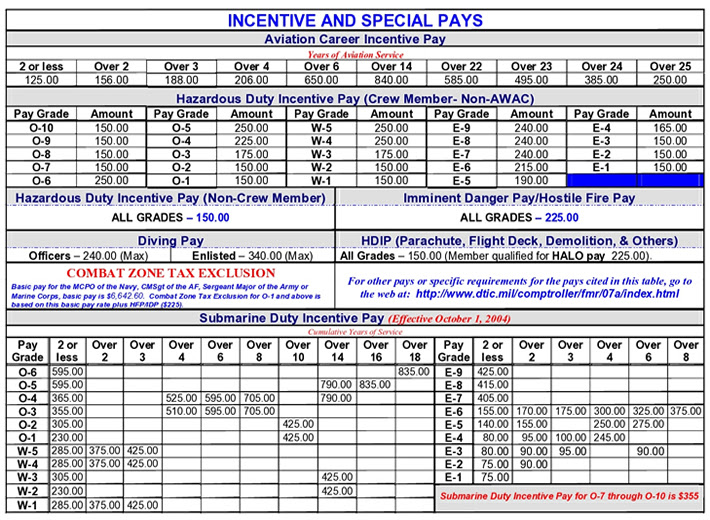
So your saying that pilots have to keep their Quals. to receive flight pay.
In the Navy as long as you have wings you receive FP. When Son was working in the Pentagon (Shore Duty) and Nimitz Air Boss he was not flying but still received FP. In the Navy there air many non flying jobs that require pilots to perform. Daughter received FP when she was the CO of a Reserve Unit in MT which was non flying job.
 
  • Like
Reactions: g5m
Army is Qualfied and Current for flight pay. As a master crew chief I was required to fly at least 1.5 hours each month to receive flight pay. Toward the end of my career it became a challenge to meet the requirements. Many months I didn't get my time or my flight pay. AR95-1 is the 'bible' for pilots/crew members on flight status.
 
  • Like
Reactions: g5m
Nowadays, to retain their flight status (and pay), helo pilots are required to fly 120 hours/yr., measured in 3-month increments (30 hers/quarter). [During the mid-2010's, pilots logged more like 200-250 hours/yr, particularly those in CABs that toured the middle east.] Helo pilots must climb a proficiency ladder. Pilot, then command pilot, then flight leader, then mission planner. They must also climb a competence ladder: NVG flying, dust landings, slings, mountain flying, Naval vessel take-off/landing, etc. During the time a pilot is closing in on CW3 promotion, he/she must also declare and pursue a specific "track": instructor pilot, weapons, maintenance test pilot. There are milestones for each of those tracks as well. And most all of those tracks also require flying time. These are the flight hours that are now harder to come by. [I'm ignoring the 10% of pilots who are commissioned officers. Those folks' proficiency, by the time they are mid-term captains, is flying a desk. 😁]
 
I recommend AAA+RV. It covers anything other than a car. I got it because I ride a motorcycle. But I hit them with a few hypotheticals like if "my plane" runs out of gas and I put down on the road and yes they would bring gas. Maybe not aviation grade but could probably get you to the next airport. If the wings fold they would probably flat bed it as well.
 

Latest posts

Back
Top