Just thought some people here might find this interesting.
My dad is a retired geologist from the university. Along the way his office of course got full to overflowing. When he retired, and he found out they were just taking all the stuff to the dumpster, he found locations to donate a lot of different fossils and artifacts.
This is from Pipestone National Monument. Well, it was apparently carved before it became a National Monument, which happened in 1937. This makes it legal, and I guess pretty old too. Now of course it isn't legal to remove material from a National Monument. It was carved by an Indian of the area. I just did some quick reading and it looks like the Dakota Sioux Indians have lived in and around the area since the 1700's.
Ok, beyond this, I have no more information about it. It's obviously a pipe and ashtray. The pipe looks like it needs a stem of some kind. It's never been used. I guess someday I'll get around to donating it back to the National Monument.
My daughter bought an art book a few weeks ago about the French Impressionists. There were a lot of pictures of different paintings, and many of them listed the location as a "private collection." I.e, never to be seen by the likes of mere mortals like us. That really bothers me. Why someone should have a Monet locked away where nobody can enjoy it. So yeah, I will send it to the museum there at the Pipestone National Monument. And to quote a good song, I've never been there, they tell me it's nice.
Here is the link to the National Park Service's webpage about Pipestone National Monument.
https://www.nps.gov/pipe/index.htm
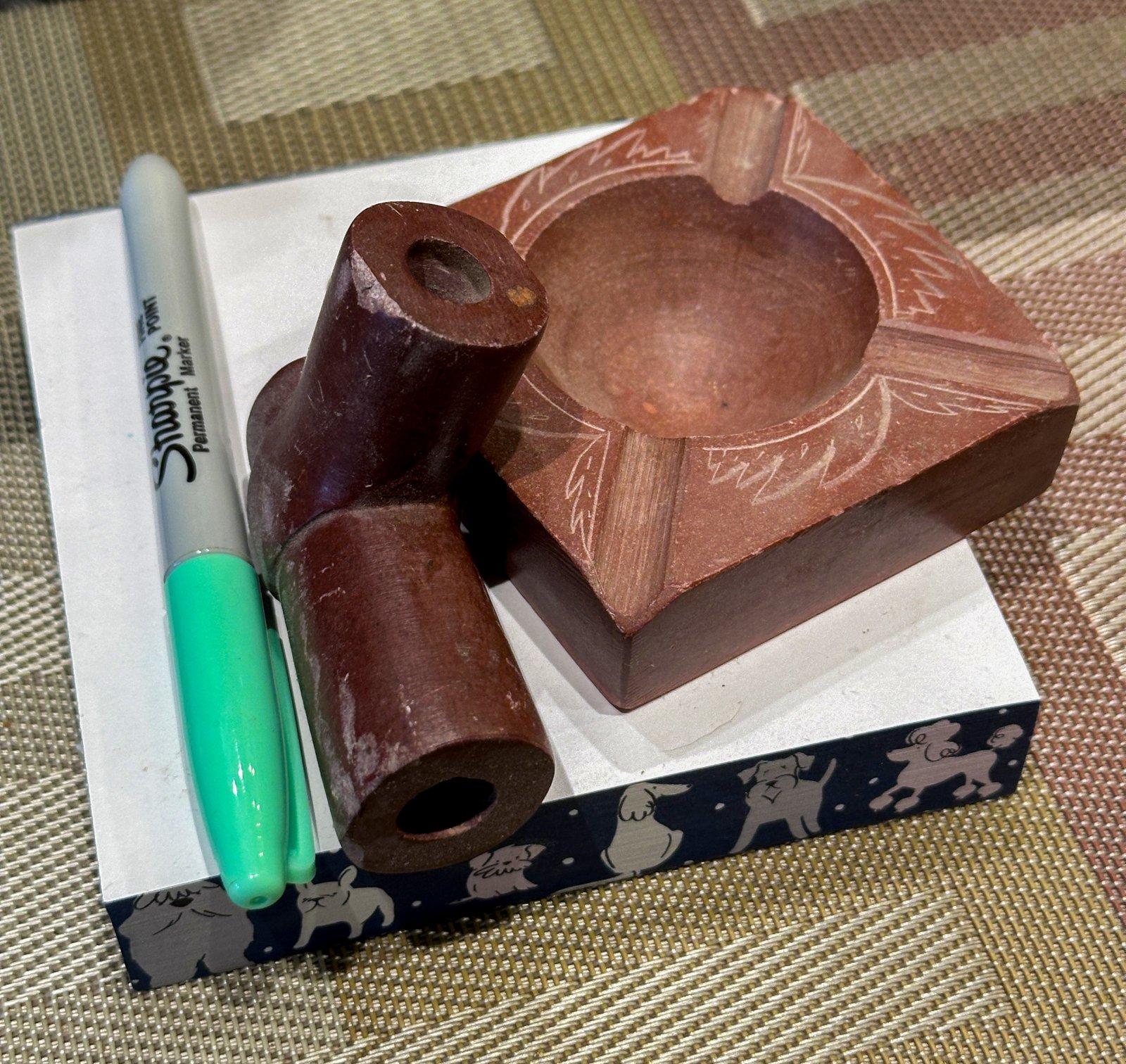
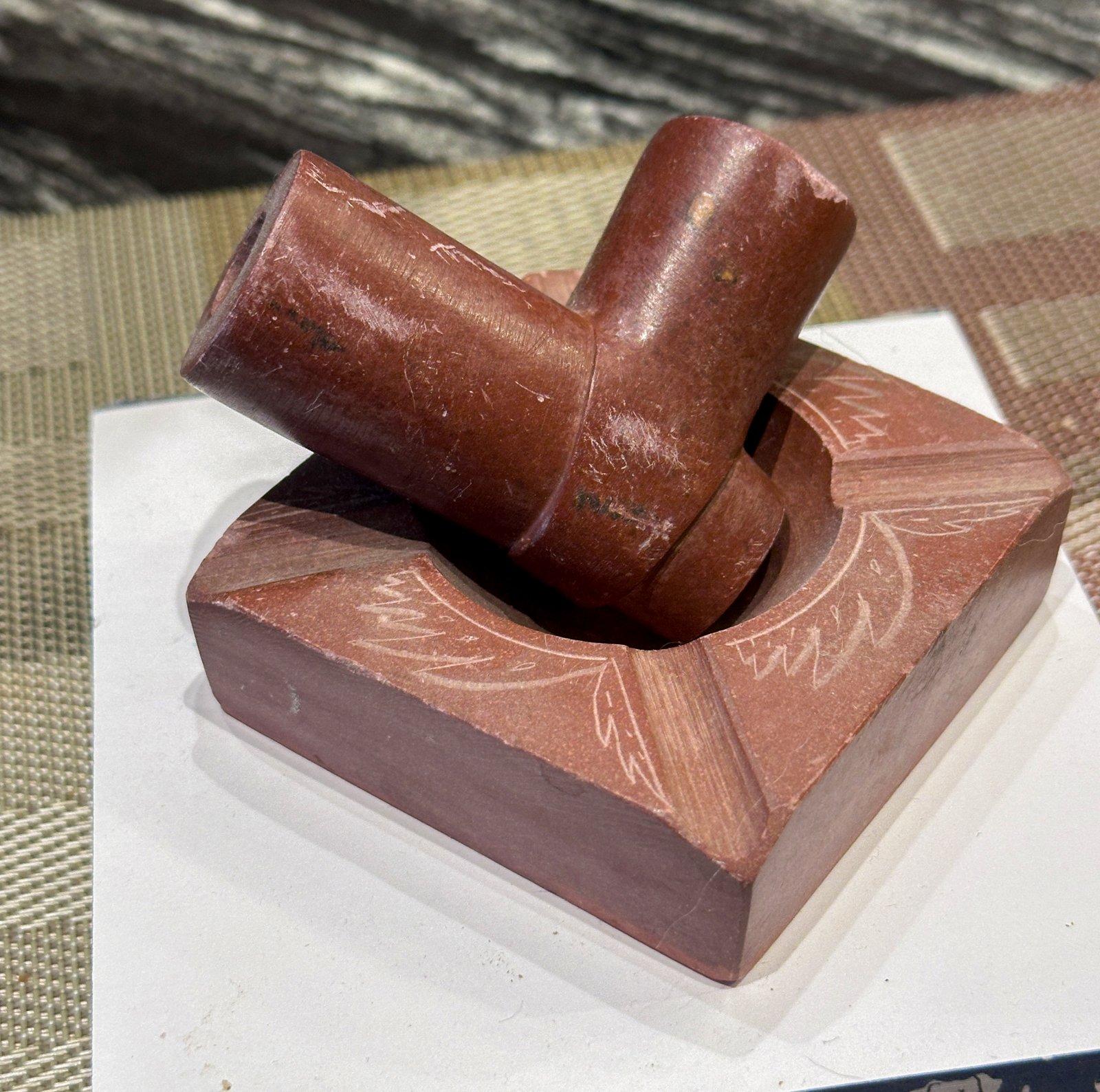
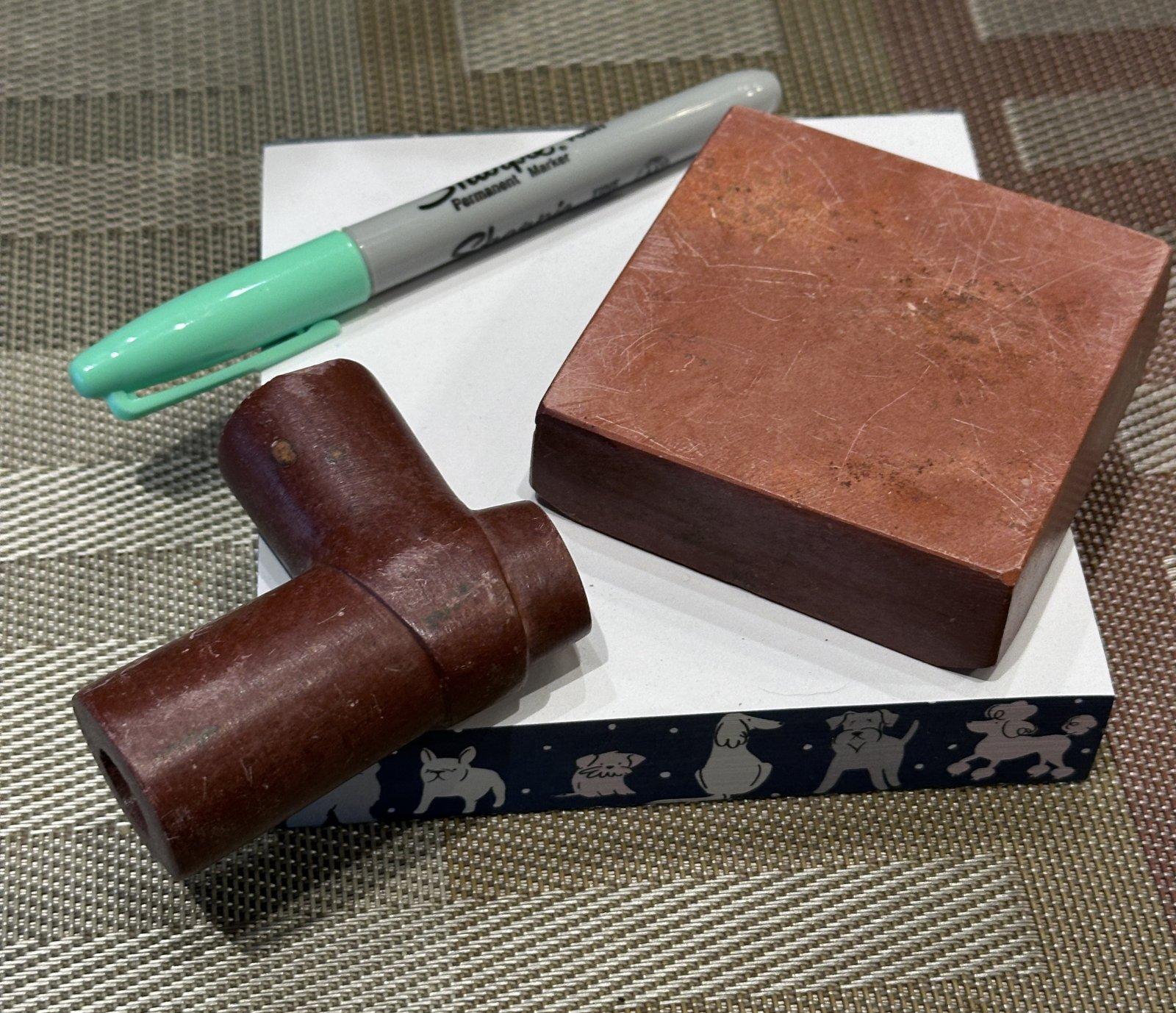
Oh, and here are a few pictures about the pipe and ashtray. It's carved, as I said. The material is very soft, you could probably scratch it with your finger nails. It reminds me of the Soapstone carvings you find in tourist traps. The color is red clay, it's really very nice, and just sitting on my shelf.
I've been meaning to post some pictures of it for a while now. I hope the pictures aren't too big.

My dad is a retired geologist from the university. Along the way his office of course got full to overflowing. When he retired, and he found out they were just taking all the stuff to the dumpster, he found locations to donate a lot of different fossils and artifacts.
This is from Pipestone National Monument. Well, it was apparently carved before it became a National Monument, which happened in 1937. This makes it legal, and I guess pretty old too. Now of course it isn't legal to remove material from a National Monument. It was carved by an Indian of the area. I just did some quick reading and it looks like the Dakota Sioux Indians have lived in and around the area since the 1700's.
Ok, beyond this, I have no more information about it. It's obviously a pipe and ashtray. The pipe looks like it needs a stem of some kind. It's never been used. I guess someday I'll get around to donating it back to the National Monument.
My daughter bought an art book a few weeks ago about the French Impressionists. There were a lot of pictures of different paintings, and many of them listed the location as a "private collection." I.e, never to be seen by the likes of mere mortals like us. That really bothers me. Why someone should have a Monet locked away where nobody can enjoy it. So yeah, I will send it to the museum there at the Pipestone National Monument. And to quote a good song, I've never been there, they tell me it's nice.
Here is the link to the National Park Service's webpage about Pipestone National Monument.
https://www.nps.gov/pipe/index.htm
Oh, and here are a few pictures about the pipe and ashtray. It's carved, as I said. The material is very soft, you could probably scratch it with your finger nails. It reminds me of the Soapstone carvings you find in tourist traps. The color is red clay, it's really very nice, and just sitting on my shelf.
I've been meaning to post some pictures of it for a while now. I hope the pictures aren't too big.