
You are using an out of date browser. It may not display this or other websites correctly.
You should upgrade or use an alternative browser.
You should upgrade or use an alternative browser.
Holster Repair Help
- Thread starter SWR
- Start date


- Joined
- Apr 3, 2012
- Messages
- 10,877
I use bag balm, it works great. But use at your own risk,  . It is not meant for leather but has been used by many people on leather for a long time. Check it’s ingredients and decide for yourself.
Bag balm has petrolatum (mineral oils & waxes), lanolin, parafin wax and an antiseptic.
My Dad swore by kiwi “mink” oil, it contains similar ingredients and lard. (It has very little if any mink oil in it).
“Mink” oil seems to feed mold. If you treat with bag balm you never get mold after.
. It is not meant for leather but has been used by many people on leather for a long time. Check it’s ingredients and decide for yourself. Bag balm has petrolatum (mineral oils & waxes), lanolin, parafin wax and an antiseptic.
My Dad swore by kiwi “mink” oil, it contains similar ingredients and lard. (It has very little if any mink oil in it).
“Mink” oil seems to feed mold. If you treat with bag balm you never get mold after.
Last edited:

Thank heaven. No one would want a cow with moldy utters.I use bag balm, it works great. But use at your own risk,
Its petrolatum, lanolin, parafin wax and an antiseptic.
My Dad swore by kiwi “mink” oil, it contains similar ingredients and lard. Mink oil seems to feed mold. If you treat with bag balm you never get mold after.
Busterswoodshop
Hunter
Mineral oil.
I have used it on everything from saddles to shoes.
I have used it on everything from saddles to shoes.
Neatsfoot Oil (Walmart or Ace Hardware. Not for moldy leather.)What have yall found to be the best conditioner to take a dry, stiff unlined holster and make it butter soft on the inside ?

GasGuzzler
Hawkeye
Post pics. I can fix it.



As an Amazon Associate we earn from qualifying purchases. Product prices and availability are accurate as of the date/time indicated and are subject to change.

This is what they use to rejuvenate old dry leather at the local saddle shop

Last edited:
Busterswoodshop
Hunter
In just about every leather conditioner or preservative out there , mineral oil is the main ingredient.
Neats foot oil , has mineral oil in it.
Mineral oil is also a good finish on wood bread boards and other wood dishes and bowls that are used for food.
Obviously you want to get a food grade oil for this.
It is all I use for these types of finish.
Do not use vegetable oil , it can get rancid.
Neats foot oil , has mineral oil in it.
Mineral oil is also a good finish on wood bread boards and other wood dishes and bowls that are used for food.
Obviously you want to get a food grade oil for this.
It is all I use for these types of finish.
Do not use vegetable oil , it can get rancid.
Last edited:

Baxter6551
Single-Sixer
Be aware that any of these products will soften the leather and potentially cause the holster to loose shape and function.
I would suggest simple kiwi shoe polish and a couple of tooth brushes and rags.
I would suggest simple kiwi shoe polish and a couple of tooth brushes and rags.

Grew up using kiwi mink, and aIso neatsfoot, but now use feibings. boots, shoes, belts, knife sheaths and cases, and some holsters. Dye and then shoepolish, bottle or wax, on duty belts and duty boots and shoes for nice places, dye and oil and sometimes wax (no bottle) for patrol boots outside office situations. I have even used beeswax on holsters, it sheds water but dosent soften it or prevent cracking. Anything that will penetrate to the inside will also gather dust and be a dirt magnet to the inside of the holster, which will get dirty inside without any oil anyway.. And i havent figured out how to keep brass, copper, or nickle from growing verdegris, oil dosent stop it but seems to feed it. And no matter how you oil it, some leather cracks and breaks down faster than others. oil tanned latigo is softest, and longest lasting of anything leather i have. Alum tanned i avoid, but most leather seems to be "vegetable tanned", with chrome tanning for things like stiff holsters or shoeleather. If it squeaks, its probably chrometanned.
Your holster is likely chrometanned, it will never get buttery soft, but it can be softened. I have made holsters and sheathes from both veggie or chrome tanned, depending on whether i want it to flex or not. I have even made a few sheathes, no holsters yet, with chrome (top-split) for stiff lining, but dont like inside splits for that, and would rather chrome topsplit inside and outside were i to build another lined one. and wouldnt saturate it because chrome wont get butterysoft anyway. The soft you want should have been made from veggetable-tanned leather. Silk purse/sow's ear thing, there. You can only soften chrometan just so much, and the thicker it is the stiffer it will stay.
Your holster is likely chrometanned, it will never get buttery soft, but it can be softened. I have made holsters and sheathes from both veggie or chrome tanned, depending on whether i want it to flex or not. I have even made a few sheathes, no holsters yet, with chrome (top-split) for stiff lining, but dont like inside splits for that, and would rather chrome topsplit inside and outside were i to build another lined one. and wouldnt saturate it because chrome wont get butterysoft anyway. The soft you want should have been made from veggetable-tanned leather. Silk purse/sow's ear thing, there. You can only soften chrometan just so much, and the thicker it is the stiffer it will stay.
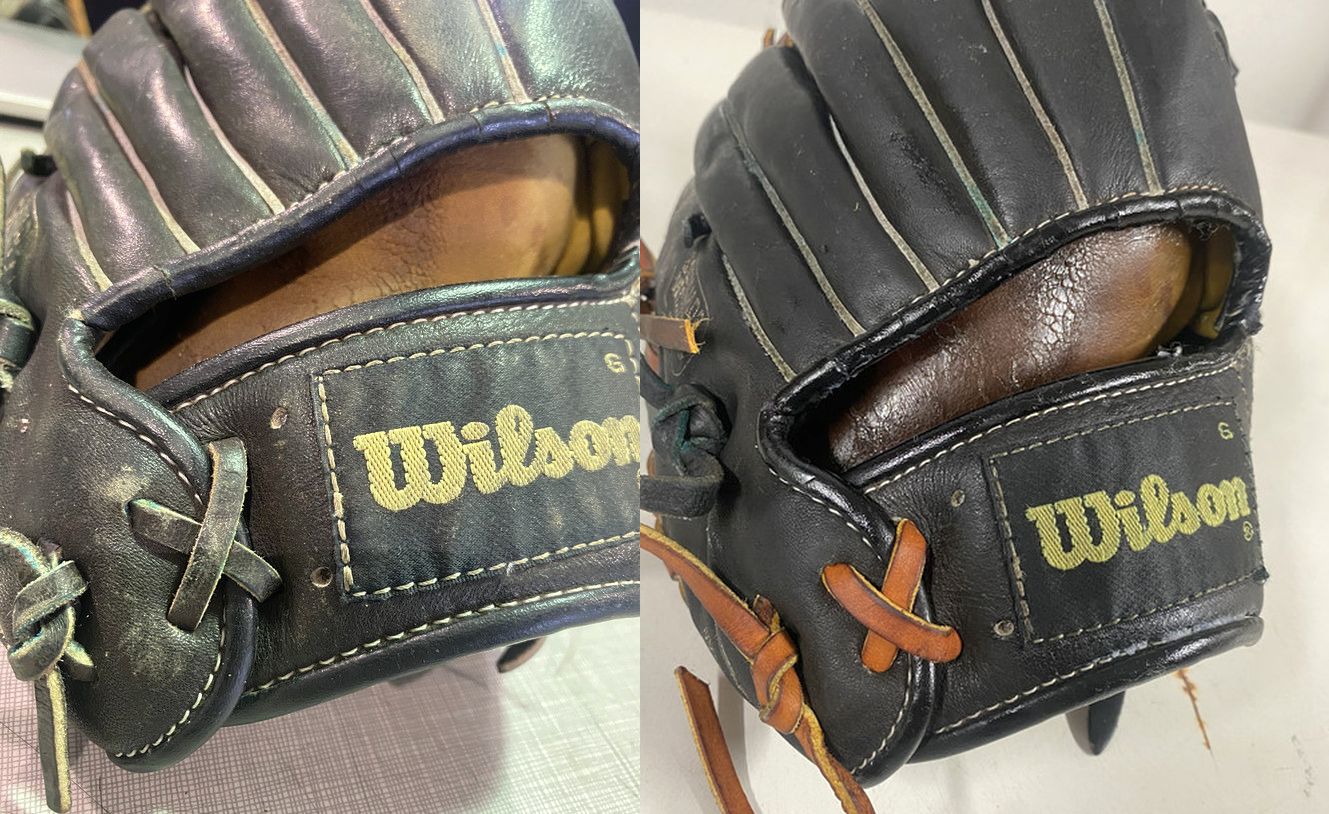
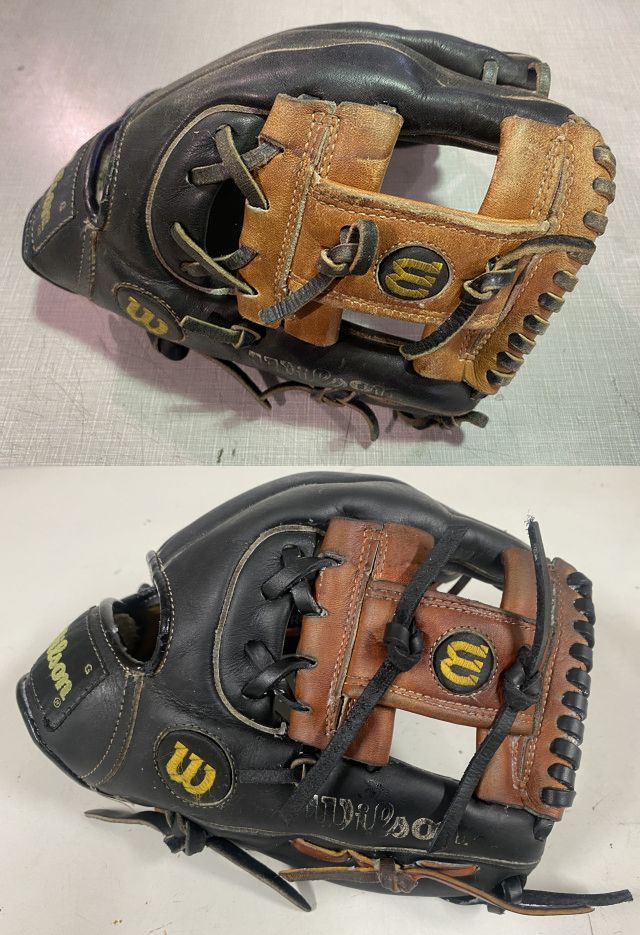
Neetsfoot Oil rejuvenated my dad's pre-WW II baseball glove. Whether it is the "best" leather conditioner or not, it works. With dad's instruction, I used Neetsfoot Oil on my baseball gloves, my baseball shoes...everything I owned that was made from leather. No complaints. And the leather never deteriorated - except from use.
Dad even used it on the leather covered up by his pitcher's toe plate (a curved piece of steel that attached, using screws, to the toe and inside edge of the baseball cleat). Dad had played semi-pro baseball before WW II (at age 16, he was selected as the Dallas/Fort Worth area's outstanding amateur/semi-pro baseball player in the summer of 1941). When he returned home after the war, dad was hired by an insurance company to pitch for for the company's softball team while he learned the casualty insurance business. Dad was good...good enough that at the end of WW II, while his team was playing in military tournaments in the Bay area waiting for their discharges, major league scouts for the Phillies and A's each tried to sign dad to pro contracts. [Dad passed up these offers. His family needed dad to return home and get a job to help support the family.]
Times were tough and dad couldn't afford to buy replacement cleats. So, dad - a lefthanded pitcher and outfielder - did everything he could to extend the life of his cleats and glove. [Pitchers frequently scrubbed a hole on the inside edge of their "push-off foot" - left foot for lefties, right foot for righties. Softball pitchers abused their shoes even more that hardball pitchers did.] Once or twice each year, I'd watch dad unscrew that steel toe plate, then and slosh/massage Neetsfoot oil into the now-uncovered leather and let it soak for a while. Then he'd reglue the shoe sole (if it was separating), plug the screw holes in the sole and apply multiple coats of neutral, followed by black shoe polish to the entire shoe. Only then would he re-attach the toe plate. His toe plates came with a leather attachment that allowed the plate to be both screwed into the bottom of the sole and also secured/interlaced with the shoelaces. Toe plates so attached weren't going anywhere.
My badge of honor came when dad bought a pitcher's toe plate for my baseball shoes. I had arrived!!! [It also meant my feet had stopped growing.] I was a decent baseball player, but not of dad's caliber. My youngest son, on the other hand, was Academic All-state on his high school's Texas state championship team, and he was the starting pitcher/manager on UT-Austin's club baseball team (a team comprising high school varsity baseball players and which played against other D1 college club teams in the southeastern US. Occasionally, this team produced a walk-on candidate to the UT varsity team). My oldest son, blind as a bat before his Lasik surgery, placed 4th at Texas' state wrestling meet at 132 lbs. Lasik surgery corrected his vision and he's now a CW4 Blackhawk pilot. My daughter's high school soccer team was Texas' state champion her senior year. We were/are a competitive family.
Dad even used it on the leather covered up by his pitcher's toe plate (a curved piece of steel that attached, using screws, to the toe and inside edge of the baseball cleat). Dad had played semi-pro baseball before WW II (at age 16, he was selected as the Dallas/Fort Worth area's outstanding amateur/semi-pro baseball player in the summer of 1941). When he returned home after the war, dad was hired by an insurance company to pitch for for the company's softball team while he learned the casualty insurance business. Dad was good...good enough that at the end of WW II, while his team was playing in military tournaments in the Bay area waiting for their discharges, major league scouts for the Phillies and A's each tried to sign dad to pro contracts. [Dad passed up these offers. His family needed dad to return home and get a job to help support the family.]
Times were tough and dad couldn't afford to buy replacement cleats. So, dad - a lefthanded pitcher and outfielder - did everything he could to extend the life of his cleats and glove. [Pitchers frequently scrubbed a hole on the inside edge of their "push-off foot" - left foot for lefties, right foot for righties. Softball pitchers abused their shoes even more that hardball pitchers did.] Once or twice each year, I'd watch dad unscrew that steel toe plate, then and slosh/massage Neetsfoot oil into the now-uncovered leather and let it soak for a while. Then he'd reglue the shoe sole (if it was separating), plug the screw holes in the sole and apply multiple coats of neutral, followed by black shoe polish to the entire shoe. Only then would he re-attach the toe plate. His toe plates came with a leather attachment that allowed the plate to be both screwed into the bottom of the sole and also secured/interlaced with the shoelaces. Toe plates so attached weren't going anywhere.
My badge of honor came when dad bought a pitcher's toe plate for my baseball shoes. I had arrived!!! [It also meant my feet had stopped growing.] I was a decent baseball player, but not of dad's caliber. My youngest son, on the other hand, was Academic All-state on his high school's Texas state championship team, and he was the starting pitcher/manager on UT-Austin's club baseball team (a team comprising high school varsity baseball players and which played against other D1 college club teams in the southeastern US. Occasionally, this team produced a walk-on candidate to the UT varsity team). My oldest son, blind as a bat before his Lasik surgery, placed 4th at Texas' state wrestling meet at 132 lbs. Lasik surgery corrected his vision and he's now a CW4 Blackhawk pilot. My daughter's high school soccer team was Texas' state champion her senior year. We were/are a competitive family.
Last edited:
Sun, dizzelfuel, and roadsalt kill bootleather. Have managed to not spill def on'em.Neetsfoot Oil rejuvenated my dad's pre-WW II baseball glove. Whether it is the "best" leather conditioner or not, it works. With dad's instruction, I used Neetsfoot Oil on my baseball gloves, my baseball shoes...everything I owned that was made from leather. No complaints. And the leather never deteriorated - except from use.
- Joined
- Apr 3, 2012
- Messages
- 10,877
If you are worried about scratches. Do not put it in an unlined holster.
All it takes is 1 grain of sand trapped in the leather to make a scratch.
All it takes is 1 grain of sand trapped in the leather to make a scratch.
Last edited:
Yeah, it will. But while oiling it will make it softer, it will hang onto every mite of grit that falls into there, and over time will become a very smooth micro-grit strop, and what it will do to the blueing will give it a soft sheen. Burnished, almost. Holster wear is unavoidable.Well, to clarify, its a Bianchi thumb break holster for a Redhawk. But it is so dry , prickly and stiff on the inside I am afraid it will scratch the blueing
HOWEVER!
Alcohol will soften the leather (and may do a number on the outer finish) but the higher proof the less water in it, as in denatured industrial alcohol; it softens it, allows it to be worked (burnished or boned) and usually evaporates before it absorbs enough atmospheric water to rust anything, and you will get a smoother interior finish. You work the leather up against the steel and it wont shrink like with water; you form it and take the gun out and wipe it down the way you do, and the leather will dry far faster than with water. If it feels cool, it is still evaporating. This will smooth out the spikes you are objecting to. may need to do it several times, but you will see the work you are doing. The alky will dry out ALL the oil, so you then oil it, lightest possible oil you can find, soaks in faster, than heavier oil. Some mink and neatsfoot used to have rubber cement in it for waterproofability, ya dont want that in there. Brush it in from the inside and remember it will collect all the dust it can and hone an antique worn finish, first on the higher points of the gun, later everywhere it contacts it. No holster is perfect, but honest in-the-holster wear beats real-world, no-holster exposure. You are trying to limit holster wear, but you cannot eliminate it.
Last edited:
That’s the bad thing about carrying a gun in a holster, it marks up the gun finish. So, I think of my guns as tools for use, and if you use something it will wear. Otherwise, a gun could be kept in the box for viewing.Well, to clarify, its a Bianchi thumb break holster for a Redhawk. But it is so dry , prickly and stiff on the inside I am afraid it will scratch the blueing
GasGuzzler
Hawkeye
Picture is worth a thousand words. Hard to give good advice without seeing the patient.
model70man
Bearcat
- Joined
- Feb 26, 2016
- Messages
- 60
I used to use Mink Oil, but when my leather rifle sling came apart, and my rifle barrel hit the ground, I stopped.
So do you feel mineral oil would be ok ?Yeah, it will. But while oiling it will make it softer, it will hang onto every mite of grit that falls into there, and over time will become a very smooth micro-grit strop, and what it will do to the blueing will give it a soft sheen. Burnished, almost. Holster wear is unavoidable.
HOWEVER!
Alcohol will soften the leather (and may do a number on the outer finish) but the higher proof the less water in it, as in denatured industrial alcohol; it softens it, allows it to be worked (burnished or boned) and usually evaporates before it absorbs enough atmospheric water to rust anything, and you will get a smoother interior finish. You work the leather up against the steel and it wont shrink like water, you form it and take the gun out and wipe it down the way you do, and the leathervwill dry far faster than with water. If it feels cool, it is still evaporating. This will smoith out the spikes you are objecting to. may need to do it several times, but you will see the work you are doing. The alky will dry out ALL the oil, so you then oil it, lightest possible oil you can find, soaks in faster, than heavier oil. Some mink and neatsfoot used to have rubber cement in it for waterproofability, ya dont want that in there. Brush it in from the inside and remember it will collect all the dust it can and hone an antique worn finish, first on the higher points of the gun, later everywhere it contacts it. No holster is perfect, but honest in-the-holster wear beats real-world, no-holster exposure. You are trying to limit holster wear, but you cannot eliminate it.
- Joined
- Apr 3, 2012
- Messages
- 10,877
I used to use Mink Oil, but when my leather rifle sling came apart, and my rifle barrel hit the ground, I stopped.
Did the stitching fail? Or the leather?
it is a variable componnent in many leather treatments for outdoors use. i could suggest something like car leather conditioners, inside and out, if the finish survives working it with alcohol, or just ferget the professional-type fitting work and give it some meguiars, in and out. Havent looked in a while (i still have some, somewhere) but even supermarkets used to have kiwi et.al. in the shoecare section, and they used to sell little balls of wool on a twisted wire handle. The meguiars may be found in the car care of the same store. Its the stuff they put on classic car leather. But i have never worked on a holster to smooth it out inside. Ol'john had a decent rep for his products, but its the impala/fairlane/cessna 172 middle-ground standard; its what gets compared to, as better or worse than a bianchi. I havent handled your example, but while i have polishwaxed a few holsters, i also have only oiled one holster, ever, it was a n-frame i cut down for my first duty pistol, a k-frame. I still have it, but i oiled it because i wanted it to survive patrolling the base in any and all weather and conditions, and while a finely fettled example (the best of the batch), the ol' 38 had been surplussed out by the boston p.d. and wasent a collector piece.So do you feel mineral oil would be ok ?
Holster wear is unavoidable. Do you have a Tandy leather store nearby? Or a saddle shop, even. A walk-in visit to a custom leatherworker who specialises in holsters is an idea, as would be calling one. I am a hobbyist who has never been paid for any of my leatherwork. I only know what i would be doing with it, and this requires handling it for accurate analysis and best results.
Any holster will cause wear on the gun, however microscopically it may be. They will all collect dirt, whether oiled or dry. stiff leather wont scratch the hard gunfinish, but any dirt will. You may think you live a clean life, but a thousand tons of meteoritic dust falls thru our atmosphere every day, and short of holstering it in a ziplock baggie you WILL be coming in contact with your fair share of it. A masterly made, fitted, and maintained holster WILL eventually wear-polish the gun. Caint get away from it, except leave it in the glassfront case in the vault.
Yeah, i think short of visiting a holstermaker, go wit meguiars, and look for a tandy leather store or saddlemaker/leather repair shop to talk shop with.
No leather treatment will totally keep leather. It makes good leather last longer, but will not repair or strengthen old, abused or cheap leather productsI used to use Mink Oil, but when my leather rifle sling came apart, and my rifle barrel hit the ground, I stopped.
- Joined
- Apr 3, 2012
- Messages
- 10,877
For smoothing the rough leather interior, some people use wax paper. The kind to wrap sandwiches.
I heard it recommended to wrap the gun in the wax paper and holster it, but that will stretch the holster some
If the holster isn’t tight maybe try rubbing or buffing the leather with a sheet.
I heard it recommended to wrap the gun in the wax paper and holster it, but that will stretch the holster some
If the holster isn’t tight maybe try rubbing or buffing the leather with a sheet.
model70man
Bearcat
- Joined
- Feb 26, 2016
- Messages
- 60
It wasn't the stitching. It was the leather strap that separated at the front sling swivel. It was a Hunter brand Hunter sling like JOC used. Thank you.Did the stitching fail? Or the leather?

protoolman
Service-Sixer
Mink oil to soften up old dried up holsters for me. And shoe polish for my police duty gear on the outside.
Cheaper than meguiars. Never heard of it, tho, but i wont say no.For smoothing the rough leather interior, some people use wax paper. The kind to wrap sandwiches.
I heard it recommended to wrap the gun in the wax paper and holster it, but that will stretch the holster some
If the holster isn’t tight maybe try rubbing or buffing the leather with a sheet.
Now ya know why some people dont like anything from hunter.It wasn't the stitching. It was the leather strap that separated at the front sling swivel. It was a Hunter brand Hunter sling like JOC used. Thank you.
GasGuzzler
Hawkeye
I give up
model70man
Bearcat
- Joined
- Feb 26, 2016
- Messages
- 60
I've never had a problem with Hunter products, and I've been using them for over six decades. I do not like their unlined holsters, though. I like their simple 1" slings because mine never had a turquoise monster grizzly and my gigantic colored initials in the broadest part of the cobra-shaped body. It's also the sling style that JOC used a lot. PS: My Mink Oiled boots came apart, too.Now ya know why some people dont like anything from hunter.
Last edited:


