blueing question

Joined
Jan 10, 2005
Messages
4,573
City & State/Province
Alexandria, LA USA
I’ve always considered case color hardened attractive and looking at the true case colored work being done have a project in mind. I notice that when case color to refinish a firearm it’s never done to the cylinder or the barrel. I’ve assumed for a long time it was to protect the strength and integrity of those two parts of the firearms, which would take the most abuse from pressure when the cylinder is fired.
I might be wrong and if I am, I would like to hear the explanation.
 
Last edited:
I have read that it would make the cylinder too hard and brittle. I assume the same for the barrel. I think originally the receivers were made out of different metal and CCH made them more durable. I'm sure there's a lot more to it than that...
 
First we need to make the distinction between case hardening and case coloring. Originally, frames were made from softer iron or steel and they needed the surface hardening to make them more durable. That's the reason for color case hardened frames, hammers and triggers on original Colt percussion revolvers and SAA's, Winchester and Marlin leverguns, among many others. It generally hasn't been necessary since the early 1900's but folks like the way it looks.

Doug Turnbull figured out how to put authentic case colors on Ruger's cast frames without getting the parts hot enough to make them brittle. That sort of process could be applied to nearly any part. The reason you don't see cylinders and barrels done that way is that it's not traditional. Folks want case colors on their frames, hammers and triggers because those are the parts that were historically case colored.

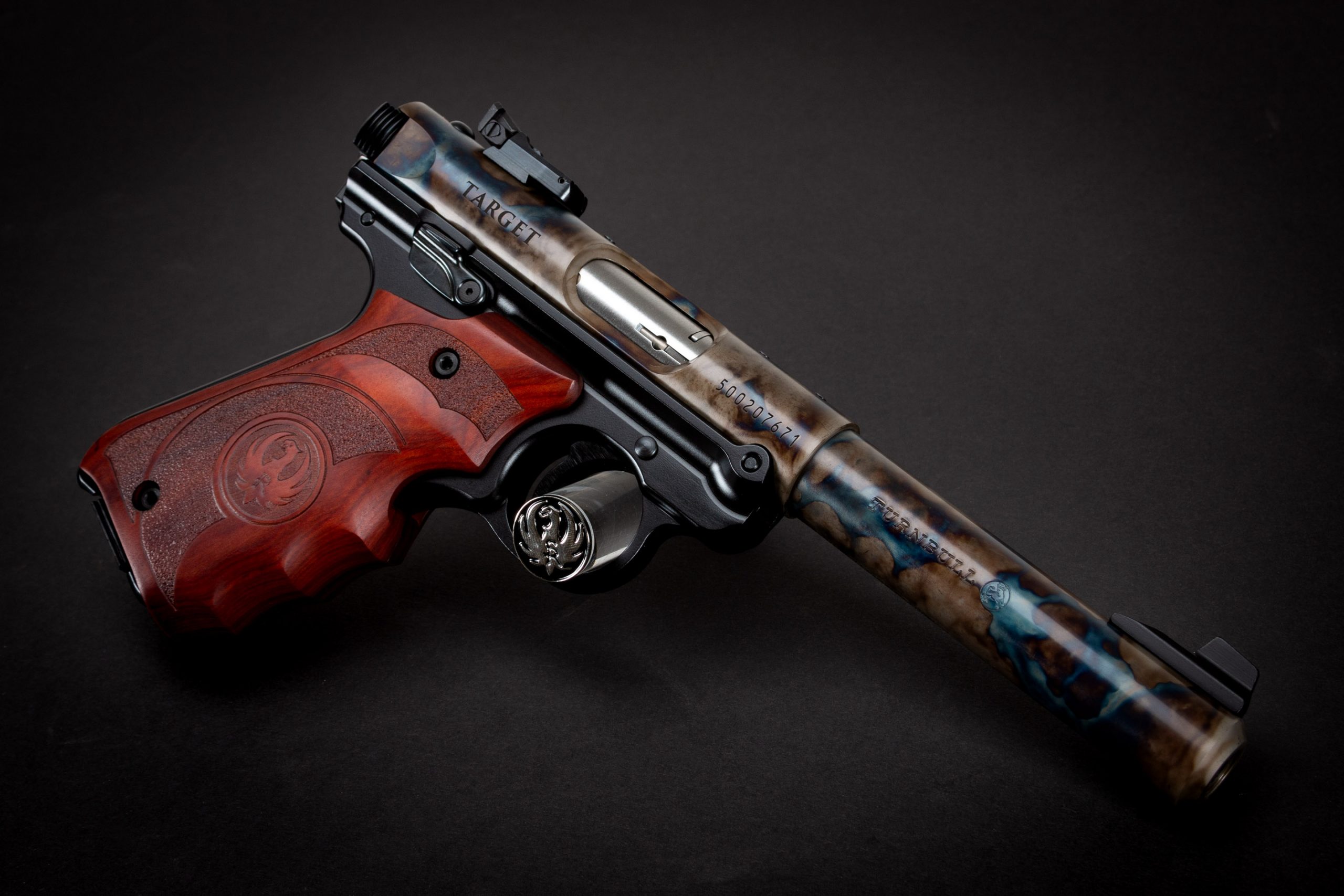
An exception to this would be the Ruger MK-series Turnbull has done, which included the barrel.

1764784210800.jpeg
 
For your project: Work with your gunsmith to select the correct, period-appropriate mild steel for the frame and have it beautifully color-cased. Ensure the barrel and cylinder (if applicable) are made from the proper alloy steel, heat-treated correctly, and finished in a complementary blued or plated finish. This will result in a firearm that is both stunningly beautiful and utterly safe.
 
Back
Top