Who knoweth?

I was led to believe that this was a result of Ralph Nader's lobbying with congress. Military jeeps will flip just by looking harshly at them, and he and his handlers didn't want them on the market supposedly for safety reasons. It may well have been that the competition against the automakers was the driving force; who knows at this late date?

I do know that my father believed that he could buy an intact, complete Jeep for some ridiculously low figure to his dying day, even after I took pictures of jeeps being demiled and sent them to him.
Andrews AFB, Maryland, late 1960s. Off base used car lot was selling 'lightly used' militray jeeps for $500. I noted that they were all 12 volt systems and I suspected they were from military air drops (you know where they were strapped to a pallet and a parchute and dropped probably in a logistics exercise.)
My loving spouse announced she was pregnant and that was the end of my dream of owning one of them.
 
I don't see your analogy there. I see it pretty well the same as removing bodies from an auto wreck. Certainly any remains should be treated with respect, but salvage operations should be permitted if there is no other law governing. Years ago working at FedEx hub in Memphis, there was the possibility of uncovering human remains. Work was suspended if found and resumed only after respectful removal of the remains were finished.

Bob Wright
Well, Bob, in BBB's anology the bones are an ancillary product to the goal of getting treasure. That's close.

Your bones/bodies are the goal and car parts (?) are ancillary.

The whole purpose of mentioning
the steel scrappers was to generate attention to the fact those bones are of American Servicemen that need to be legally protected.
I've started and participated in semantics; got to be more careful.
 
Was a very common practice until the 1970's, when the carrier FDR was going to decommissioned after returning from it's last Mediterranean cruise the guy's pitched every over the side that they didn't want to have to carry off the ship in port.
This was a common practice in the eighties. When the air wing (CAG) moved aboard ship for work ups, All the stuff that you might need for the deployment was taken aboard. Desks, refrigerators, chairs, etc. When the deployment was over and you had been relieved, we chucked all the stuff we didn’t want to off load over the side. Now I am not saying this was done with anyone’s approval. You were not supposed to do it, but under cover of night? Things got lost. The sea bed from Rota , Spain to Norfolk and from Hawaii to California is literates with all sorts of office and kitchen appliances.
 
This was a common practice in the eighties. When the air wing (CAG) moved aboard ship for work ups, All the stuff that you might need for the deployment was taken aboard. Desks, refrigerators, chairs, etc. When the deployment was over and you had been relieved, we chucked all the stuff we didn’t want to off load over the side. Now I am not saying this was done with anyone’s approval. You were not supposed to do it, but under cover of night? Things got lost. The sea bed from Rota , Spain to Norfolk and from Hawaii to California is literates with all sorts of office and kitchen appliances.
The old veteran whom I bought my house from told stories from the WW2 about all the equipment they shoved overboard . He said they had huge piles of brand new tires they piled up on the beach and set on fire .He did bring back some cool Japanese souvenirs . 😉 The man is long gone now , But He was full of war stories from the south Pacific .
 
Buddy of mine has a big bronze porthole in his mancave wall. I framed it in with rough cut oak 2x4 and big lag bolts and reinforced the house stud wall outside with a 1/2" marine grade plywood gusset two studs wide either side of it it's hole as well. Heavy bastard to finally get it square and plumb. He got it from the cruiser Celeste that was swamped in a typhoon while being towed near Guam. Perks of being a master chief on Guam Admiral's staff I guess.
 
As an Amazon Associate we earn from qualifying purchases. Product prices and availability are accurate as of the date/time indicated and are subject to change.
I found this picture fascinating
IMG_2093.png
 
In the Navy I was in Flight Hours were calculated by fuel consumption.

So, aircraft would fly about 2,000 feet or higher over the ocean and dump fuel to show they flew the hours when they returned to the boat or base.

Happened at the end of each quarter and end of the fiscal year.

Thousands of gallons.

Very common practice, so it was not just things being dumped in the ocean.
 
Yup, an essay on The Sea.
Title: "The Oceans Abide"

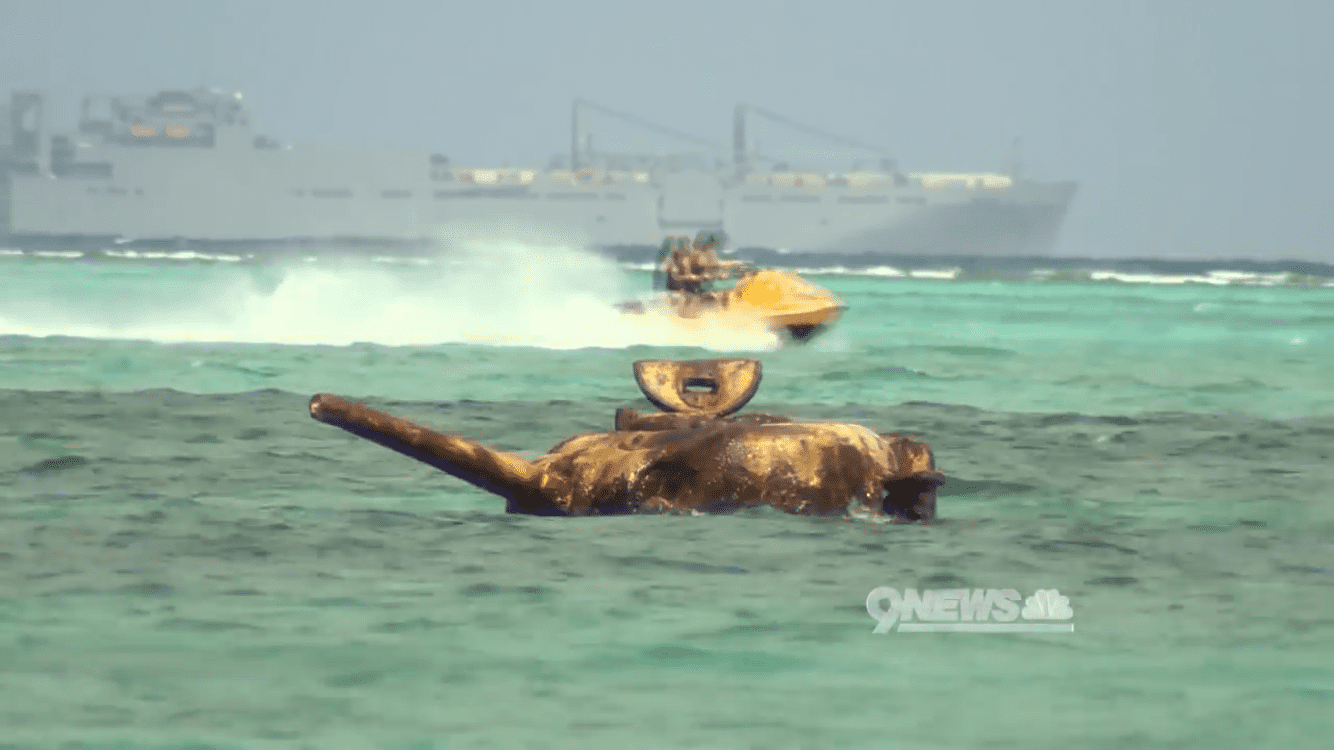
Maybe that 'trinket' in the surf is what the Sailors dumped over the rail, and was washed ashore.
It could be a Japanese tank, in
which case a Marine dumped it.
In the Navy I was in Flight Hours were calculated by fuel consumption.

So, aircraft would fly about 2,000 feet or higher over the ocean and dump fuel to show they flew the hours when they returned to the boat or base.

Happened at the end of each quarter and end of the fiscal year.

Thousands of gallons.

Very common practice, so it was not just things being dumped in the ocean.
I'm just an amateur scientist, my but best guess is that jet fuel biodegrades faster than refrigerators and desks.
Measuring flight hours by fuel consumption; does the Navy tote
airframe and engine time by fuel consumption?
 
Yup, an essay on The Sea.
Title: "The Oceans Abide"

Maybe that 'trinket' in the surf is what the Sailors dumped over the rail, and was washed ashore.
It could be a Japanese tank, in
which case a Marine dumped it.

I'm just an amateur scientist, my but best guess is that jet fuel biodegrades faster than refrigerators and desks.
Measuring flight hours by fuel consumption; does the Navy tote
airframe and engine time by fuel consumption?
It was all based on pounds of fuel used an hour, so every aircraft has a predetermined burn rate.

I didn't care about the pollution.

I cared about people being dishonest, flight time on parts being wrong, but worst of all the fuel dump valve being stuck open in flight and loosing an aircraft to this stupid practice.

Fuel dump systems on military helicopter's we are only testing the electric parts, so no one know if the valve will close properly after opening.

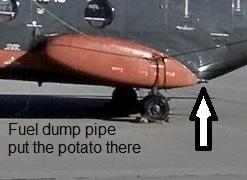
When we had H-46 helicopters a potato was one of the your best tools if you were working on the fuel dump valves. Yes, it sounds strange, but you could put the potato in fuel exit port and at least stop the fuel still on the ground.

FEC369F1-FEA2-444E-A704-B6038ABEC3EB.jpeg
 
Back in the late 1960's I had a friend that worked at Mare Island Navel Shipyard. He use to tell everyone that there was warehouses full of WW2 Harley Davidson motorcycles unused packed in wooden crates and all they need were new tires because the original tires had dry rot from old age. He said you could buy the bikes for $50.00 each, but you had to buy 500 at a time. Nobody ever believed him as he smoked those funny smelling cigarettes. Years later my late father inlaw worked at Travis Air Force base and later at Mare Island Navel Shipyard running auctions every month selling surplus military items. He brought home some neat stuff.

CHEVYINLINE6.
 
I am a Marine so you'll have to excuse my ignorance of Navy fuel metrics.
I would be very upset if I found a flight/ground crew putting potatoes into any aircraft, ever!

F-4s had no provision for dumping fuel except from wingtanks. All internal fuel left the a/c via the exhaust pipe, except venting.
Without breaking out the NATOPS I think the internals were ~9,600# and the external wing tanks held about 3,000#. But that could be off.

In Vietnam, CAS strikes were rarely > 1.2 hrs, targets were very close.
A tight 4 or 5G bomb pattern using lots of burner to keep airspeed high, pretty much put you back down on the runway with 1,000#,
doing the required external fuel dump over land, before turn and burn target time.

Going up to strike targets in North Vietnam, external fuel was not dumped, sometimes aerial refueling was required.

All this boring flight ops description was only to help
explain how this Marine might
react to putative potatoe pusher.

I didn't understand your last paragraph.

Thank you
 
I am a Marine so you'll have to excuse my ignorance of Navy fuel metrics.
I would be very upset if I found a flight/ground crew putting potatoes into any aircraft, ever!

F-4s had no provision for dumping fuel except from wingtanks. All internal fuel left the a/c via the exhaust pipe, except venting.
Without breaking out the NATOPS I think the internals were ~9,600# and the external wing tanks held about 3,000#. But that could be off.

In Vietnam, CAS strikes were rarely > 1.2 hrs, targets were very close.
A tight 4 or 5G bomb pattern using lots of burner to keep airspeed high, pretty much put you back down on the runway with 1,000#,
doing the required external fuel dump over land, before turn and burn target time.

Going up to strike targets in North Vietnam, external fuel was not dumped, sometimes aerial refueling was required.

All this boring flight ops description was only to help
explain how this Marine might
react to putative potatoe pusher.

I didn't understand your last paragraph.

Thank you
Cargo helicopters usually fly with their max fuel load because they need distance and time on station.

The F-4 was fueled to match the mission, distance to target and it's bomb or missile load.

We tested the fuel dump system during an inspection cycle on H-46's and sometimes it did not shutoff or reset, so we needed to stop the fuel coming out.

On other helicopter we would just test the wiring from the cockpit to the valve.

The helicopter's had a fuel dump system because dumping fuel could keep it in the air if it lost an engine or had another emergency.
 
I understand now what you were talking about. The fuel dump valve on the H-46 would not shut off after ground test so the fuel just kept pouring out of the valve. The potato was used to stop the flow. Surely you didn’t mean to say you flew them like that?
 
I am a Marine so you'll have to excuse my ignorance of Navy fuel metrics.
I would be very upset if I found a flight/ground crew putting potatoes into any aircraft, ever!

F-4s had no provision for dumping fuel except from wingtanks. All internal fuel left the a/c via the exhaust pipe, except venting.
Without breaking out the NATOPS I think the internals were ~9,600# and the external wing tanks held about 3,000#. But that could be off.

In Vietnam, CAS strikes were rarely > 1.2 hrs, targets were very close.
A tight 4 or 5G bomb pattern using lots of burner to keep airspeed high, pretty much put you back down on the runway with 1,000#,
doing the required external fuel dump over land, before turn and burn target time.

Going up to strike targets in North Vietnam, external fuel was not dumped, sometimes aerial refueling was required.

All this boring flight ops description was only to help
explain how this Marine might
react to putative potatoe pusher.

I didn't understand your last paragraph.

Thank you
I learned something new today.. I did not know that the F4 did not have an internal fuel dump.
 
Cargo helicopters usually fly with their max fuel load because they need distance and time on station.

The F-4 was fueled to match the mission, distance to target and it's bomb or missile load.

We tested the fuel dump system during an inspection cycle on H-46's and sometimes it did not shutoff or reset, so we needed to stop the fuel coming out.

On other helicopter we would just test the wiring from the cockpit to the valve.

The helicopter's had a fuel dump system because dumping fuel could keep it in the air if it lost an engine or had another emergency.
- If you say Navy cargo Helos were fueled to the max for endurance, sure thing, I have no experience.

If you say Navy F-4s were uniquely fuel loaded depending on the assigned mission (variability of TO
fuel stores being a function of 'assigned' flying distance and book value of consumption rate of fuel?
Additional fuel may be added or not added depending on ordnance
attached to plane?)
OKAY, that's our Navy.
- Now, on U S Navy ships of the line, the H-46 Helicopters launched on assigned flights, with crew, with potatoes to be jammed into the dump valve to stop dumping. So the H-46 just flew around with a potatoe controlling fuel loss.
- OKAY, that's our Navy.
- Lastly, the fuel tank that was plugged with a spud, that fuel tank was designed with a dump valve so the tank COULD be dumped to help in the case of an emergency where the H-46 needed to lighten up.
- But if the tank were fueled, and the potatoe plug in, but an emergency required the plug removed to save the H-46, Could someone reach out, or did you carry a stick to knock off the spud,
or hey why not wrap a string on it and yank it off. But couldn't the
United States Navy fix that properly and safely?. Hmmm.
 
- If you say Navy cargo Helos were fueled to the max for endurance, sure thing, I have no experience.

If you say Navy F-4s were uniquely fuel loaded depending on the assigned mission (variability of TO
fuel stores being a function of 'assigned' flying distance and book value of consumption rate of fuel?
Additional fuel may be added or not added depending on ordnance
attached to plane?)
OKAY, that's our Navy.
- Now, on U S Navy ships of the line, the H-46 Helicopters launched on assigned flights, with crew, with potatoes to be jammed into the dump valve to stop dumping. So the H-46 just flew around with a potatoe controlling fuel loss.
- OKAY, that's our Navy.
- Lastly, the fuel tank that was plugged with a spud, that fuel tank was designed with a dump valve so the tank COULD be dumped to help in the case of an emergency where the H-46 needed to lighten up.
- But if the tank were fueled, and the potatoe plug in, but an emergency required the plug removed to save the H-46, Could someone reach out, or did you carry a stick to knock off the spud,
or hey why not wrap a string on it and yank it off. But couldn't the
United States Navy fix that properly and safely?. Hmmm.
You are a fleet Marine, we only used a device to block the dump when it was being tested on the ground, so it doesn't make a mess.

In the air the system works or it doesn't, but once a pilot flipped the switch we were heading for the ground one way or another. ;)

Marine helicopter's fly at their max fuel load too.

The only way I know anything about go fasters (F-4), is because on the carrier the plane captains alway had a predetermined fuel load they wanted for each sortie.
 
I learned something new today.. I did not know that the F4 did not have an internal fuel dump.
That’s one reason we disliked the Phantom. That and either they had a propensity for hing ordinance or pilots just didn’t drop their unused weapons after battle damage.

The results were the same potential burning aircraft with weapons involved.
 
That’s one reason we disliked the Phantom. That and either they had a propensity for hing ordinance or pilots just didn’t drop their unused weapons after battle damage.

The results were the same potential burning aircraft with weapons involved.
Jeepnik, please elucidate so that I might address the topic properly,
Who is we diliked Phantom, the
US Navy, Your Carrier Air Group, Your Phantom aircrew, Your Phantom deck crew, Your Phantom disliking friends, or Your Phantom disliking self.

Also, tell this old Phantom driver what "hing ordiance" is?
"Hing", I never saw that word before. "Ordinance" is a municipality or county law.

"Pilots just didn't drop unused bombs after battle damage"

Could you rewrite, Naw, belay that, I'll tell you what, I don't have the time or inclination to write mine and write yours too.
tbobcar signing off.
 
Back in the late 1960's I had a friend that worked at Mare Island Navel Shipyard. He use to tell everyone that there was warehouses full of WW2 Harley Davidson motorcycles unused packed in wooden crates and all they need were new tires because the original tires had dry rot from old age. He said you could buy the bikes for $50.00 each, but you had to buy 500 at a time. Nobody ever believed him as he smoked those funny smelling cigarettes. Years later my late father inlaw worked at Travis Air Force base and later at Mare Island Navel Shipyard running auctions every month selling surplus military items. He brought home some neat stuff.

CHEVYINLINE6.
There was a motorcycle dealer in Upstate NY that had some of those WLA Harley Davidson bikes in the original US Military wooden crates. He also had Benelli, Moto Guzzi and Zundapp motorcycles in the crates. All were stored in Quonset huts and when he died someone hauled them out by the trailer load.
 

Latest posts

Back
Top