Question for aviation buffs

Dan in MI

Moderator
Staff member
Moderator
Joined
Aug 9, 2003
Messages
4,683
City & State/Province
Davisburg, MI. USA
My hunting spot is about 50 miles from a major airport in a flight path. Quite often the jets almost sound like they are downshifting overhead. (For lack of better description)

Is there a common change at roughly that range? Flaps? Speed adjustment?
 
I am thinking what sometimes are called "Air Brakes", a flap adjustment on the wings to slow the plane speed. I have never flown a jet but have hours behind that spiny thing held on with the Jesus Bolt.
 
I think one of the first commercial jet flights I ever took I was in a window seat just behind the wings and right after we landed it looked like the jet engine on that side broke... the back of it came loose and tried to fall off... my first thought was, "at least we are on the ground", then I realized it was doing this to sort of reverse thrust to slow us down. I suspect you are right... they need to start slowing down a bit before landing.... from my gps... I've noted the take off and landing speed is usually around 145-175 mph. Since the cruising speed is usually around 600mph......

I'm sure the real internet jet experts will chime in....
 
My GUESS is they may be putting the landing gear down, AND responding to air traffic control instructions to slow speed to a specific rate.... (?)

J.
 
I think one of the first commercial jet flights I ever took I was in a window seat just behind the wings and right after we landed it looked like the jet engine on that side broke... the back of it came loose and tried to fall off... my first thought was, "at least we are on the ground", then I realized it was doing this to sort of reverse thrust to slow us down. I suspect you are right... they need to start slowing down a bit before landing.... from my gps... I've noted the take off and landing speed is usually around 145-175 mph. Since the cruising speed is usually around 600mph......

I'm sure the real internet jet experts will chime in....

I'm not a pilot, but I did work for Boeing for 15 years. A 747 is approximately 3.5 million assorted parts (counting fasteners), produced by over 1500 low bidders from around the world - all flying in formation.
 
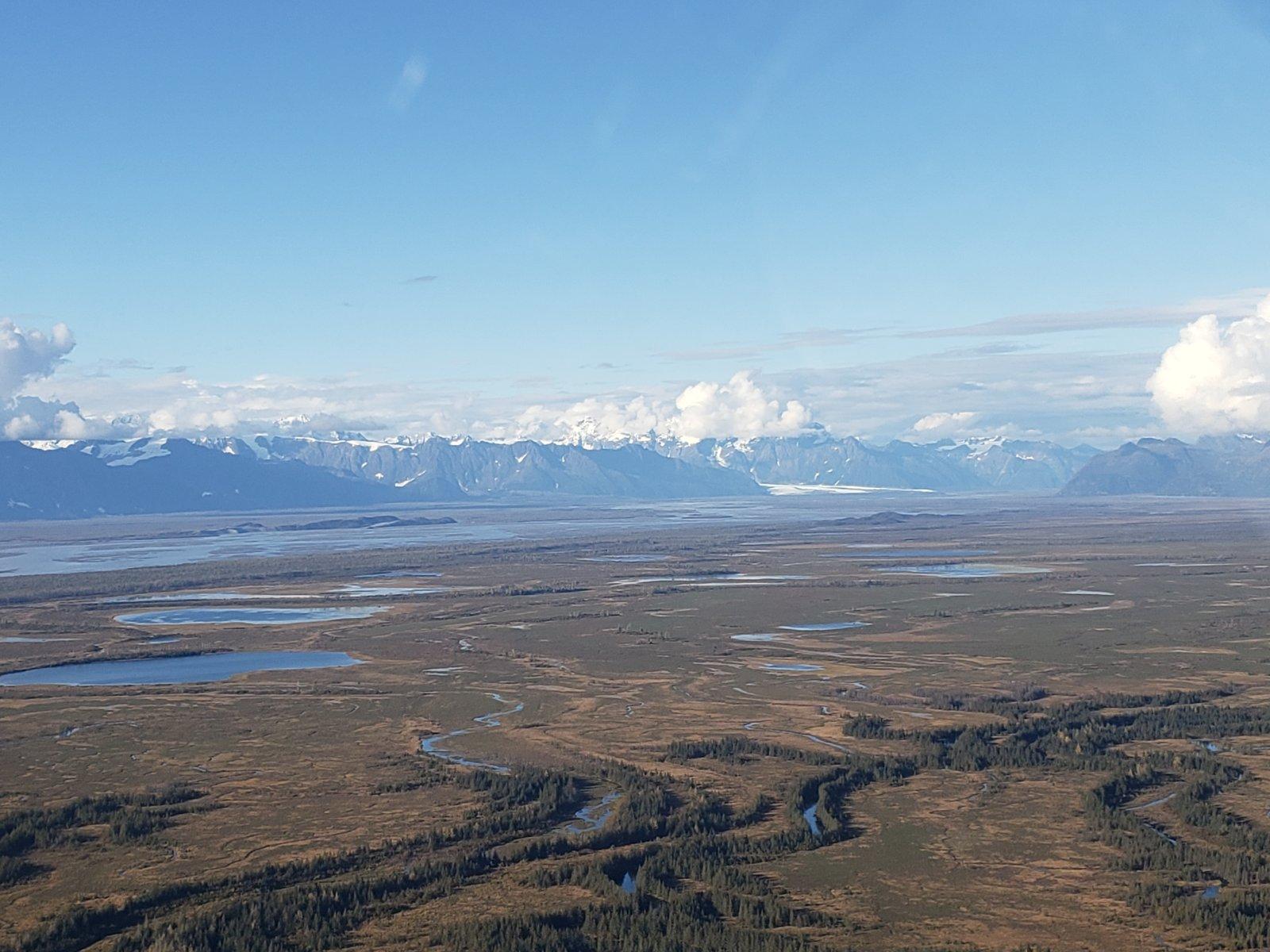
I am along time, and current pilot, air breaks are only use on the ground to assist with breaking power. your more then likely hearing reduced power (less engine noise) flap and gear drag noises. (different noises). copper river valley, fall Cordova AK. 2024. Mr. DS
 

Attachments

  • 20240927_164333.jpg
    20240927_164333.jpg
    222.9 KB
As an Amazon Associate we earn from qualifying purchases. Product prices and availability are accurate as of the date/time indicated and are subject to change.
You didn’t say whether they were taking off or landing. But I have noticed that when they are taking off as the engine noise reduces it’s due to the angle of the engine turbines to your relative location on the ground. I probably didn’t say that really well, but in my mind, I knew what I was talking about.
 
Flaps come out of the wings and lower to cause more drag and scrub off speed but they don't make the noise you're hearing. Depending on the engines used, the pilot can put on engine brakes that either move the cowl of the engine changing the air flow in and out or flaps come out of the sides of the cowling to dissipate thrust but that's for ground use.

All aircraft have a minimum and maximum landing speed and obviously decent can raise speed (pilots trade altitude for speed and vice versa) so if the conditions or the airport say so, the pilot might have to lower their speed later in the decent than "normal". This could explain the pilot pulling power out all at once near the ground. There are max Db specs for jet engines on take off and landing, some older engines that are being repurposed or restored have to be modified to be compliant.

I think this is all true based on hours of watching 74Gear on YouTube.
 
On stand now. 😆

Heard a good one this morning. It may be landing gear. About 15 seconds of noise. I could possibly apply a hydraulic tone to the noise.

They are inbound, approaching landing.
 
Forty-five year Air Traffic Controller here. Landing gear does not come down 50 miles from an airport. That is way too far out and the aircraft is going too fast. Landing gear comes down when aircraft reaches approach speed 160-120 knots or less and about 8-10 miles from the airport between at or about 2000-3000 feet.
When an aircraft descends below 10,000 feet they must reduce their air speed to 250 knots or less.
You may be correct with what you heard. The aircraft reducing power during the decent to the airport.
 
If it were trains we were talking about, I think a few more folks might realize that what they are dealing with is -- Doppler Effect. Pitch rises as the object approaches, goes down as the source passes and heads away.
 
i am 20 miles from pdx and very much directly under approach.

as vectors and altitudes are changed very frequently to get into the pattern, power settings are abruptly changed and it is loud and obvious to us on the ground as well those actually in the airplane.
 
50 miles out ... Doppler effect. Commercial aircraft don't have 'air brakes', too far out to be deploying flaps, slats, or landing gear. Possible power changes to start decent but then many aircraft fly the same general flight path and all do not land at one particular airport. All would NOT be reducing power as there would be no need unless heading to that particular airport.
 
It’s not the Doppler effect. On the planes that do it it is a major change. And as noted in the plane yesterday it is only for a short duration.

The airport is DTW. So it is an assortment of large planes.
 
On take off there is a set/predetermined thrust setting.

During the approach/ landing phase there are specific flap settings required pending the reduction in airspeed. Each time the slates/flaps are changed it requires an increase in thrust setting to counteract the increased drag to hold a specific speed.

Air brakes/speed brakes can be used in flight if ATC requests a specific speed or altitude change that wasn’t planned, for example traffic separation.

These devices then become ground spoilers upon landing when there is weight on wheels (wow) (landing gear squat switches compressed.
 
On take off there is a set/predetermined thrust setting.

During the approach/ landing phase there are specific flap settings required pending the reduction in airspeed. Each time the slates/flaps are changed it requires an increase in thrust setting to counteract the increased drag to hold a specific speed.

Air brakes/speed brakes can be used in flight if ATC requests a specific speed or altitude change that wasn't planned, for example traffic separation.

These devices then become ground spoilers upon landing when there is weight on wheels (wow) (landing gear squat switches compressed.
True but they won't be heard 50 miles away from the airport. About the only thing that would happen at that distance is power setting changes.
 
Just a guess, but maybe it's about where they've reached their assigned altitude, so they quit climbing at that point, thereby maybe needing less thrust from the engines. The initial rate of climb at takeoff for a 737 is about 3,000 ft a minute, so to get to 30,000 ft would take something like 10 minutes or so. Takeoff speed is about 165 knots, and, of course, they are gaining speed from takeoff until they get to their assigned cruising altitude. You're probably near where they back off the power somewhat. Cruising speed is about 585 mph, give or take some, so you can see going from 165 at takeoff and climbing and accelerating to 585 would probably get them about as far as where you are in 10 minutes, give or take a little.
 
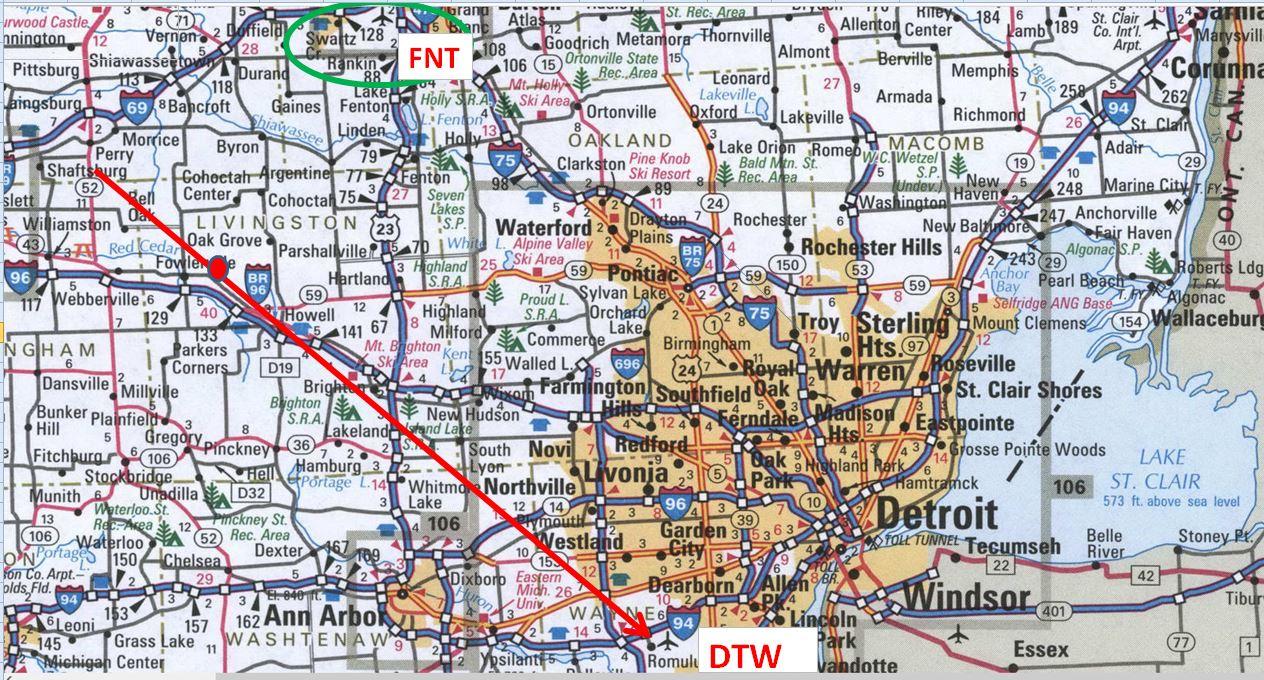
For reference. DTW and FNT (Detroit Metro, Flint Bishop) are the only airports big enough for the volume and size aircraft in this discussion. The red circle is my hunting area and the red line is the line of flight. So I'm pretty sure they are going to DTW and the altitude is not that high. From what I am reading it sounds like my WAG is close, flaps and or power down.

CaptureDTW.JPG
 
On take off there is a set/predetermined thrust setting.

During the approach/ landing phase there are specific flap settings required pending the reduction in airspeed. Each time the slates/flaps are changed it requires an increase in thrust setting to counteract the increased drag to hold a specific speed.

Air brakes/speed brakes can be used in flight if ATC requests a specific speed or altitude change that wasn't planned, for example traffic separation.

These devices then become ground spoilers upon landing when there is weight on wheels (wow) (landing gear squat switches compressed.
YEAH, we knew that......... we were just pretending to be experts.... :rolleyes:

J.
 
As they approach the fle's (Forward leading edge) and slats start changing positions to increase lift as the plane slows. The throttles are also backed off to start losing speed.

The thrust reversers usually don't deploy until it touches down.
If you deploy the reverse thrusters in flight you crash.
 
Flaps/slats at about 200 kts and landing gear around five miles from the runway is about normal. Neither of those would be happening at 50 out. Power setting is about the only thing at that distance.
 
If you deploy the reverse thrusters in flight you crash.
NASA modified a Gulfstream 2 to be able to deploy the two thrust reversers in flight to duplicate the approach angle of the Space Shuttle I training.

I was able to do it many times in the simulator. Unbelievable experience.
 
Back
Top