Knife sharpening question

Joined
Nov 5, 2007
Messages
11,832
City & State/Province
Dallas, TX
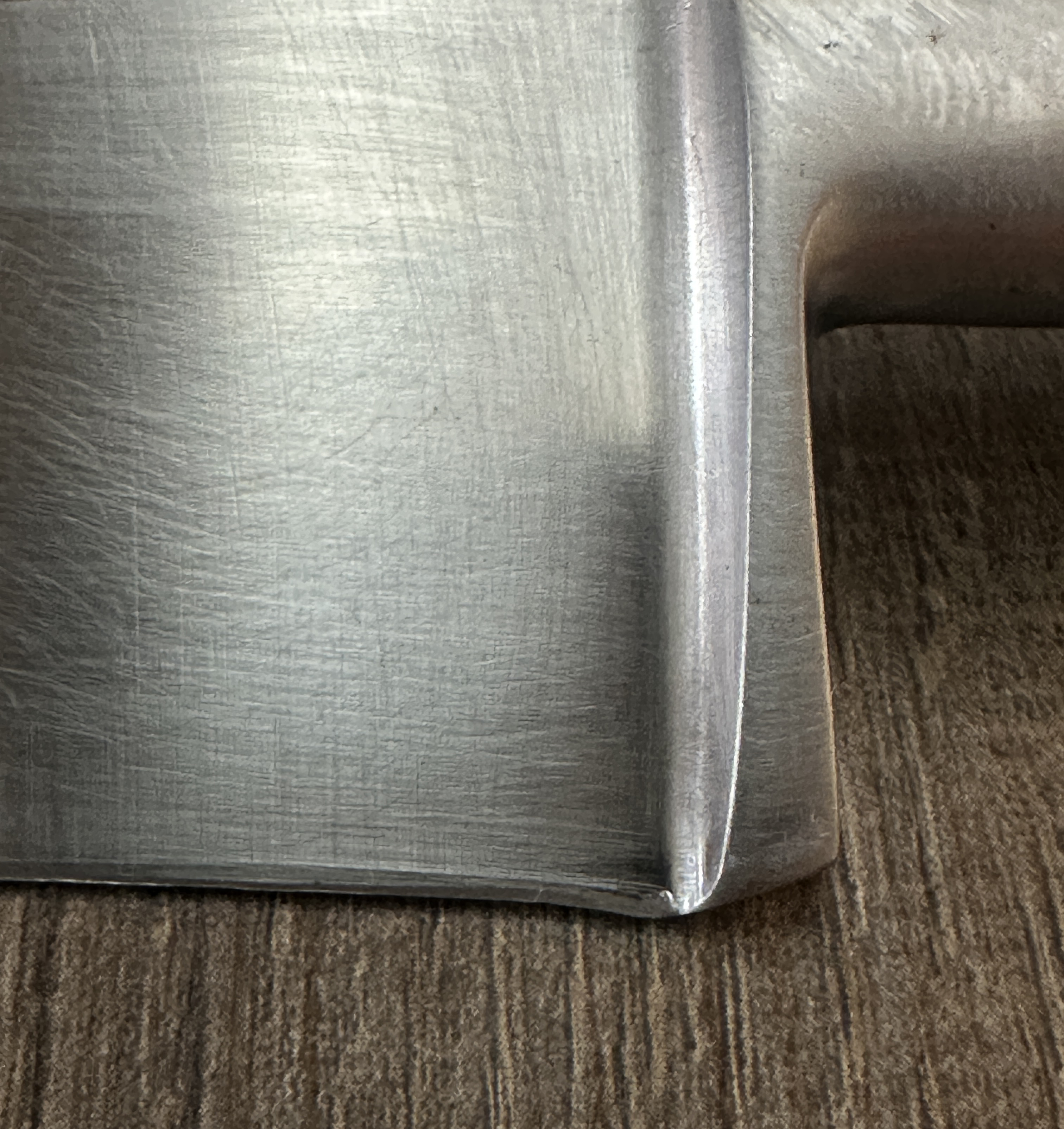
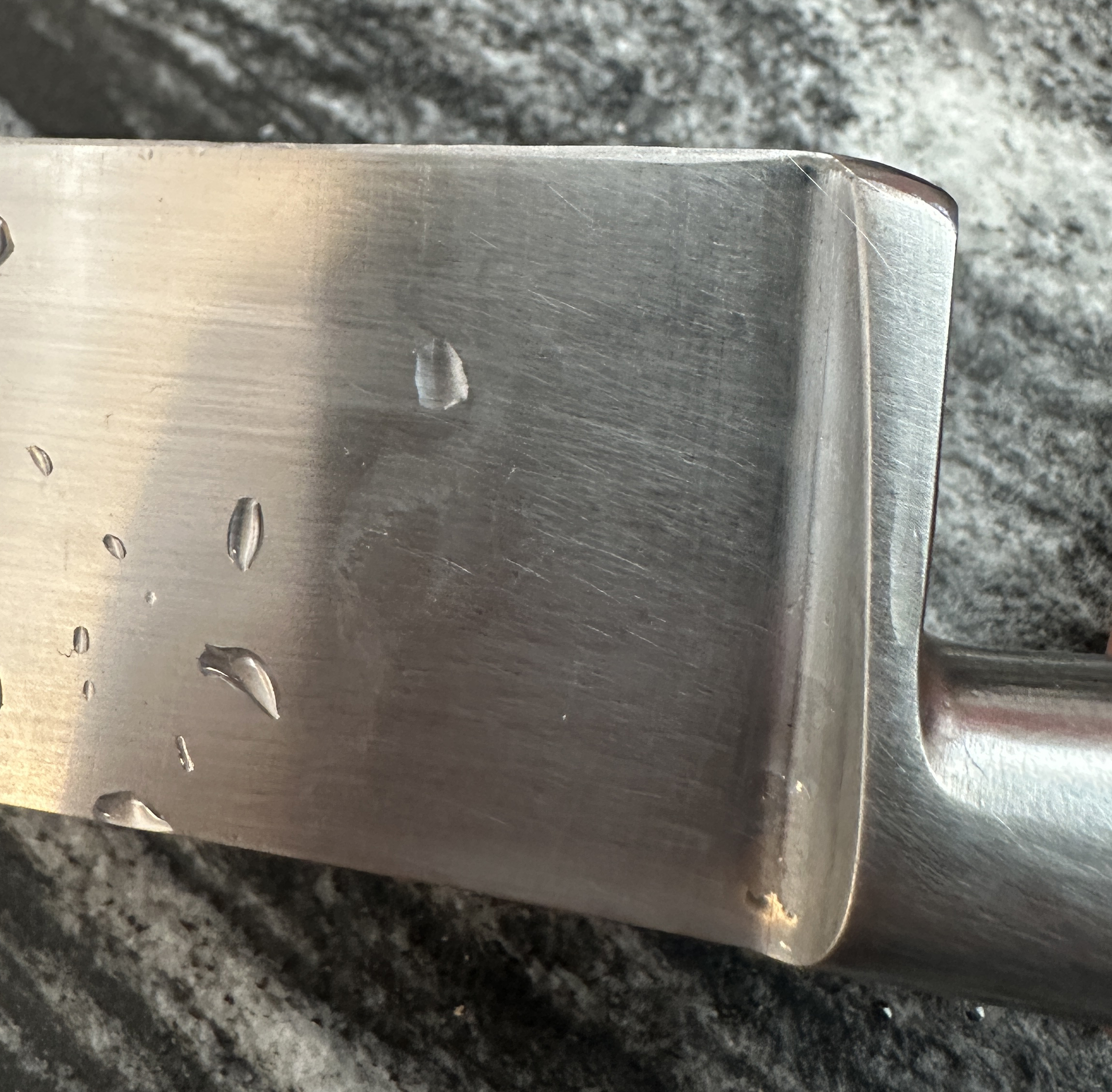
I’ve got this kitchen knife, it's one of my favorites. I believe it's the French brand Sabatier. Anyway, As I've sharpened it over the years, I've chewed away the blade and the guard at the end of the blade now drags on the cutting board.

Do I simply grind this away? How do I make a smooth transition from cutting edge of blade to the ground down guard?

The Asian style of kitchen knives are honestly better, but this knife has a lot of class. It feels really good to hold and the round part of the handle between the handle and the blade is very comfortable. But this knife isn't too heavy, the blade is nice and thin and it's the perfect length.

I've attached some pictures.

IMG_9277.jpeg


IMG_9275.JPG


IMG_9274.JPG


IMG_9273.JPG
 
And just to let you know, I have upped my sharpening game since I took off all this metal on the knife. I've had this knife probably 10 years.

But a few years ago, I bought the Wicked Edge sharpener. It sharpens to a much better, and more consistent edge.
 
As an Amazon Associate we earn from qualifying purchases. Product prices and availability are accurate as of the date/time indicated and are subject to change.
I found one of those WorkSharp knife sharpeners, the electric belt sander. I might try that on the guard (bolster?) not sure what that piece is called.

If that doesn’t work I might go look at the Harbor freight belt sander.
 
I love those forged in guards, but they require maintenance so they don’t interfere with sharpening.

Either file or grind it off. You need to be able to sharpen all the way to the edge or you will get a recurve at the Ricasso.

I wish you were closer, I could fix it faster than describe it.
 
I used a file to take that section down when needed on my parents Wusthof knives. I put the knife edge up (taped with blue painters tape to protect the edge from me and vice versa) in a padded vice. I like the files because they are very controllable, no heat issues, and hard to really mess up the knife.
 
Last edited:
Too hot to touch is like 150*f. Damage happens above 500*f. But it is easy to get a blade that hot with a grinder especially at the thin edge.

I have a slow speed grinder the wheel sits in a water bath to prevent overheating.

But any grinder will work if you keep dipping the blade in water. I’ve even used a carpenters belt sander on knife blades. A file is usually the best choice and us the most forgiving.
 
And just to let you know, I have upped my sharpening game since I took off all this metal on the knife. I've had this knife probably 10 years.

But a few years ago, I bought the Wicked Edge sharpener. It sharpens to a much better, and more consistent edge.
What sharpener did you get? I need one.
I suck at sharpening knives.
 
When my mother in law passed away we inherited the traditional carving set with knife, fork and sharpening steel. A sharpening steel does not compare to a stone sharpening followed up by a fine stropping but for normal kitchen work it’s fine.
The trick with a steel is how you finish. As most everyone knows, with each sharpening pass,, a fine burr results on the other side of the blade. My last pass on the steel is a very very light pass on that back edge, it removes that tiny hair like burr so well that I can easily slice grapes or tomatoes.
My pocket knives are a different matter, I use a Lansky for those and finish with a leather strop. When finished it easily shaves hair off my arm.
 
One of our young adult married girls at church recently posted a FB inquiry "who in our area can sharpen my kitchen knives?" I replied and told her I could do that for her, and that I work cheap for friends 😉. She brought me her knives, a really nice set of serrated steak knives and a set of German-made Henckels kitchen knives. They had never been sharpened, and lacked a real bevel on the edge. I worked on the kitchen knives a good while with a medium grit 8" diamond stone before finishing them on my Warthog sharpener. They were scary sharp, and I cautioned her to be careful. The serrated steak knives were single bevel, so I worked on the serrated side with a small fine file, lightly, then a very few quick passes on the back edge with a fine diamond stone just to take the burr off. She was very happy with the result and left me a pound of a locally roasted coffee as a "thank you."
 
When my mother in law passed away we inherited the traditional carving set with knife, fork and sharpening steel. A sharpening steel does not compare to a stone sharpening followed up by a fine stropping but for normal kitchen work it’s fine.
The trick with a steel is how you finish. As most everyone knows, with each sharpening pass,, a fine burr results on the other side of the blade. My last pass on the steel is a very very light pass on that back edge, it removes that tiny hair like burr so well that I can easily slice grapes or tomatoes.
My pocket knives are a different matter, I use a Lansky for those and finish with a leather strop. When finished it easily shaves hair off my arm.
The steel actually straightens any small dents/curves/imperfections along the cutting edge of the knife. A sharpened edge is typically quite thin. The steel realigns any deviations along the edge, making the cutting edge work better.
 
You want to make sure to dull that last bit of the edge after you grind it down or it'll get you. I have a santoku sharpened all the way to the edge (from the factory) that I had to 'fix' by creating a choil.
 
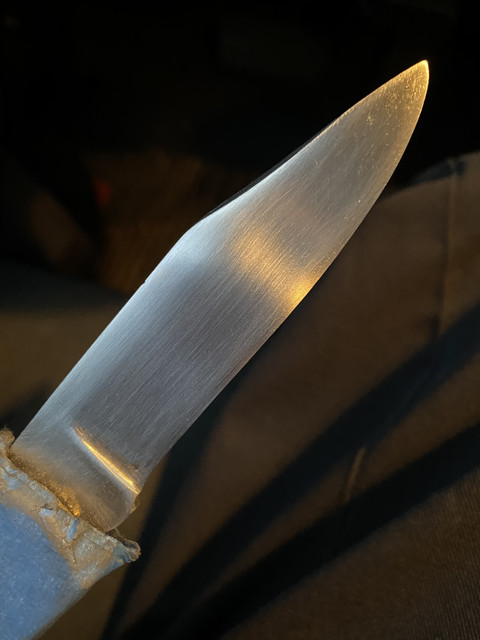
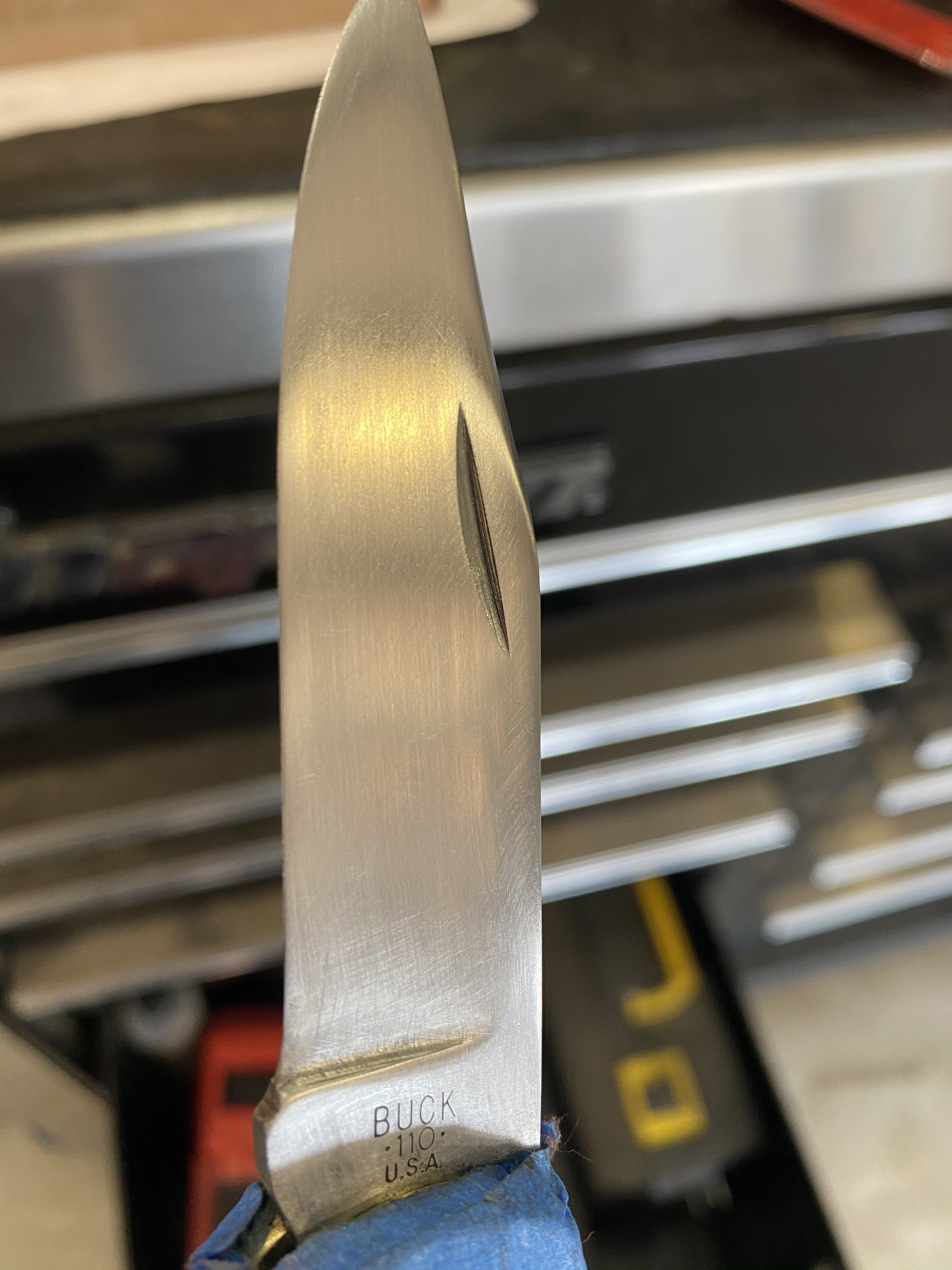
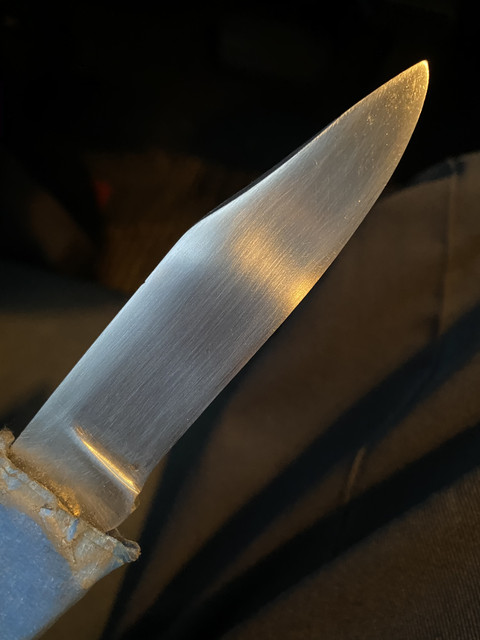
This Buck 110 had the point broken off and several small chunks missing from the edge. I used the grinder to reshape it, sanded it by hand, then used my polishing wheels on a bench grinder motor. Here's before the shine was put on it. I think y'all are being a little too cautious with something hard to ruin.

C62-F422-F-C606-4076-BB5-D-73-AD49-A24-E97.jpg

CD7-F6-E46-597-E-4-C45-94-AA-4-A4-DB8408-DC0.jpg
 

Attachments

  • CD7-F6-E46-597-E-4-C45-94-AA-4-A4-DB8408-DC0.jpg
    CD7-F6-E46-597-E-4-C45-94-AA-4-A4-DB8408-DC0.jpg
    49.3 KB
Easy repair with a file and no risk of overheating.

I agree the spot he needs to fix would be less susceptible to heat damage, but a knife edge or tip, is very easy to over heat.

So easy, it is not unheard of to get a new knife that doesn’t hold an edge for the first few sharpenings. They sharpen on a belt at the factory and often overheat the edge.
 
This Buck 110 had the point broken off and several small chunks missing from the edge. I used the grinder to reshape it, sanded it by hand, then used my polishing wheels on a bench grinder motor. Here's before the shine was put on it. I think y'all are being a little too cautious with something hard to ruin.

View attachment 93636
View attachment 93634
having read the Buck knives thread about the warranty, I have a 110 with a broken/repaired blade I think I'm going to send to them to have blade replaced. have you considered that or do you prefer it the way it is?
 
What sharpener did you get? I need one.
I suck at sharpening knives.
I bought the Wicked Edge sharpener kit on Amazon. It was cheaper a few years ago. I did not pay $999. But it's a nice one, it came with a granite base and then I bought some extra sharpening pieces. I think up to 2200.

Anway, I used the belt sander of the WorkSharp knife sharpener and yeah it got hot. But I was right at the kitchen sink and kept the knife wet. It was just on that little bit at the end of the knife, so it didn't hurt the knife edge at all.

I think I got it, but might grind off just a bit more. At least it glides smooth on a cutting board now. Well, smoother.

WorkSharpKnifeSharpener.jpg


WorkSharpKnifeSharpener2.jpg


And the knife:

SabatierKnife.jpg
 
This Buck 110 had the point broken off and several small chunks missing from the edge. I used the grinder to reshape it, sanded it by hand, then used my polishing wheels on a bench grinder motor. Here's before the shine was put on it. I think y'all are being a little too cautious with something hard to ruin.

View attachment 93636
View attachment 93634
Looks like you did a great job on that knife.
 
having read the Buck knives thread about the warranty, I have a 110 with a broken/repaired blade I think I'm going to send to them to have blade replaced. have you considered that or do you prefer it the way it is?
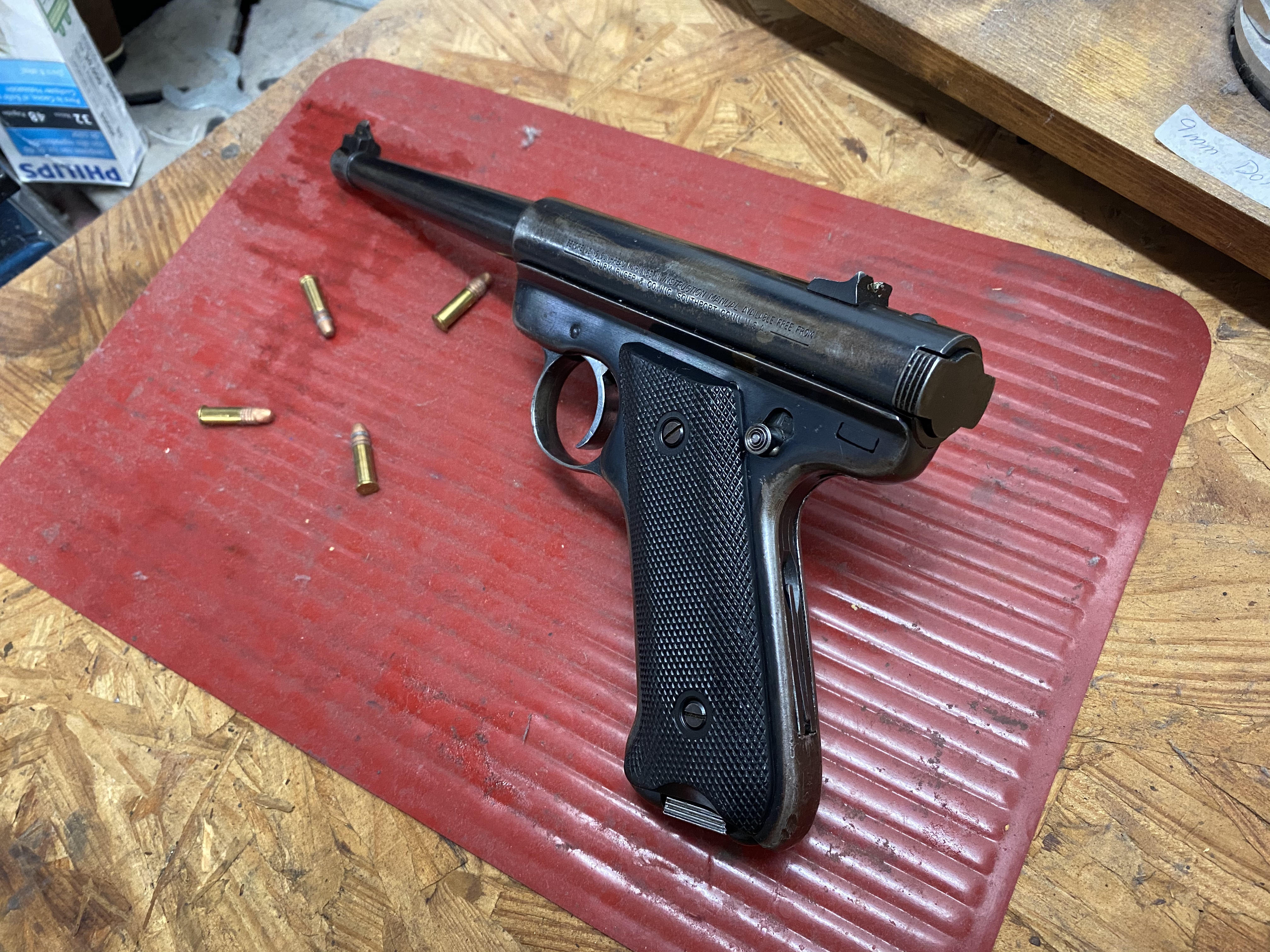
I have a Ruger Standard that was his too and the family gave it to me as well. It's beat up more than the knife and all I did was clean it up. I went a little overboard on the knife but it wasn't even functional before. I like it the way it is. He inspired me to fix it and put it in the safe. The Ruger will stay "beat up" too.

9-F9-E57-F2-25-E2-458-E-88-C4-D9126629-EE46.jpg
 
having read the Buck knives thread about the warranty, I have a 110 with a broken/repaired blade I think I'm going to send to them to have blade replaced. have you considered that or do you prefer it the way it is?

I like the old Macassar Ebony they used in the 70’s.

I sent my 2 worn user 110’s and a broken 111 for new blades. I was happy with the results.

So I bought up a bunch of 110’s and 112’s cheap. I put them all in a small flat rate box and sent them to Buck for new blades. $10 each they came back like new. For $7 they sharpen and do a spa service including return shipping. $10 for a blade and spa service return shipping included!

Maybe a dozen of them. It’s a great service.

Nice job on your knife @Kevin part of sharpening is maintaining the whole blade. As the blade wears down you have to compensate.
 
Last edited:
Back
Top