cylinder hone

J. Yuma

Single-Sixer
Joined
Apr 4, 2024
Messages
379
City & State/Province
north carolina
I loaded 100 rounds of .44 special.
I've got some good tips from forum members about removal of carbon shooting specials out of magnum revolvers.
Was surfing the internet on the subject and found an article about cylinder honing:
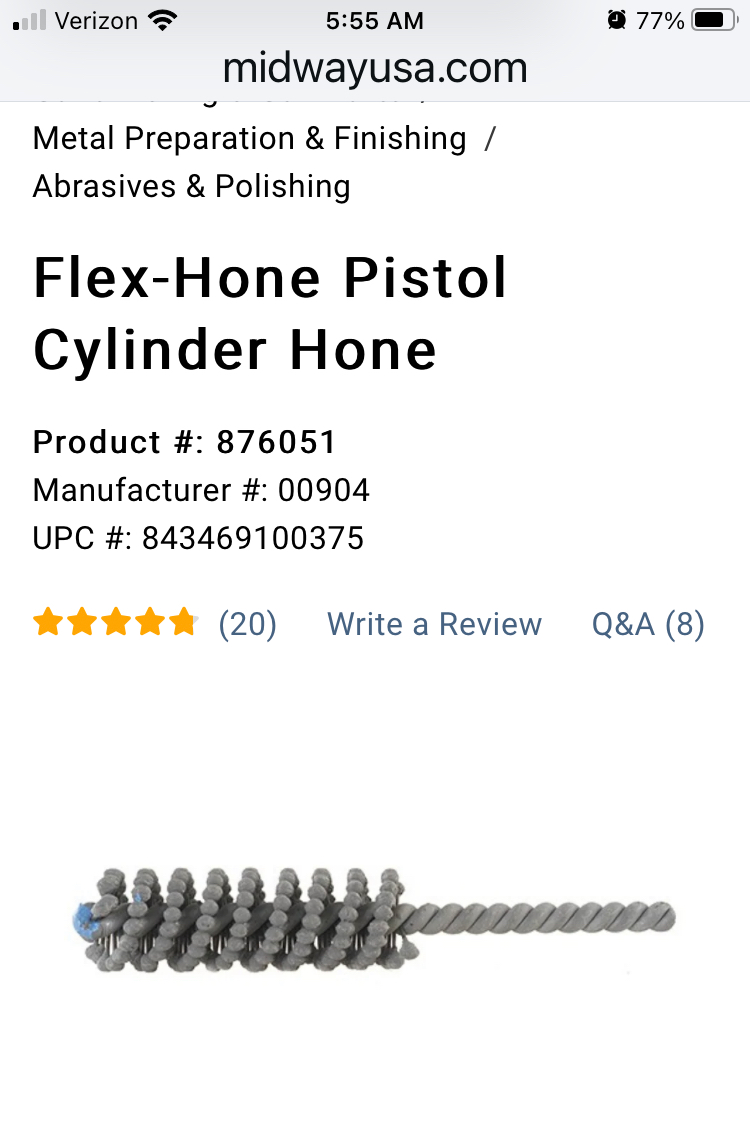
"...flex hones to polish cylinders ever so often, but you can do the same with a piece of T shirt on a cleaning jag in an electric drill and just use a little rubbing or polishing compound. Bring them to shine and done"
Any thoughts?
IMG_4892.jpeg
 
I've used the cylinder hone and can say it does the job well. I've also just used a tight fitting cotton mop with JB Bore Paste with good results. I used a drill press so as to keep things centered.
 
A "flex hone" will remove material. I would not use one to "clean" or "polish".

Carbon buildup will be tight into the crease where the chamber meets the throat. You need something that will get into that tight space.
 
A "flex hone" will remove material. I would not use one to "clean" or "polish".

Carbon buildup will be tight into the crease where the chamber meets the throat. You need something that will get into that tight space.
since I got into magnums, I've learned a lot, (especially from this forum).
One thing is that some powders are "dirty."
Looking at the cases loaded with TITEGROUP I fired yesterday, they're very sooty as opposed to the "peppier" loads of Win 244, HS 6, H110, etc.

Maybe the special cases I loaded with Win 244 won't even leave much residue?

And I'm betting Contender is right about applying Hoppes generously and letting it sit a bit, then using a .45 size brass brush to clean the cylinder. Then use the clink test, does a magnum cartridge drop into the cylinder and go "clink?"

There's only one way to find out.

but shootin that SRH with titegroup loads was...relaxing.
 
As an Amazon Associate we earn from qualifying purchases. Product prices and availability are accurate as of the date/time indicated and are subject to change.
I your cases are sooty it usually means your load is too light. How much TG and bullet weight?
 
I your cases are sooty it usually means your load is too light. How much TG and bullet weight?
240 grain bullet
4.7 grains of titegroup
I purposely went light to keep the pressure down, I have a health issue at the moment.
maybe I can jack it up a bit, but I can live with the soot if I'm not hurting the revolver.
 

Attachments

  • FBCCA6A3-3310-4612-8345-29DC76E02A9A.jpeg
    FBCCA6A3-3310-4612-8345-29DC76E02A9A.jpeg
    179.6 KB
As mentioned,, sooty cases usually mean the case didn't expand quickly enough to seal completely when firing the gun. It won't hurt the gun.
Light loads have always done that.
What a lot of people do to prevent the soot is to only size the case where the bullet will just fit the case & not full length resize. This cuts down the soot by keeping the seal better.

BUT,, this thread is about the carbon build-up in a chamber from firing Specials in a chamber cut for Magnums.

I have a container I use to soak a complete cylinder in overnight if need be. But I usually just put in enough Hoppes or Ballistol to submerge the chambers enough to penetrate the carbon build up in the throats. Makes for easier cleaning the carbon ring. And if one soaking & scrubbing doesn't work, a second soaking then scrubbing is in order.

Cylinder hones have their place. But to assure you don't "oval" or "egg shape" your chambers,, a drill press that is properly aligned and the hone & chamber(s) perfectly aligned is a must. A hone can & will remove metal. Out of alignment,, and you will have bad chambers.
 
The simple way . . .

Mop chambers with Hoppes.
Put a .44 brass bore brush in your electric drill and give each chamber a brief spin or two.
Mop with Hoppes and then a clean cloth patch.

Repeat if necessary.
;)
 
I've always thought about making scrapers using spent cartridges cutting off the rim and inserting a handle.

I've bought several used guns that had major crud rings, soak scrub scrape etc finally get them cleaned up. Major pain in the butt.

I've never made a crud ring of my own. It doesn't seem to be a problem if you put minimal effort into prevention.
 
The simple way . . .

Mop chambers with Hoppes.
Put a .44 brass bore brush in your electric drill and give each chamber a brief spin or two.
Mop with Hoppes and then a clean cloth patch.

Repeat if necessary.
;)
this youtube video agrees with you, clean your chambers so carbon doesn't build up. use a brass brush and solvent.
I clean my guns after every shooting session. Not sure if i'm doing it well, but it's like flossing my teeth, and reading scripture, every night for 40 years.
 
240 grain bullet
4.7 grains of titegroup
I purposely went light to keep the pressure down, I have a health issue at the moment.
maybe I can jack it up a bit, but I can live with the soot if I'm not hurting the revolver.
Just to follow up. I shot 100 specials through my SRH. Not bad, but I think lightly loaded magnums will be fine.
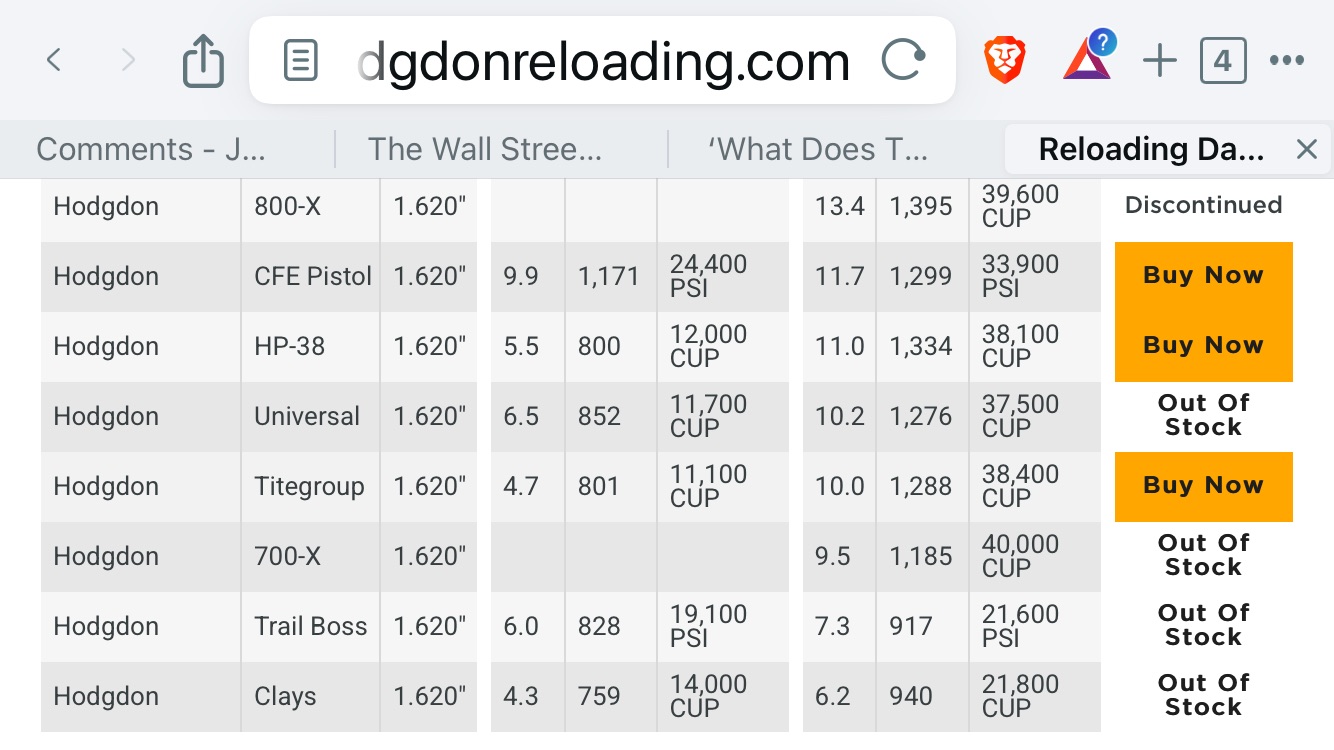
Been loading magnum cases with 5 grains of TITEGROUP. That's gentle enough for my health issues, about 11,000 CUP, and I also bought some WIN 231.

Yesterday handled 9.6 grains of WIN 244, in the SBH, no issues.
I use RAMSHOT ENFORCER in the CVA, no issues,
so maybe I'm back in business?
It was a bit unnerving getting nose bleeds from the pressure waves.

For double action, I do like the TITEGROUP, and at 10 yards rather than 25 yards. I still flinch, but it's less than on 244.

I'm really glad that I reload. I can use 3 different loads for 3 different pistols.
Thanks, forum!
 
Maybe this will be relevant:
I once had a Cowboy load that was very accurate, but was causing a heavy soot / fowling build up in my cylinder. It was a very mild load with low pressure. At the advise of a fellow shooter, I learned a valuable lesson. The sooting issue was the result of low case expansion allowing gases to flow back into the cylinder, as suggested by Contender. The simple solution was to simply apply a firm crimp to the case mouth, with no other change to the load. Crimping the case mouth causes more pressure to develop before the bullet is released, thus causing the case to expand sufficiently to seal the case to the cylinder wall and greatly reduce fowling. No additional powder was required and accuracy remained excellent. Problem solved.
 
it's amazing how many different tricks there are in something that seems so simple. I've started to recover and shot some pretty peppy loads the last couple of sessions but I do enjoy the lighter loads. I will try to crimp a little tighter and see if that helps. Thank you
 
Back
Top