
You are using an out of date browser. It may not display this or other websites correctly.
You should upgrade or use an alternative browser.
You should upgrade or use an alternative browser.
B-17 gunner training film 1944
- Thread starter Danjet500
- Start date


Ruger Accumulator
Single-Sixer
Kinda like a cross between Skeet and Trap shooting with a rifle instead of a shotgun, except the birds shoot back!

That was great. @Danjet500 thank you for posting that. Is there a place where I can find more like it?
A long time ago, I shot trap and skeet with a man by the name of Wayne Marley. He was nobody famous, but he could sure shoot. I remember him consistently hitting skeet birds while firing from the hip. Wayne is long gone now.
Wayne was a waist gunner on a B-24 bomber flying missions over Europe during WWII.
A long time ago, I shot trap and skeet with a man by the name of Wayne Marley. He was nobody famous, but he could sure shoot. I remember him consistently hitting skeet birds while firing from the hip. Wayne is long gone now.
Wayne was a waist gunner on a B-24 bomber flying missions over Europe during WWII.
I don't know where these guys find them but many are on youtube.
https://www.reddit.com/r/WWIIplanes/
https://www.reddit.com/r/WWIIplanes/

Very interesting! A good friend of mine was a radioman gunner on a B24 Liberator flying out of England in 1944 and 1945. He did 35 missions came home in 1 piece. Burt truly was from the Greatest Generation and I was honored to call him my friend.

Hope the gang bangers doing drive-by shootings in Los Angeles don't see this.




As an Amazon Associate we earn from qualifying purchases. Product prices and availability are accurate as of the date/time indicated and are subject to change.

Verrry interesting
Makes me want to get on airplane with a machine gun and try to shoot some planesdown. I may have to go to the Ukraine to try it though.
Makes me want to get on airplane with a machine gun and try to shoot some planesdown. I may have to go to the Ukraine to try it though.

I've always wondered about this... two different objects, both moving, and you are trying to put rounds from one into the other.... seems somebody really smart figured out how to simplify it to a degree.
I have some similar experience. Not drive-by shooting, but I remember throwing snowballs from the bed of a moving pickup truck and learning to use a reverse lead. That was probably 50 years ago. I have not thought about it for a very long time. I could see the snowball's curved trajectory, and I used it to adjust my lead. Of course, the target was not moving.

From an old post
Hey Guys,
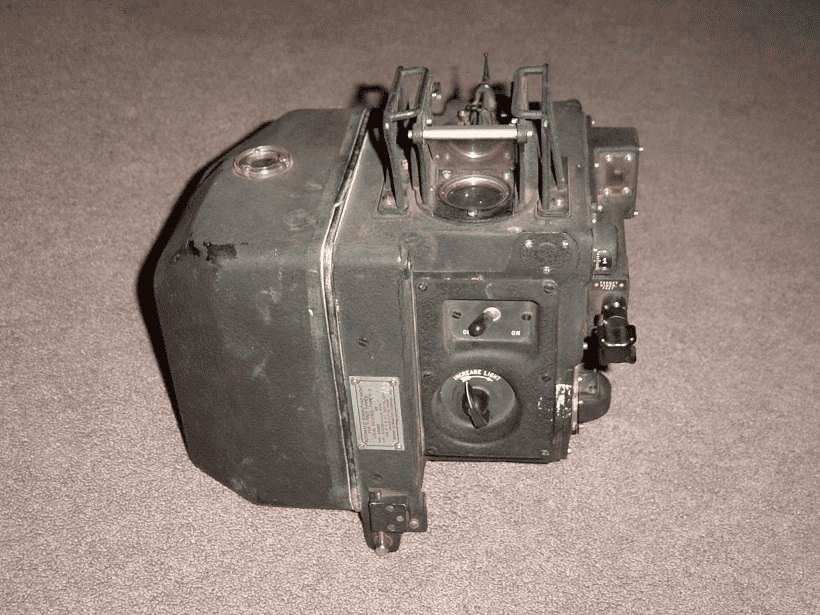
This is the gunsight from a B-17. It was located in the Ball/bottom turret. It was made by NCR under license from Sperry. The sight is an Automatic Computing Sight. It has 3 cannon plugs for the power. The settings are Target Dimension in Feet/wingspan, Range in 100 Yards. Elevation 100 Mills (Millibars) Just like you set in an altimeter.
So with this info set say for a FW-190 Dim. 35', altitude 25,000', this would compensate for bullet drop, Range 300yards, also for bullet drop and lead. The rectial/mirror also was self adjusting for lead on a deflection shot.
As a lot of you know my Dad was a Ball turret gunner on the 17s.
Not only did you have to set in the ball for 8 hrs or so no chute and with your knees almost to your chin, while using your feet to control left, right, up, down and your gloved hands, because it is -30 or so in the ball, to operate the 50s and the sight in front of your face.
The later 17s had a computer sight in the waist and tail. The top and ball always had them I think. Our member Fast Ed is going to do some research at the USAFM for me.
Right Ed.
I was not able to show my dad this sight or ask him how it operates before he died.
If you go to this post http://www.rugerforum.com/phpBB/viewtop ... +europeyou will see some of the pictures my Dad took. He must have had to reach around the sight to take them. Also if you look at the picture of flatgate sighting the waist 50 you will see a small version of this sight. Notice no RING AND PIN SIGHT on the 50.
To me this is amazing technology for 1940 or earlier. How many people had heard or knew what a computer was?????????????
Hope you enjoy and if you have any more info please let me know.
Thanks,
Jim
This is how it would have been mounted in the ball. You would be looking through the lens at the target.
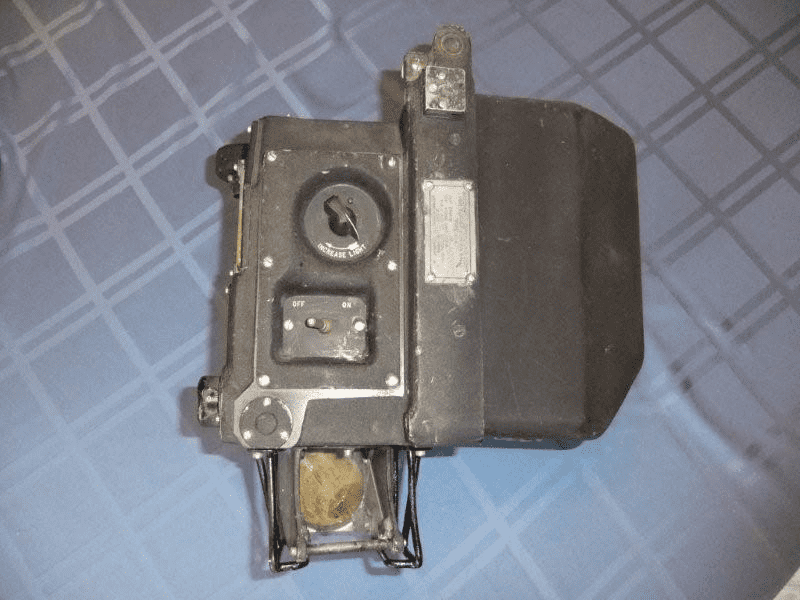
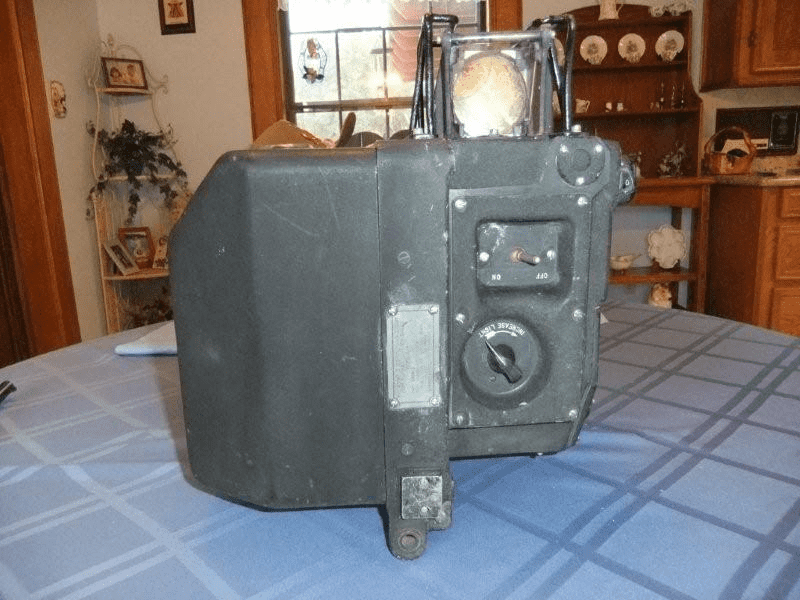
through the lens at the target.

Ya can see the size of it, probably weights 20#

All sides of it with the cover off.


Hey Guys,
This is the gunsight from a B-17. It was located in the Ball/bottom turret. It was made by NCR under license from Sperry. The sight is an Automatic Computing Sight. It has 3 cannon plugs for the power. The settings are Target Dimension in Feet/wingspan, Range in 100 Yards. Elevation 100 Mills (Millibars) Just like you set in an altimeter.
So with this info set say for a FW-190 Dim. 35', altitude 25,000', this would compensate for bullet drop, Range 300yards, also for bullet drop and lead. The rectial/mirror also was self adjusting for lead on a deflection shot.
As a lot of you know my Dad was a Ball turret gunner on the 17s.
Not only did you have to set in the ball for 8 hrs or so no chute and with your knees almost to your chin, while using your feet to control left, right, up, down and your gloved hands, because it is -30 or so in the ball, to operate the 50s and the sight in front of your face.
The later 17s had a computer sight in the waist and tail. The top and ball always had them I think. Our member Fast Ed is going to do some research at the USAFM for me.
Right Ed.
I was not able to show my dad this sight or ask him how it operates before he died.
If you go to this post http://www.rugerforum.com/phpBB/viewtop ... +europeyou will see some of the pictures my Dad took. He must have had to reach around the sight to take them. Also if you look at the picture of flatgate sighting the waist 50 you will see a small version of this sight. Notice no RING AND PIN SIGHT on the 50.
To me this is amazing technology for 1940 or earlier. How many people had heard or knew what a computer was?????????????
Hope you enjoy and if you have any more info please let me know.
Thanks,
Jim
This is how it would have been mounted in the ball. You would be looking through the lens at the target.
through the lens at the target.
Ya can see the size of it, probably weights 20#
All sides of it with the cover off.
and it was designed to run at negative 0 degrees.... add that in to the equation....
As a side note to this discussion it would be interesting to learn the reasoning for the angle of attack of the fighter plane which was also a curve.
As a side note to this discussion it would be interesting to learn the reasoning for the angle of attack of the fighter plane which was also a curve.

Those sights as stated were only in the ball turret. The rest of the crew members/gunners had to essentially use "Kentucky Windage and Elevation" of a ring and post.
The ball and top turret had computer sights and later the tail and waist had them.Those sights as stated were only in the ball turret. The rest of the crew members/gunners had to essentially use "Kentucky Windage and Elevation" of a ring and post.
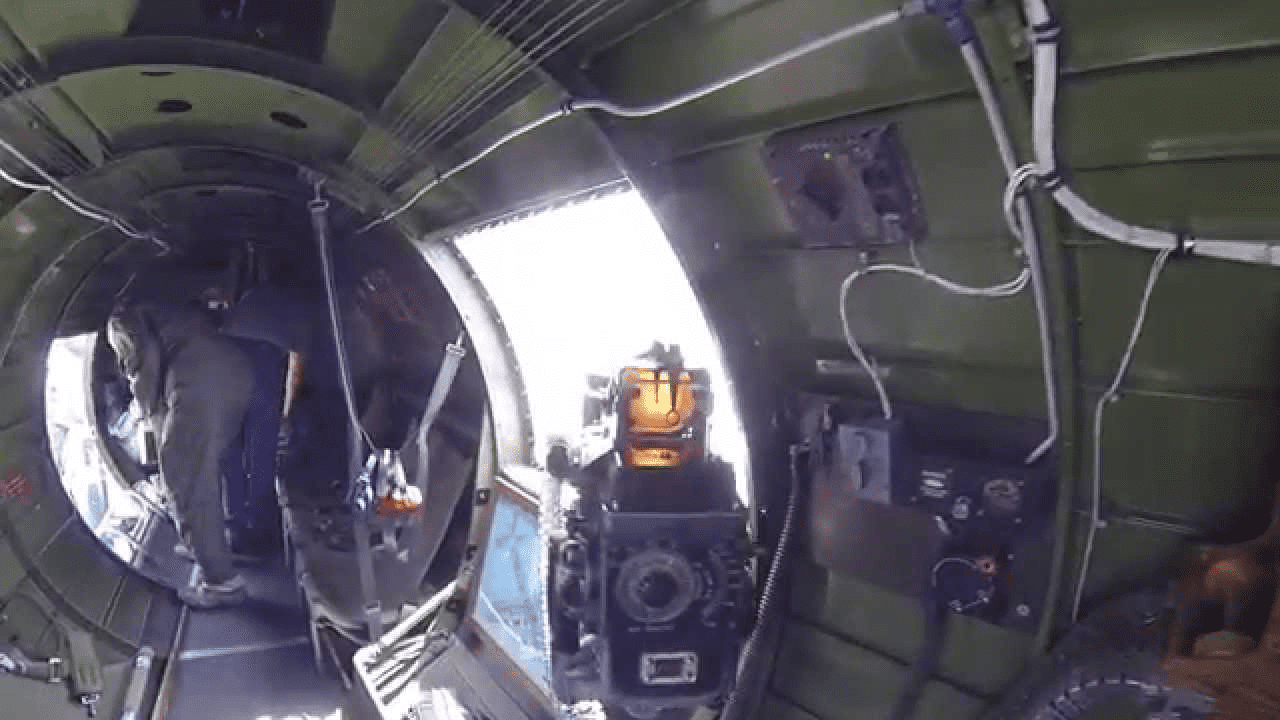
A picture of the waist guns in B-17 Sentimental Journey with the later sights.


Another B-17
Last edited:
My dad 1943-44 was top turret gunner/flight engineer on a B24H (Satan's Mate) never mentioned "computing gun sight" in his turret but he did mention the ball turret gunner had a "computing gun sight". BTW he flew 31 missions to Germany as lead or deputy lead, his pilot was squadron commander. He received a DFC for beating off a head on attack on the flight deck. The pilots said that the muzzle blasts from the twin 50s hammered them pretty hard.
Sam the K3 was used in the top turrets and the K4 was used in the ball. They are the same except for the mounting.
I'm presently reading "Masters of The Air" If your dad was flying in early/mid43 and 44 he was lucky to be alive, especially being in 24s.
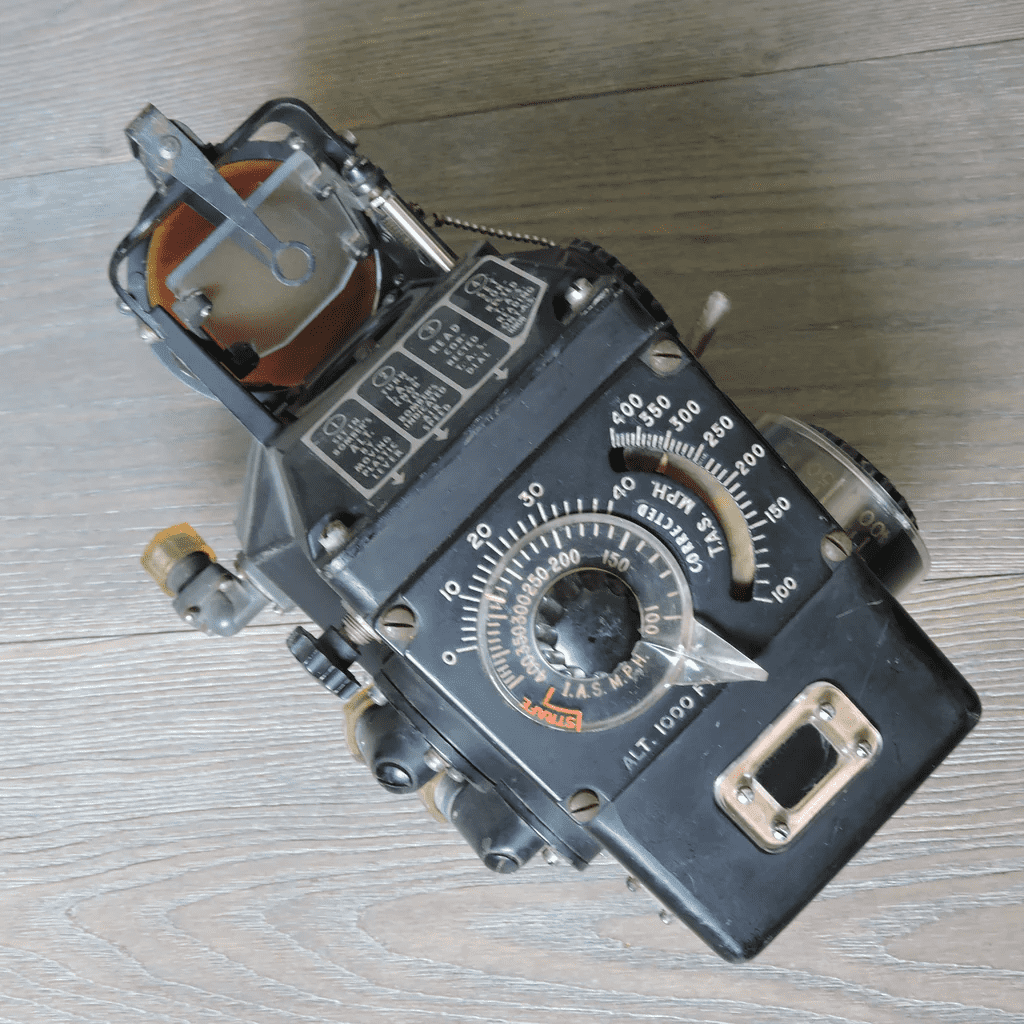
The gunner inputs range information by estimating the size of the plane and adjusting its image in the attached optical sight so that the image fits withing reticles. The gunner then tracks the target with the optical sight by moving the K-3 (mounted on a movable head) keeping the plane image centered in the reticles. The sight movements cause the computing unit, which, based on the range information and built-in ballistics data, to calculates the deflection, or lead, for aiming the guns and moves the turret accordingly.

Another picture of the waist gun K-13 sight
The K-13 Compensating Gunsight, made by Sperry, is a electrically-powered gunsight designed to compensate for altitude and airspeed. Typically mounted on the rear housing of a 50 cal machine gun from a side/waist gun position in the aircraft. Used in Boeing B-17 Flying Fortress and Consolidated B-24 Liberator bombers during WW2. It was a late war innovation that used the aircraft altitude and speed with the direct correlation of where the weapon was pointed to calculate the reticle. The aircraft altitude and speed was entered on the rear of the sight.
[HR=3][/HR]
I'm presently reading "Masters of The Air" If your dad was flying in early/mid43 and 44 he was lucky to be alive, especially being in 24s.
The gunner inputs range information by estimating the size of the plane and adjusting its image in the attached optical sight so that the image fits withing reticles. The gunner then tracks the target with the optical sight by moving the K-3 (mounted on a movable head) keeping the plane image centered in the reticles. The sight movements cause the computing unit, which, based on the range information and built-in ballistics data, to calculates the deflection, or lead, for aiming the guns and moves the turret accordingly.
Another picture of the waist gun K-13 sight
The K-13 Compensating Gunsight, made by Sperry, is a electrically-powered gunsight designed to compensate for altitude and airspeed. Typically mounted on the rear housing of a 50 cal machine gun from a side/waist gun position in the aircraft. Used in Boeing B-17 Flying Fortress and Consolidated B-24 Liberator bombers during WW2. It was a late war innovation that used the aircraft altitude and speed with the direct correlation of where the weapon was pointed to calculate the reticle. The aircraft altitude and speed was entered on the rear of the sight.
[HR=3][/HR]
Last edited:
Did the AAF award kills to enlisted gunners for enemy fighters shot down. How did the bombers do against attacking fighters?
One of the things I've always wondered about is when all this shooting was going on, what about all those 50 caliber rounds and such that are coming out of the sky?
Were the fighter pilots when diving on a bomber required to follow gun safety rule number 4? "Be aware of what is behind (below in this case) your target."
Were the fighter pilots when diving on a bomber required to follow gun safety rule number 4? "Be aware of what is behind (below in this case) your target."
blume,One of the things I've always wondered about is when all this shooting was going on, what about all those 50 caliber rounds and such that are coming out of the sky?
Were the fighter pilots when diving on a bomber required to follow gun safety rule number 4? "Be aware of what is behind (below in this case) your target."
I think that a spent bullet would be the last of your problems.
Think of what a surprise it would be when you are eating your Sunday chicken dinner and BAM a 1000# engine from a blown-up B-17 lands on your kitchen table.
I have always wondered about what damage was caused by all of the stuff that fell from the sky. Brass, bullets, Flak fragments, bombs jettisoned, blown up airplane parts and such. I have read a lot of WWII Air War books, and it is never mentioned.
Most of the time, from what my dad told me, the whole squadron was firing at the same time, so it was hard to tell who hit the fighter. Yes, the gunner was recognized at times but not like the fighter guys.Did the AAF award kills to enlisted gunners for enemy fighters shot down. How did the bombers do against attacking fighters?
Without long range fighter escort the bombers were slaughtered by enemy fighters.
Remember the USAAF over Europe had more casualties than the Navy and Marines combined.
I used to work with a guy from Hungary who was a kid during WW2. He said that a B-17 crashed in his village and pieces damaged the barn by his house. There was a piece stuck in the silo and several holes in the roof.Think of what a surprise it would be when you are eating your Sunday chicken dinner and BAM a 1000# engine from a blown-up B-17 lands on your kitchen table.
I have always wondered about what damage was caused by all of the stuff that fell from the sky. Brass, bullets, Flak fragments, bombs jettisoned, blown up airplane parts and such. I have read a lot of WWII Air War books, and it is never mementioned.
I am not sure what happened to the first part of my comment, My dad flew 31 missions to Germany in 1943-44 as the flight engineer/top turret gunner. He never mentioned a "computing gun sight" on his guns but he did mention that the ball turret had a "computing gun sight". My take was his were not so equipped. Dad's pilot was the squadron commander, so they usually flew as lead and deputy lead not always in the same position in the formation but up toward the front. BTW, he received the DFC for beating off a German fighter that tried to crash into the flight deck. The pilot mentioned the muzzle blast from the twin 50s right over their heads was quite noticeable.Those sights as stated were only in the ball turret. The rest of the crew members/gunners had to essentially use "Kentucky Windage and Elevation" of a ring and post.
Similar threads


- Replies
- 0
- Views
- 62


