Aircraft Armament and ordnance

Bob Wright

Hawkeye
Joined
Jun 24, 2004
Messages
8,597
City & State/Province
Memphis, TN USA
Appartently there are a few aviation buffs here. Aircraft ordnance and armament has always been of interest to me. So.................

During the WW II era, combat aircraft were armed with the Browning AN/M-2 .30 caliber machine guns, and the AN/M-2 Browning .50 caliber machine guns. The early P-40 and A-36 were armed with four .30 cals. and two .50cals. The P-40 (maybe the A-36) had a selector swithc so that either the .30s only, or the .40s on.y, or all six could be selected for firing. As tactical fighters, the .30 calibers were thought for "soft" targets (folks) while the .50 calibers could be fired against armored targets, vehicles, etc.

Later six .50s became standard (except for the P-47 with eight) for fighter armament. I bellieve it was Robin Olds who commented that "German pilots often ridiculed the .50 caliber guns as being pea shooters. Yet every plane I shot down was shredded by my guns." May not be exact quote, but close.

Later in the War and afterwards the 20 mm guns were employed.

O.K. The bait can is opened!
 
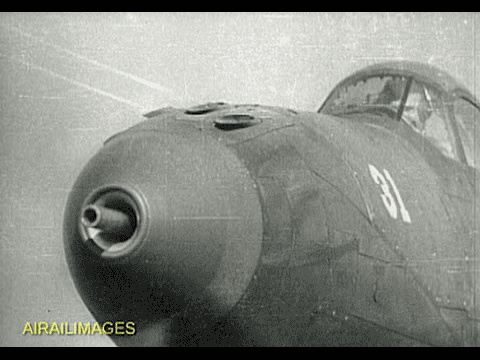
When I was in Hartford, Conn. I visited the museum in the library there, (The only place open at that time) and noticed a Browning designed 37 mm gun made by Colt. As I recall the gun looked much like an oversized .30 cal. M9191A4. Note stated it was an experimental gun for aircraft mounting. Maybe for the P-38 and P-39? And the A-26?

Bob Wright
 
1691075001956.png


75mm

:)
 
The 75mm gun installation was short lived, being replaced by the more effective 5" HVAR rockets. These were evolved from the Navy's 3.5" FFAR rockets.

I have seen one photo of a Japanese destroyer hit by a 75 mm round fro a B-25/PBJ. There was a dent in the forward stack.

Bob Wright
 
In their arrogance the Navy and aircraft designers of the F-4 Phantom II, to use its full name, decided guns were obsolete and didn’t mount any.

It didn’t take long for the mistake to become apparent so a gun pod was added and later versions all had a nose mounted 20 mm.

Most design mistakes like this are usually because designers don’t listen to the folks that fly and fight the aircraft.

A launcher full of 2.75” rockets is impressive, but the sound of that gun is heartening.
 
Last edited:
As an Amazon Associate we earn from qualifying purchases. Product prices and availability are accurate as of the date/time indicated and are subject to change.
In their arrogance the Navy and Air he designers of the F-4 Phantom II, to use its full name, decided guns were obsolete and didn’t mount any.

It didn’t take long for the mistake to become apparent so a gun pod was added and later versions all had a nose mounted 20 mm.

Most design mistakes like this are usually because designers don’t listen to the folks that fly and fight the aircraft.

A launcher full of 2.75” rockets is impressive, but the sound of that gun is heartening.

In all fairness, the F-4 (Originally the F4H) was designed to be an interceptor, to get off the deck of carriers and meet the threat of incoming enemy aircraft. It was the intent that it could intercept in any weather and destroy a threat with Sparrow and Sidewinder missles. In Viet Nam the F-4 was pressed into service for which it was not designed. As was the F-105. Tribute to the design was the manner it handled the jobs assigned to it.

Bob Wright
 
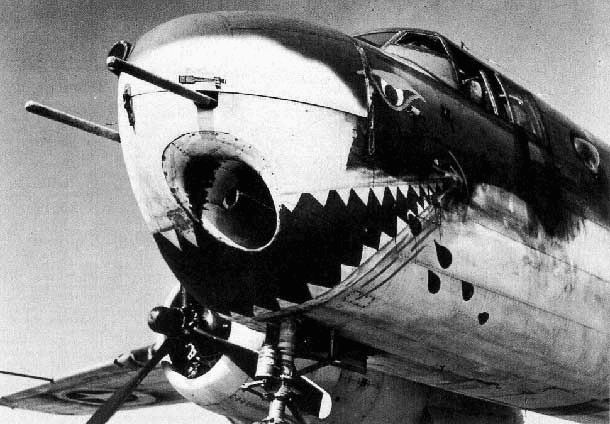
A friend of mine flew a Douglas A-26/B-26 with the eight gun nose and six gun wings, a total of fourteen foward firing .50 caliber guns!

Bob Wright

I've got an old photo somewhere, of my uncle sitting in the pilot's seat of a B-25. Based on his insignia, I think it was while he was in training (I've read the B-25 was much easier to fly than the A-26/B-26).

As always FWIW, YMMV, IMHO, IIRC, etc., etc.
:)
 
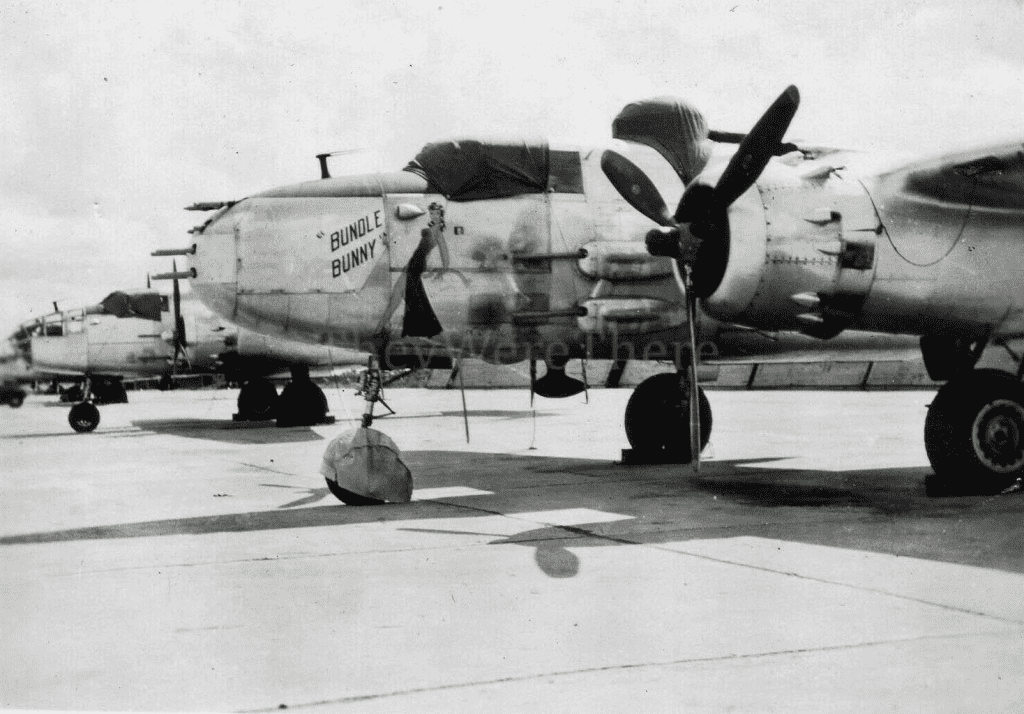
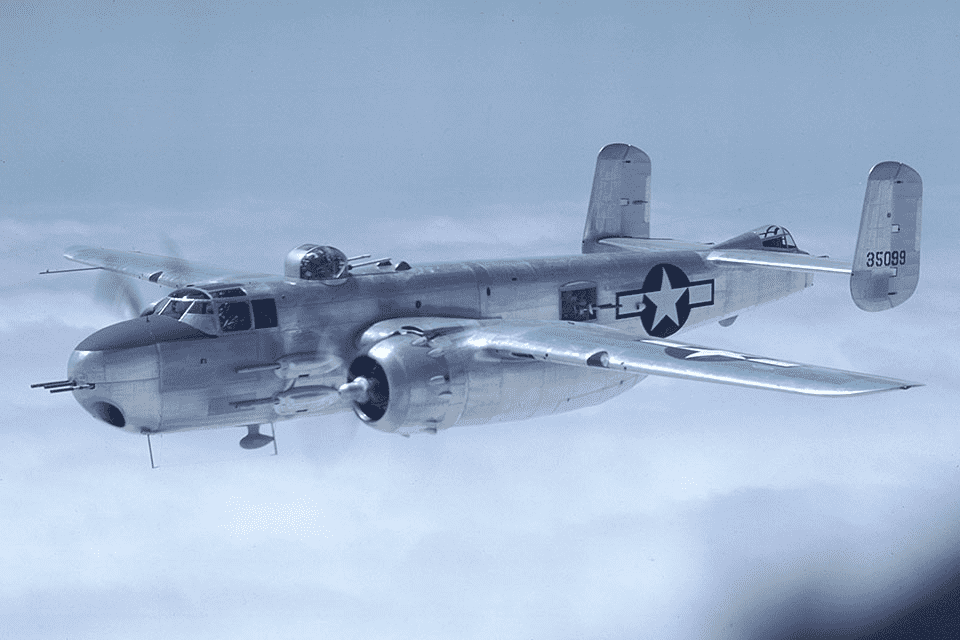
That's a B-25J, or--possibly--a B-25H with the cannon nose replaced with a field 8-gun conversion nose (not possible to tell the difference without knowing the SN). The 8x.50 nose was nearly as devastating and a lot more versatile than the 75mm cannon with 2 or 4x.50 nose of the G and H.

Note the "package guns" on the fuselage sides. Swing the top turret around to face front and this airplane could lay 14 (!) forward-firing .50s on a strafing target.
 
The German fighters had cannons. I don't remember the caliber(s) but I believe it was 30 mm. One time I was in Munich and went to a technical museum there and they had on display one of those cannons. I was really surprised at its small size. I expected something like an enlarged fifty cal but it was very short and compact. I just looked it up and it was the MK 108 cannon.
 
Last edited:
Yep Watching the WWII videos of the Strafers in action is great. They could sink a destroyer size ship with just the 50s. A lot of concentrated firepower with 10-14, 50s
One version of the late-model B-25J had 18 forward-firing machine guns.


The interior of the B-25 was the loudest due to the straight stacks rather than the exhaust dumping into a collector ring.

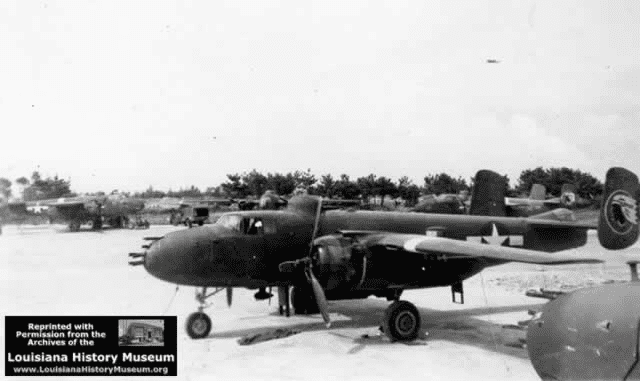
August of 1943 began the conversion from level bomber to the "strafer" role that the 345th would become famous for. This conversion entailed the removal of the bottom turret which was replaced with an extra gas tank, and the three hand-held machine guns manned by the bombardier-navigator were removed and the "greenhouse" nose was rebuilt to accommodate four forward-firing .50-caliber machine guns. Two side-pack machine guns were added on each side of the lower fuselage just aft of the cockpit, giving the plane eight new fifty-caliber machine guns in addition to the twin fifties in the top turret and tail, and single fifties at the waist positions. Later versions would bring the total forward firing capabilities to 14 forward firing .50 caliber machine guns that would make the superstructure of an enemy ship dissolve as the armor-piercing incendiary projectiles melted it.


Strafers of the 345th Air Apaches.
1691097659097.png
 
Last edited:
Hey Guys,
Notice the bumps aft of the top turret 50s. Those are deflectors. They keep the top turret gunner from shooting the tail gunner if he brings the guns to low


The 75mm cannon installed in the nose of B-25Gs and Hs proved to be more trouble than it was worth. The added forward firing .50-caliber machine guns, however, were another matter.
1691100189125.png
 
I've got an old photo somewhere, of my uncle sitting in the pilot's seat of a B-25. Based on his insignia, I think it was while he was in training (I've read the B-25 was much easier to fly than the A-26/B-26).

As always FWIW, YMMV, IMHO, IIRC, etc., etc.
:)
If he was a trainee at Brooks Field, Texas, there's a good chance he encountered my sister, who was an instructor there. Her claim to fame was that she once "flew" a B-25. Highly unauthorized, but she was a very attractive young WAC.

Bob Wright
 
The German fighters had cannons. I don't remember the caliber(s) but I believe it was 30 mm. One time I was in Munich and went to a technical museum there and they had on display one of those cannons. I was really surprised at its small size. I expected something like an enlarged fifty cal but it was very short and compact. I just looked it up and it was the MK 108 cannon.
German fighters mounted 15mm, 20mm and 30mm auto canons. These were needed since their adversaries were B-17s and B-24s which took a lot of "killing."

Bob Wright
 
Yep Watching the WWII videos of the Strafers in action is great. They could sink a destroyer size ship with just the 50s. A lot of concentrated firepower with 10-14, 50s
One version of the late-model B-25J had 18 forward-firing machine guns.


The interior of the B-25 was the loudest due to the straight stacks rather than the exhaust dumping into a collector ring.

August of 1943 began the conversion from level bomber to the "strafer" role that the 345th would become famous for. This conversion entailed the removal of the bottom turret which was replaced with an extra gas tank, and the three hand-held machine guns manned by the bombardier-navigator were removed and the "greenhouse" nose was rebuilt to accommodate four forward-firing .50-caliber machine guns. Two side-pack machine guns were added on each side of the lower fuselage just aft of the cockpit, giving the plane eight new fifty-caliber machine guns in addition to the twin fifties in the top turret and tail, and single fifties at the waist positions. Later versions would bring the total forward firing capabilities to 14 forward firing .50 caliber machine guns that would make the superstructure of an enemy ship dissolve as the armor-piercing incendiary projectiles melted it.


Strafers of the 345th Air Apaches.
View attachment 26680
Once when I was visiting the now gone Champlin Fighter Museum I was talking to one of the docents and asked a question about B-25's since I always thought that was a great airplane. He said, "Yes, and you could always tell who the B-25 pilots were". I asked "How is that" and he said, "They're all deaf".
 
I saw some ROK F-86s (F-86H) make a bombing run and rocket attack on a nearby hill top. First they made a diving attack dropping two 500 lb. bombs, then followed up with 5" HVAR rockets.

I diistinctly remember the bomb run: two objects fell away from the plane, then an instant thick cloud of black smoke. I was about to think that wasn't so much when the ground suddenly shook beneath my feet and I heard sort of a "CRUMP!" as the shock wave got to me.

Now I'd seen rockets fired in movies, but the real thing was altogether different. There was no "whish" and trail of smoke. A pinpoint of flame appeared behind the plane's wing and there was imediately smoke and the delayed blast. Those 5" rockets were more like gun shots than the rocket trail of movie scenes.

Bob Wright
 
While I was a WWII model buff, and served in the Navy as an Aviation Ordnanceman , I can speak little to the F4 aside from what we trained in A School, a little to the F18 and a lot to the F14.

Loading F4's, especially centerline, hurts my entire lower body just thinking about it. Thankfully only dealt with it in A School.

F18s is either all MERS and TERS (bombs) or LAU 7's and 85's (missiles) and 20MM cranking. The Hornet was small, arrogant and had an identity issue in the 80s.....lol

My only Squadron level experience is F14......20MM cranking, Lau 7's, 85's and 93's....as an Ordie Tomcats were the way to go. We got a movie pretty quick.....A6's got jealous and followed with on shortly....but look how long it took the 18 to score a movie, over 30 dang years (just ribbing).

I was a M61A1 certified Tech and that alone was gold in getting orders to a F14 Squadron. It and it's LALs support gear was finicky.
 
Once when I was visiting the now gone Champlin Fighter Museum I was talking to one of the docents and asked a question about B-25's since I always thought that was a great airplane. He said, "Yes, and you could always tell who the B-25 pilots were". I asked "How is that" and he said, "They're all deaf".
I believe it. As I related in another thread, my Dad flew TB-25s in training in the early '50s and for the last couple decades of his life, he was VERY hard of hearing--not far from deaf.
 
I saw some ROK F-86s (F-86H) make a bombing run and rocket attack on a nearby hill top. First they made a diving attack dropping two 500 lb. bombs, then followed up with 5" HVAR rockets.

I diistinctly remember the bomb run: two objects fell away from the plane, then an instant thick cloud of black smoke. I was about to think that wasn't so much when the ground suddenly shook beneath my feet and I heard sort of a "CRUMP!" as the shock wave got to me.

Now I'd seen rockets fired in movies, but the real thing was altogether different. There was no "whish" and trail of smoke. A pinpoint of flame appeared behind the plane's wing and there was imediately smoke and the delayed blast. Those 5" rockets were more like gun shots than the rocket trail of movie scenes.

Bob Wright

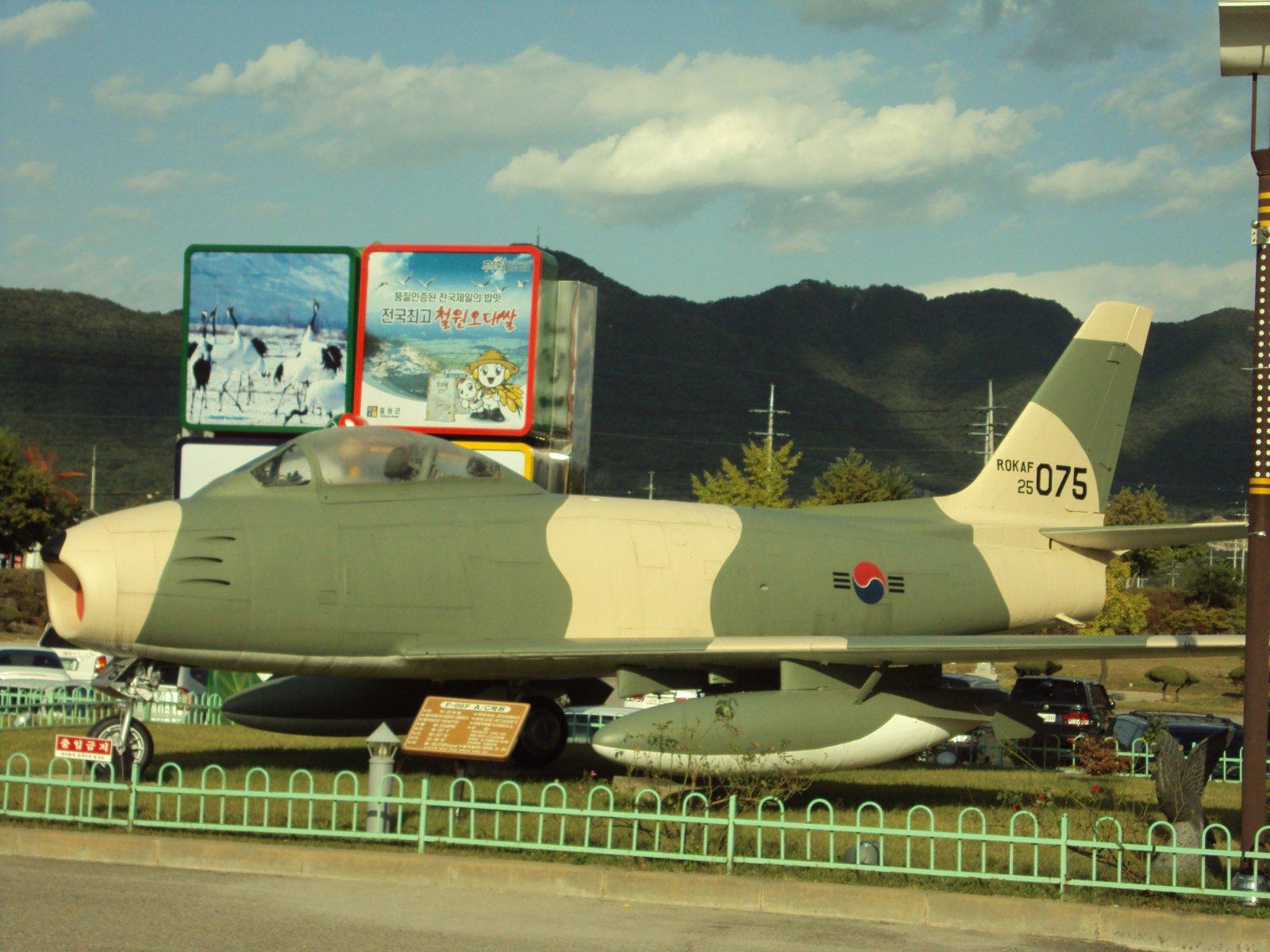
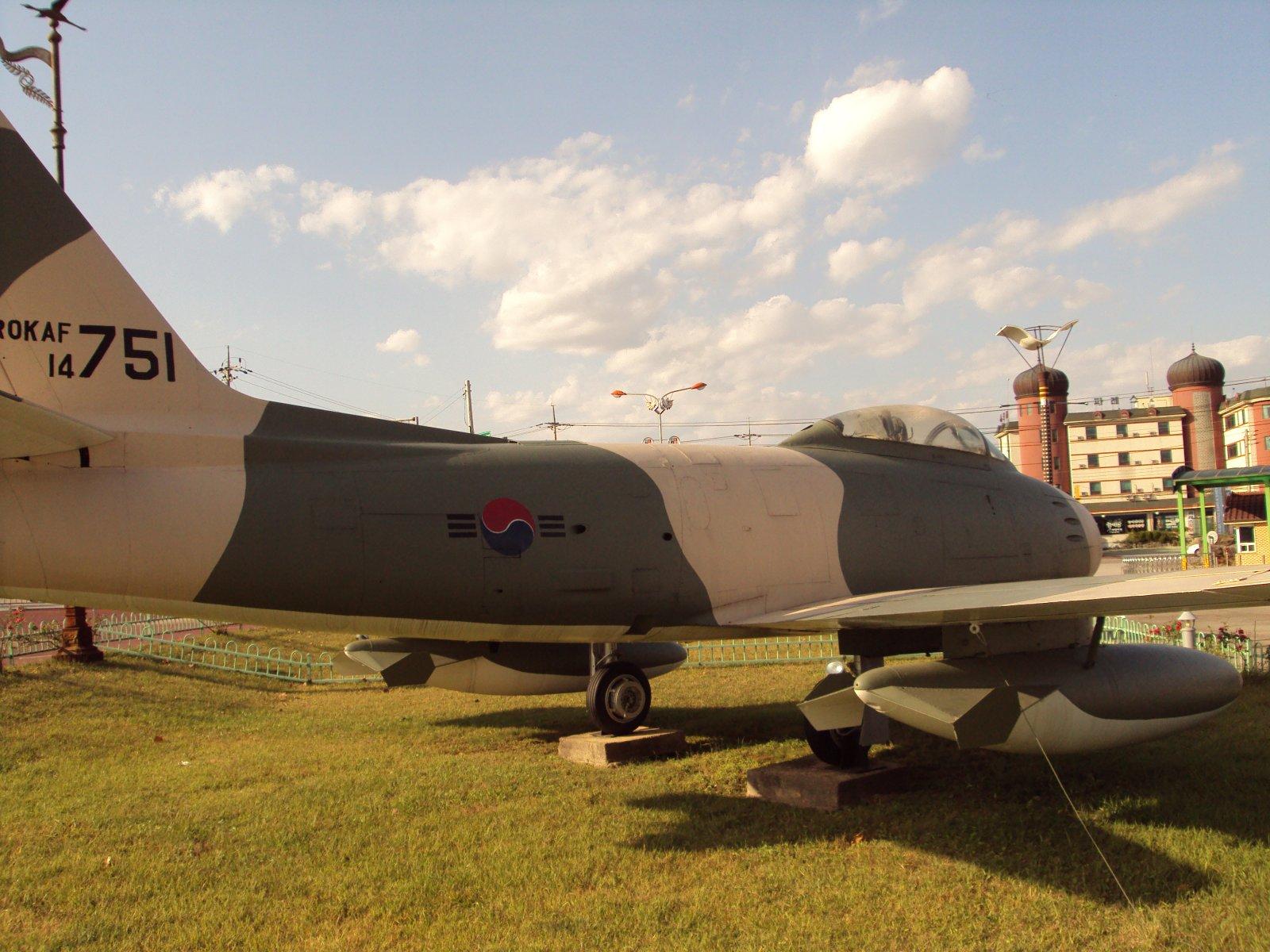
Did they look anything like this?

I understand that the F-86 pilots really disliked the fact that their aircraft were armed with six .50 machine guns, when the Migs that they were fighting carried two 23mm and one 37mm cannons! The fifties seemed to do a pretty good job for all that, but the pilots wanted cannons!

Picture 168 (2020_07_28 22_00_35 UTC).jpg

Picture 169 (2020_07_28 22_00_35 UTC).jpg
 
Did they look anything like this?

I understand that the F-86 pilots really disliked the fact that their aircraft were armed with six .50 machine guns, when the Migs that they were fighting carried two 23mm and one 37mm cannons! The fifties seemed to do a pretty good job for all that, but the pilots wanted cannons!

View attachment 26695
View attachment 26696
Enigma, those aren't F-86Hs, those are Es or Fs.

The F-86Hs started out being armed with 6x.50s, and at some point in production they switched over to 4x20mm.
 
I mentioned earlier in some thread that when Champlin Fighter Museum imported its Korean F-86 it still had its armament-- 6x50's. I have no idea how they handled that with the legal business. It's interesting to think about the World War 2 aircraft and that they were as well or better armed for air-to-air combat than many of the jets. And for a long time.
 
In their arrogance the Navy and aircraft designers of the F-4 Phantom II, to use its full name, decided guns were obsolete and didn’t mount any.

It didn’t take long for the mistake to become apparent so a gun pod was added and later versions all had a nose mounted 20 mm.

Most design mistakes like this are usually because designers don’t listen to the folks that fly and fight the aircraft.

A launcher full of 2.75” rockets is impressive, but the sound of that gun is heartening.
As a Marine F-4 pilot, I have some experience with the shortcomings of the F-4. With no internal gun, the Air Force went with the SUU-17 vulcan gun pod. The Navy went with the Huges built MK-4 gun pod. Both were 20mm. The older F-4B's I flew only had a crude gun sight that was only good for air-to-ground work. For someone who enjoyed shooting, firing the MK-4 was a lot of fun.
 
The last true USAF fighter was the F-86 until the F-15 ( Not a pound for ground) came along. All of the rest were Interseptors. Their main job was to intercept the Russian bombers.

The MIG 17 was pretty bad arsh in a Gunfight as we found out. I worked with a Navy F-4 driver that found that out and spent 61/2 years as a POW. From what I heard the 17 will get your attention when being fired upon. ;)

During the Vietnam war and up until the F-16 entered service, it was the tightest-turning fighter in the world. When production started in the 1950s, its VK-1F engine made it one of the first production jet fighters in the world with an afterburner. The MiG-17F could carry bombs, rockets, or extra fuel tanks under its wings.

In its lower nose it carried some of the largest guns ever used for air-to-air combat—two 23mm cannons and one 37mm cannon. The MiG-17F #1611 entered service with the Soviet bloc in March 1960 and wasn't withdrawn from service until May 1990. Photos of the aircraft in Europe can be seen at www.fighterjets.com.

The MiG-17F can maintain 8g turns (8g = 8 times the force of gravity on the pilot's body), attain a maximum speed of 715 mph (Mach 1.04) and can climb to 30,000 feet in only 3 minutes, with an initial rate of climb better than 14,000 feet per minute.

The MiG-17F was a very nimble fighter that could prove deadly unless respected when engaged by pilots with superior training and tactics such as those used by the U.S. Navy and Air Force. One moment's complacency when fighting against the MiG-17F could prove fatal. It was flown by over 20 countries, three of which still fly it. Because of its famous heritage and great maneuverability, it makes one of the best air show jets in the world, able to stay in front of the fans while still flying at great speeds.


Randy Ball's MiG-17F spent almost four years in restoration, and is one of only a handful of vintage jets flying the North American air show circuit. It has an authentic paint job and is the only MiG available for ground display with fully restored guns.
1691152302793.png
 
Last edited:
The last true USAF fighter was the F-86 until the F-15 ( Not a pound for ground) came along. All of the rest were Interseptors. Their main job was to intercept the Russian bombers.

The MIG 17 was pretty bad arsh in a Gunfight as we found out. I worked with a Navy F-4 driver that found that out and spent 61/2 years as a POW. From what I heard the 17 will get your attention when being fired upon. ;)

During the Vietnam war and up until the F-16 entered service, it was the tightest-turning fighter in the world. When production started in the 1950s, its VK-1F engine made it one of the first production jet fighters in the world with an afterburner. The MiG-17F could carry bombs, rockets, or extra fuel tanks under its wings.

In its lower nose it carried some of the largest guns ever used for air-to-air combat—two 23mm cannons and one 37mm cannon. The MiG-17F #1611 entered service with the Soviet bloc in March 1960 and wasn't withdrawn from service until May 1990. Photos of the aircraft in Europe can be seen at www.fighterjets.com.

The MiG-17F can maintain 8g turns (8g = 8 times the force of gravity on the pilot's body), attain a maximum speed of 715 mph (Mach 1.04) and can climb to 30,000 feet in only 3 minutes, with an initial rate of climb better than 14,000 feet per minute.

The MiG-17F was a very nimble fighter that could prove deadly unless respected when engaged by pilots with superior training and tactics such as those used by the U.S. Navy and Air Force. One moment's complacency when fighting against the MiG-17F could prove fatal. It was flown by over 20 countries, three of which still fly it. Because of its famous heritage and great maneuverability, it makes one of the best air show jets in the world, able to stay in front of the fans while still flying at great speeds.


Randy Ball's MiG-17F spent almost four years in restoration, and is one of only a handful of vintage jets flying the North American air show circuit. It has an authentic paint job and is the only MiG available for ground display with fully restored guns.
View attachment 26709
FABULOUS post, Jim! Thanks for taking the time to share all that!

Both Robin Olds and Jack Broughton, in their books, expressed great respect for the MiG-17 and its pilots--even a bit of envy, IIRC. (Olds flew F-4s against them, and Broughton, F-105s.)

I have a whole book on F-105 MiG Killers of the VN War. I was amazed to learn that the 105 actually had a positive kill ratio against the -17, though suffered badly at the hands of the MiG-21. I probably have similar figures somewhere in my extensive VN air war library on the F-4, but don't have time today to try to find them.
 
Back
Top