I had heard at one time that you could filter water out of gasoline by pouring thru a chamois shirt. It came from a story of a father/son fishing on a lake with a contaminated spare tank for the outboard. Any truth to that?

You are using an out of date browser. It may not display this or other websites correctly.
You should upgrade or use an alternative browser.
You should upgrade or use an alternative browser.
Water in gasoline
- Thread starter Deer Hunter
- Start date


I seriously doubt that would be effective. There are water absorbing socks(resembles an oversized tampon with a 4' string) that do work but not something one would just have laying around.

I seem to remember using "dry gas" which helped with water in gas. Since water mixes with alcohol, and alcohol blends with gas you "should" be able to burn off excess water, that is unless you have a LOT of water in the gas, then it's best to drain it.
This may help explain it.
https://web.archive.org/web/20130427123941/http://www.epa.gov/OMS/regs/fuels/rfg/waterphs.pdf
This may help explain it.
https://web.archive.org/web/20130427123941/http://www.epa.gov/OMS/regs/fuels/rfg/waterphs.pdf

Available at Walmart and finer auto supply stores everywhere

OP
Yes, I'm aware of dry gas and ethanol for water removal. The technicalities via Wayback was interesting. The fishing story seemed to allude to the chamois absorbing water but not gasoline. I had never heard of such and decided I would ask here where there is a definite wealth of knowledge and opinions.I seem to remember using "dry gas" which helped with water in gas. Since water mixes with alcohol, and alcohol blends with gas you "should" be able to burn off excess water, that is unless you have a LOT of water in the gas, then it's best to drain it.
This may help explain it.
https://web.archive.org/web/20130427123941/http://www.epa.gov/OMS/regs/fuels/rfg/waterphs.pdf





As an Amazon Associate we earn from qualifying purchases. Product prices and availability are accurate as of the date/time indicated and are subject to change.

It will work. Not well, but if you have no other alternative...
Methanol, not ethanol is used to remove water from light hydrocarbons in some processes.
Ethanol is less effective, and was forced on refiners to support farmers. There really is no good reason, chemically, to add ethanol.
At least it isn't the disaster that MTBE created. MTBE is highly carcinogenic. It also has a great affinity for water (once in it's very difficult to remove).
The feds mandated its use "lower" emissions. The petroleum industry told the it was a bad idea and about all of the potential problems. But politicians know better. They also wanted those kickbacks from the MTBE producers.
Flash forward, MTBE is in the water table, folks are getting sick and the fed now demand it be removed immediately. And want to fine the petroleum industry for ever using this additive.
When the oil folks pointed out that they didn't want to use it and the fed mandated it the current politicians said"that wasn't us it was the other guys that were here before us".
The news about MTBE contamination has fallen off the page. But the contamination remains in many places. And, it will for generations.
By the way, anyone remember leaded gasoline. It used tetra ethyl lead, TEL. It was removed because some folks convinced idiot politicians it would poison the water supply. This was after many years of use resulted in no such contamination. And so it all began.
Methanol, not ethanol is used to remove water from light hydrocarbons in some processes.
Ethanol is less effective, and was forced on refiners to support farmers. There really is no good reason, chemically, to add ethanol.
At least it isn't the disaster that MTBE created. MTBE is highly carcinogenic. It also has a great affinity for water (once in it's very difficult to remove).
The feds mandated its use "lower" emissions. The petroleum industry told the it was a bad idea and about all of the potential problems. But politicians know better. They also wanted those kickbacks from the MTBE producers.
Flash forward, MTBE is in the water table, folks are getting sick and the fed now demand it be removed immediately. And want to fine the petroleum industry for ever using this additive.
When the oil folks pointed out that they didn't want to use it and the fed mandated it the current politicians said"that wasn't us it was the other guys that were here before us".
The news about MTBE contamination has fallen off the page. But the contamination remains in many places. And, it will for generations.
By the way, anyone remember leaded gasoline. It used tetra ethyl lead, TEL. It was removed because some folks convinced idiot politicians it would poison the water supply. This was after many years of use resulted in no such contamination. And so it all began.

- Joined
- Apr 3, 2012
- Messages
- 10,870
Freeze it, then strain it.

How about just let it sit in a can and then just syphon off the gas on top? What water there is will be on the bottom.

GasGuzzler
Hawkeye
Let it separate.
'freeze it and strain it'
That's how we recovered most of the gas from the storage tank after the 11/2/22 fire. The Fire Dept hosed the tank heavily to prevent explosion resulting in a significant amount of water in the tank. We removed the pump, raised the suction pipe about 4"(above the level of water in bottom), replaced the pump, and waited for 2-3 days of near zero temps. Then the gas was pumped into another tank and a 'water sock' dropped in that tank. FWIW, the gas quality was seriously affected by the heat and water contamination and only suitable for use in the light duty farm tractors. Still 200 gallons of crappy gas has some value.
That's how we recovered most of the gas from the storage tank after the 11/2/22 fire. The Fire Dept hosed the tank heavily to prevent explosion resulting in a significant amount of water in the tank. We removed the pump, raised the suction pipe about 4"(above the level of water in bottom), replaced the pump, and waited for 2-3 days of near zero temps. Then the gas was pumped into another tank and a 'water sock' dropped in that tank. FWIW, the gas quality was seriously affected by the heat and water contamination and only suitable for use in the light duty farm tractors. Still 200 gallons of crappy gas has some value.
Doesn't freeze everywhere. Let it separate. Water draw from the bottom slowly. The add methanol and you are good to go.
Heck, any one remember when they sold water injection kits to increase engine compression?
Heck, any one remember when they sold water injection kits to increase engine compression?

H2o injection was seperate, before the carb, once the engine is started and running, had its own atomisation orifices, and is added to prevent pinking, dosent help it start nor run very well, its an anti-knock process and helps cool and densify the intake charge under power loads.Doesn't freeze everywhere. Let it separate. Water draw from the bottom slowly. The add methanol and you are good to go.
Heck, any one remember when they sold water injection kits to increase engine compression?
Called GM1 the Goering Mixture for messerschmitts was heavily methanol'd.
It dident increase compression, but by effectively "reducing" compression allowed it to maintain power under preignition conditions, and added power under full(max)power conditions, where water alone dident add power.

Richbaker
Blackhawk
Sheep chamois is what you want to use. Most chamois shirts are cotton...
You want the animal hide.
You want the animal hide.

Bob Wright
Hawkeye
Waterr seldom freezes solid in such cases but remains as sort of a mush. I watched my son-in-law's fuel pump pump out mush once during a really cold spell here in Memphis. The mechanic told us there was ice as big as pie plates in the gas tank.
When I worked with the paint company, pinters often bought quarts of alcohol to pour into the gas tanks of they truckes.
Bob Wright
When I worked with the paint company, pinters often bought quarts of alcohol to pour into the gas tanks of they truckes.
Bob Wright

No. Warning, you can read anything you want to on the internet.I had heard at one time that you could filter water out of gasoline by pouring thru a chamois shirt. It came from a story of a father/son fishing on a lake with a contaminated spare tank for the outboard. Any truth to that?

I purchased some years ago a water separator filter for fuel. Handy for tractors and basically any petrol or diesel motor.
I works and I still have it in my shed. Did a complete 200 ltr drum on one occasion with it.
Made by Mr Funnel or some such name.
I works and I still have it in my shed. Did a complete 200 ltr drum on one occasion with it.
Made by Mr Funnel or some such name.
It always amazed me how the old filters on carburetors would let fuel pass, but not water. "cintered bronze" or something like that rings a bell.
Before the days of ethanol in gas, line freezing was a much bigger problem and people put alcohol additives in their fuel tank. With today's ethanol gas you will seldom encounter this problem, especially if you park your vehicles outside. If you bring your vehicle in a heated garage every night in the winter, you could get more condensation, especially if you live in a humid environment.
It was forced on us to control farmers.Ethanol is less effective, and was forced on refiners to support farmers.
OP
No. Warning, you can read anything you want to on the internet.
 True. But I read it in the early 70's. Subscribed to Field & Stream back then. Pretty sure that's where I read it but, I won't swear to it. Small boat, outboard motor, middle of lake, no access to chemicals or temp control, empty primary gas can and spare gas contaminated. Just wondering about the feasibility of the author's claimed solution to their problem. P.S. - 2/3 of my life was pre-internet. I have definitely read more hardcopy than digital.
xtratoy
Hunter
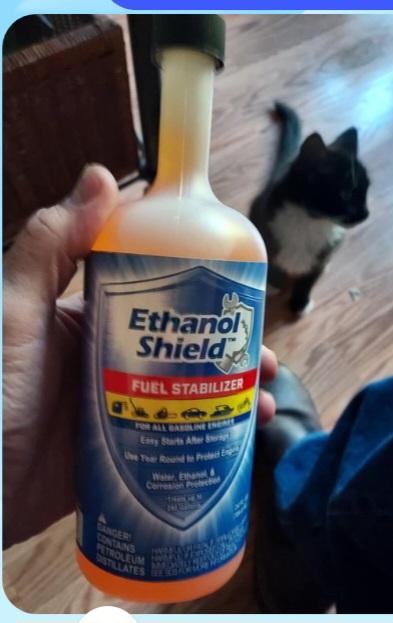
You know what's funny? Before politicians started determining what the chemical formula for gasoline should be you didn't need stabilizers. Wonder how many who made the decision to put ethanol in gas were invested in the stabilizer manufacturers.
I worked on a the "fuel farm" for several years. Receiving, delivering, and storing several types of fuels in bulk. Fifty foot tanks with floating roof down to 500 gallon gasoline pump tank. Kerosene, diesel, propane, JP4 jet fuel and such.
A floating roof lets some water in to the tank no matter what you do. No matter WHERE you buy your gasoline, there is some water in the bottom of that tank.
Water is heavier than any of those fuels I mentioned and unless you stir it up, it will be at the bottom and we had drains to drain it off occasionally. If you receive fuel, you stir it up and don't use that tank for a day of two. If a gas station receives fuel, the same for them.
If you have a suspect a suspect fuel can at home, do the same. Set it on a high shelf and let it settle. Put a receiving can on the floor. Get a tube to siphon the high one and put something on the end to keep it a half inch off the bottom and siphon the gas off the top of the water.
Use what is left to start a fire.
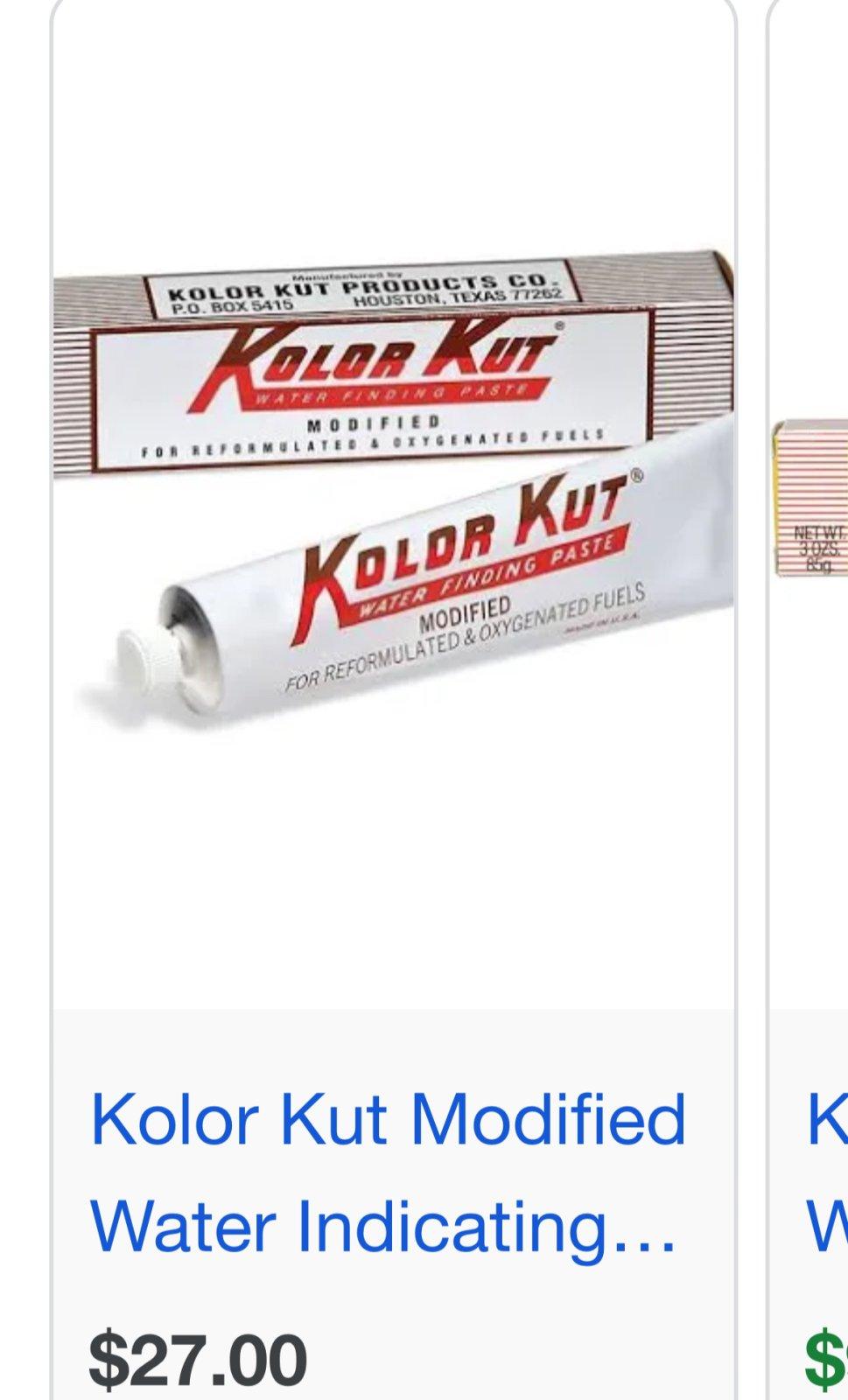
You can get a testing past to put on the end of stick and push it to the bottom of what ever fuel you suspect and what ever part of the paste touches water it will turn pink.

- Joined
- Feb 1, 2022
- Messages
- 1,028
I worked on a the "fuel farm" for several years. Receiving, delivering, and storing several types of fuels in bulk. Fifty foot tanks with floating roof down to 500 gallon gasoline pump tank. Kerosene, diesel, propane, JP4 jet fuel and such.
A floating roof lets some water in to the tank no matter what you do. No matter WHERE you buy your gasoline, there is some water in the bottom of that tank.
Water is heavier than any of those fuels I mentioned and unless you stir it up, it will be at the bottom and we had drains to drain it off occasionally. If you receive fuel, you stir it up and don't use that tank for a day of two. If a gas station receives fuel, the same for them.
If you have a suspect a suspect fuel can at home, do the same. Set it on a high shelf and let it settle. Put a receiving can on the floor. Get a tube to siphon the high one and put something on the end to keep it a half inch off the bottom and siphon the gas off the top of the water.
Use what is left to start a fire.
You can get a testing past to put on the end of stick and push it to the bottom of what ever fuel you suspect and what ever part of the paste touches water it will turn pink.
Typically you can just coat the bottom several inches of a sounding tape with a weight on it and it will be sufficient
Works for lighter hydrocarbons. But when you get to asphalts forget it. And don't even think about emulsions.View attachment 60395This is the paste we use to indicate water,
Typically you can just coat the bottom several inches of a sounding tape with a weight on it and it will be sufficient

I stick tanks on a regular basis and use water indicating paste to check the tank bottoms. It works well and we know how much to strip to get rid of most of it.
As far as water in gasoline, a friend of mine kept missing gas from his shed. I told him to put water in his can to figure out who was stealing it. It ended up to be one of his stepsons...
On a funnier note, my brother was a notorious thief that would literally steal Christ off the Cross and come back for the nails. He was high one night and tried to siphon from a motor home. He got the wrong tank and ended up with a mouthful of sewage for his trouble... I hope it had corn in it for extra nutrition!!!
As far as water in gasoline, a friend of mine kept missing gas from his shed. I told him to put water in his can to figure out who was stealing it. It ended up to be one of his stepsons...
On a funnier note, my brother was a notorious thief that would literally steal Christ off the Cross and come back for the nails. He was high one night and tried to siphon from a motor home. He got the wrong tank and ended up with a mouthful of sewage for his trouble... I hope it had corn in it for extra nutrition!!!

What he said. Water is heavier than gas and will settle to bottom.How about just let it sit in a can and then just syphon off the gas on top? What water there is will be on the bottom.


