General Motors 'crab steer'

Joined
Dec 25, 2007
Messages
14,237
City & State/Province
missouri
I've seen this commercial several times. GM SUV's with all wheel steering doing what farmers call 'crab steering' where both axles steer the same direction causing the vehicle to move laterally w/o turning. For what reason or advantage? GM tried this idea decades back and it FAILED.
I know why it can be advantageous with farm equipment but not with a vehicle. o_O o_O
 
A neighbor had one of the 2003 Silverado’s with that rear steering. He did a lot of work with trailers and said it was handy. Said it even assisted in parking at times. When he had that, I had the 1500HD WITHOUT that.

However ….. then it failed. Think he ended up replacing the rear end with a solid axle setup before he traded it. Great concept …. Poor application.
 
Custom off-road vehicles sometimes use rear steering. It does improve maneuverability. I suppose it could make getting into really tight parallel parking spots. But then you're so close to the cars in front and back they can't get out. Just remember some folks are vindictive and really don't care what you do if push comes to shove.
 
The original Quadrasteer was not a failure, just complex and expensive at the start. What was a $5500 option became a $1200-1700 (I don't remember) add near the end of its life. Like many things GM, they spent a couple years working out the bugs and punishing the techs, finally getting it right to discontinue it.

As far as I know, the new version only available on the GMC Hummer EV (from GM) but I'm pretty sure the 3rd grader drawing turned reality known as the cybertruck can do the same maneuver. If you build a truck with electric motor(s) driving the front steering axle, why not use a similar axle in the rear and get 4WS?

EV buyers interested in trucks that cost WELL over $100K need weird features to sway their purchase...and it makes taking a tall and wide vehicle through uneven and narrow terrain easier. The old Quadrasteer trucks did not have crab mode but did turn the rear wheels in the opposite direction as the fronts (for tighter turn radius) at slow speeds and the same direction (for directional stability) at highway speeds.

Does anyone remember the Honda Prelude with 4WS. It was a decade or more before the GM version.
 
I was going to mention the Honda with the 4 wheel steering. It was set up so the rear wheels turn the opposite direction at slow speeds and then the same direction at higher speeds.

The Porsche 911 has the 4 wheel steering as an option. I ridden in one with it and you can definitely feel it turning from the rear.

Pretty cool I think. I saw the Hummer ad mentioned in the OP. Those seem to really turn on the rear wheels.

Edited. To change direction of rear wheels.
 
Last edited:
As an Amazon Associate we earn from qualifying purchases. Product prices and availability are accurate as of the date/time indicated and are subject to change.
The original Quadrasteer was not a failure, just complex and expensive at the start. What was a $5500 option became a $1200-1700 (I don't remember) add near the end of its life. Like many things GM, they spent a couple years working out the bugs and punishing the techs, finally getting it right to discontinue it.

As far as I know, the new version only available on the GMC Hummer EV (from GM) but I'm pretty sure the 3rd grader drawing turned reality known as the cybertruck can do the same maneuver. If you build a truck with electric motor(s) driving the front steering axle, why not use a similar axle in the rear and get 4WS?

EV buyers interested in trucks that cost WELL over $100K need weird features to sway their purchase...and it makes taking a tall and wide vehicle through uneven and narrow terrain easier. The old Quadrasteer trucks did not have crab mode but did turn the rear wheels in the opposite direction as the fronts (for tighter turn radius) at slow speeds and the same direction (for directional stability) at highway speeds.

Does anyone remember the Honda Prelude with 4WS. It was a decade or more before the GM version.
Words that should never be used together:
Hummer EV
 
Four wheel steering is useful for people who never learned how to park. These same drivers never learned to use mirrors, turn signals or ALL of the rules of the road either.

Remember passing a driver's written test does NOT require you know the all of the rules of the road, a 70% without remedial understanding of the missed 30% is not required. :-)
 
The earliest four-wheel steering car I recall was the 1990s vintage BMW 850i. And more recently, Nissan's GT-R. Both of those were high performance, high speed vehicles.

I almost bought one of the 850i's with the intention of restoring it. But after researching the four-wheel steering feature's high failure rate and difficulties in aligning the front and rear wheels/tires, I decided to pass. I had previously owned (bought new) a 1992 MW 750iL. It had the 850iL's V-12 engine, and was an engineering marvel, complete with about every creature feature then known to the automotive world.

I traded it only because I was offered a great deal on another new car - a 1993 MB 560 SEL. That MB was the polar opposite of the BMW - incredibly low-tech and spartan. But that's what made it bullet-proof.
 
Detail question:

In the subject commercial it appears that the rear steering input is not very great, that is, the wheels are not turned very far. In a close view, this appears to be confirmed. I'm betting there's a limit on how far they can "steer" the rear wheels without requiring greater-than-normal wheel clearance inside the rear wheel "tubs" in the load bed and perhaps even the frame.

Any observations/comments? :unsure:
 
Detail question:

In the subject commercial it appears that the rear steering input is not very great, that is, the wheels are not turned very far. In a close view, this appears to be confirmed. I'm betting there's a limit on how far they can "steer" the rear wheels without requiring greater-than-normal wheel clearance inside the rear wheel "tubs" in the load bed and perhaps even the frame.

Any observations/comments? :unsure:
I recall an Auto Week (or similar rag) article describing the 4-wheel steer feature on that 1993 BMW 850i. The author observed that the 850i's 4-wheel steer feature was speed-regulated. For higher speed driving the 4-wheel steer feature occasionally triggered roll-over accidents.

While that may or may not be accurate, it is what the article's author concluded.
 
Perhaps another "solution" where there is no "problem"...........?
The sad part about being VERY OLD is that one remembers being in every possible situation where the new "solutions" were never needed.
Full disclosure: I keep an AWD 'just in case' but drive FWD all the time......... I can steer just fine without any help from the rear (although I get a LOT of help from the right front seat passenger in between her GASPS).
J.
 
Full disclosure: I keep an AWD 'just in case' but drive FWD all the time......... I can steer just fine without any help from the rear (although I get a LOT of help from the right front seat passenger in between her GASPS).
J.
1000062849.jpg
 
My late wife had around 1990 Honda Prelude(I think) that had a feature like that for parking....can't tell you anything more as it wasn't around long...
 
The earliest four-wheel steering car I recall was the 1990s vintage BMW 850i. And more recently, Nissan's GT-R. Both of those were high performance, high speed vehicles.

I almost bought one of the 850i's with the intention of restoring it. But after researching the four-wheel steering feature's high failure rate and difficulties in aligning the front and rear wheels/tires, I decided to pass. I had previously owned (bought new) a 1992 MW 750iL. It had the 850iL's V-12 engine, and was an engineering marvel, complete with about every creature feature then known to the automotive world.

I traded it only because I was offered a great deal on another new car - a 1993 MB 560 SEL. That MB was the polar opposite of the BMW - incredibly low-tech and spartan. But that's what made it bullet-proof.
You have great taste in cars. We have the BMW 430 and I just love it. They are amazing cars.

Sadly the 850, and even the 7 series or whatever the numbers are now are far too expensive.
 
I've seen this commercial several times. GM SUV's with all wheel steering doing what farmers call 'crab steering' where both axles steer the same direction causing the vehicle to move laterally w/o turning. For what reason or advantage? GM tried this idea decades back and it FAILED.
I know why it can be advantageous with farm equipment but not with a vehicle. o_O o_O

Do the wheels only track parallel? If they don't turn in opposing direction it really seems like a tremendous waste of money.

Monster trucks turn on a dime because of rear steer, and that would make sense to me.
 
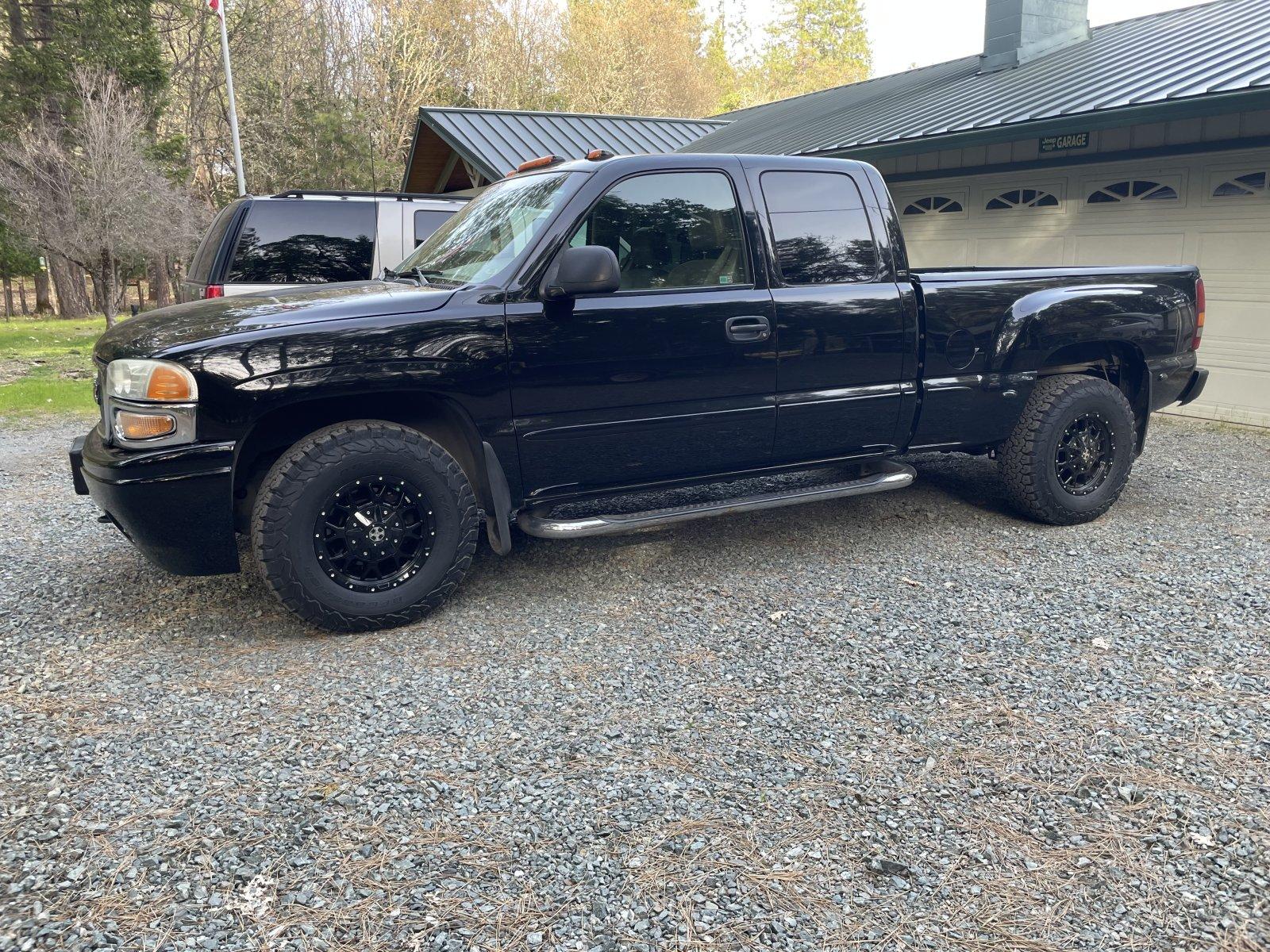
I currently have a 2002 Sierra Denali Quadrasteer. It’s a fantastic truck to drive. Below 45 MPH, the rear wheels steer opposite of the front. 45 is a “neutral” speed with no rear steering g, and above 45 the rear wheels steer the same way as the front. There is also a setting for trailer towing that gives a slightly smaller rear steering angle.

In practical use, low speed maneuvers feel like driving a much smaller vehicle. And on the highway, lane changes are also much smoother. The system really shines while towing, as trailer maneuverability and stability are greatly increased.

My truck is equipped with a 6.0 gas engine (yeah, gas hog). Also full time all wheel drive with no low range. The rear axle is a Dana 60, equivalent to a 1 ton axle, although the springs are half ton. Towing capacity is 10,700 lbs.

Bottom line- I love the truck!
IMG_8984.jpeg
 
Are airbags possible to level that Denali when towing? I wonder how that works with a fifth wheel.
If you are responding to my comments, then I believe there are airbags available. I looked into it at one point but never acted. It's a strangely equipped truck. Half ton suspension, one ton rear end, 6.0 engine normally found in 3/4 ton trucks, and a 4l65E transmission which is a beefed up half ton unit. I like keeping my trailer weight under 8K. Any heavier and I feel like I'm abusing it.

There are 3/4 ton vehicles available, and also Suburbans.
 
The option was too expensive when initially offered. Plus customer confidence was low. They should have offered it for less to increase market acceptance. Then it might have taken off.
 
My 03 Chevy 1500HD was also the 6.0L ….. yes horrible fuel economy but a monster in power and reliability; at least for me.
 
My 03 Chevy 1500HD was also the 6.0L ….. yes horrible fuel economy but a monster in power and reliability; at least for me.
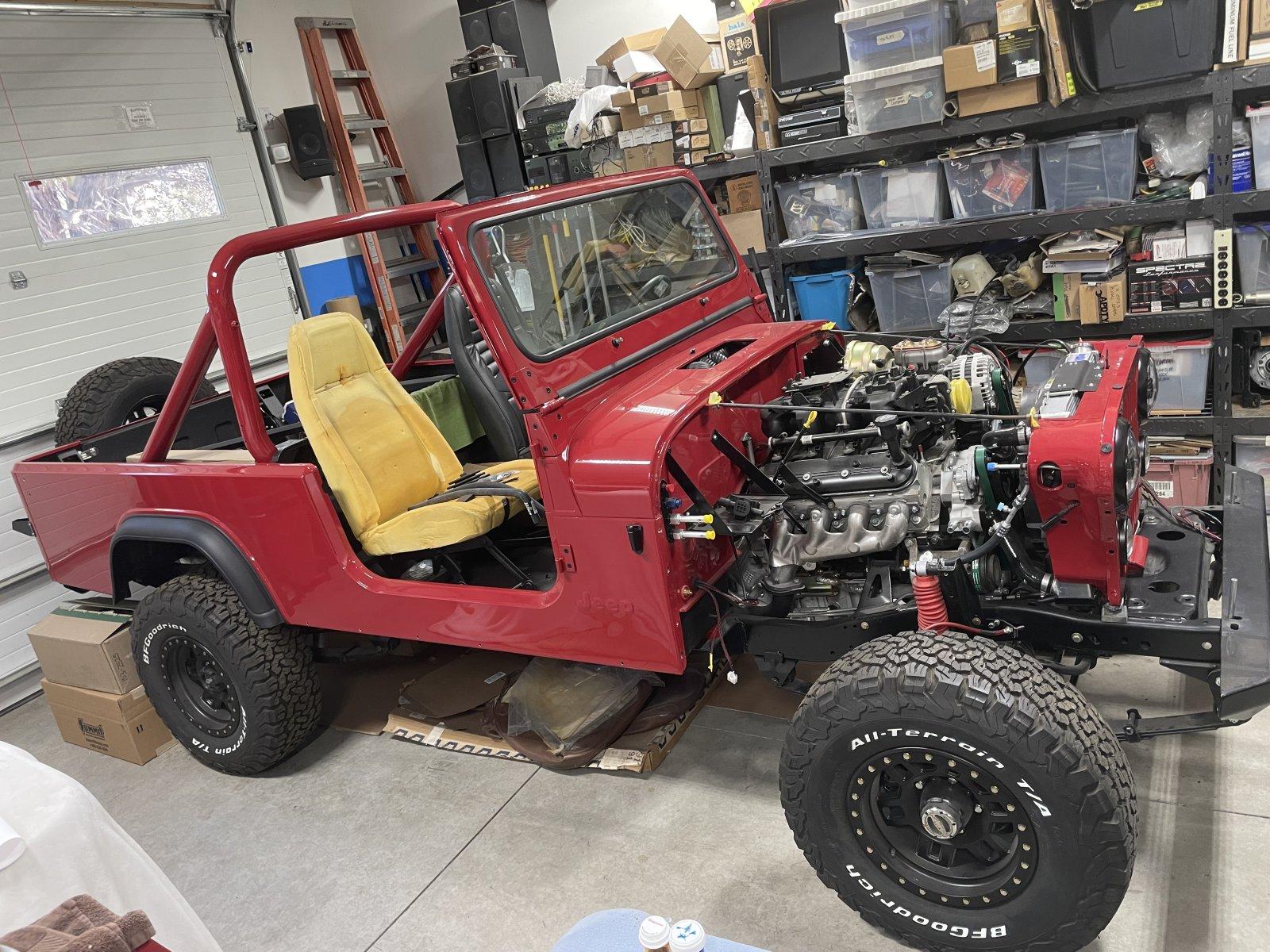
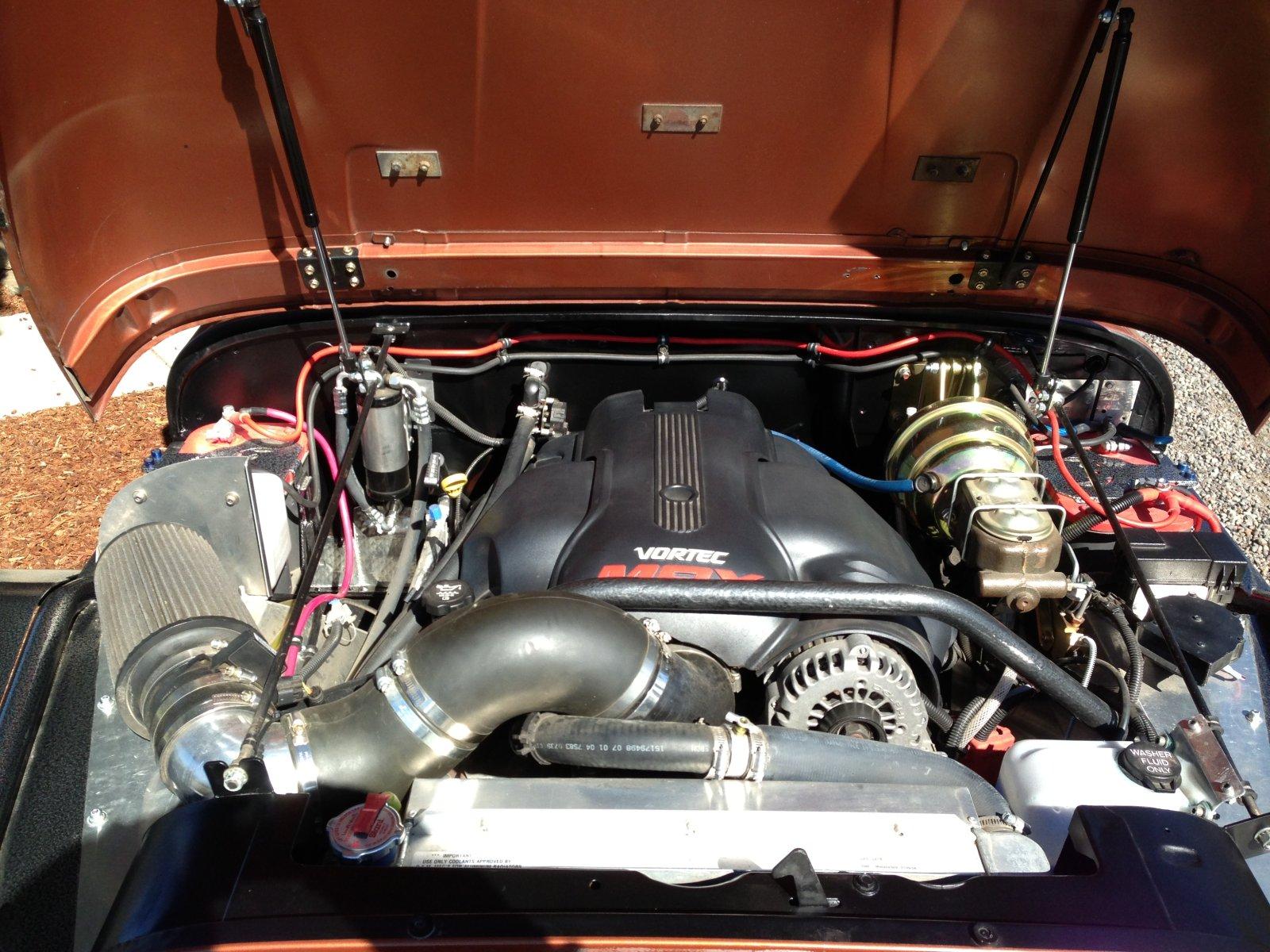
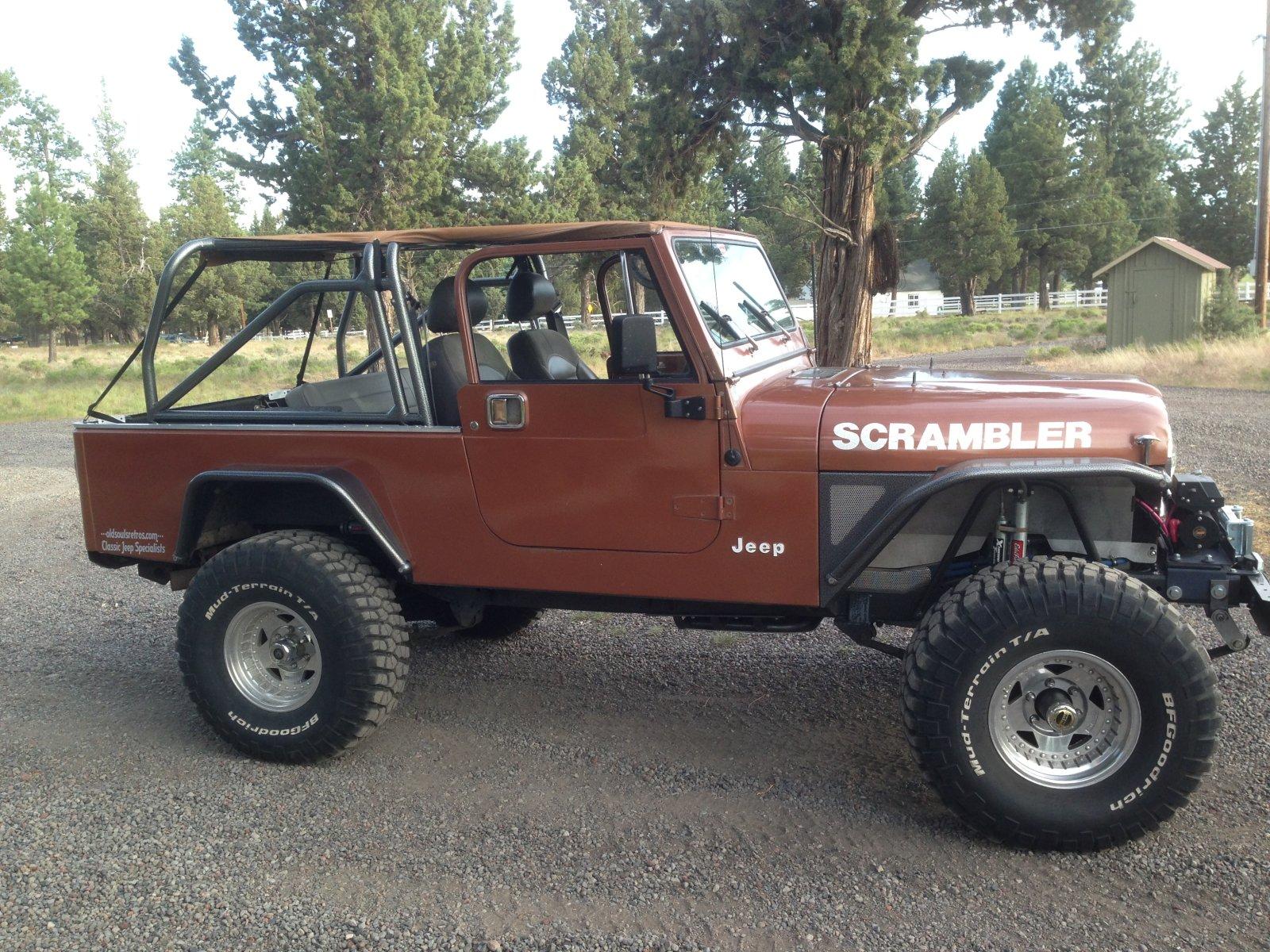
The LS engine platform is one of the best ever, in my opinion. I have had several 5.3’s and 6.0’s. I even have a 6.0 in my Jeep Scrambler.
IMG_6237.jpeg

And I had a 5.3 in my last Scrambler.
IMG_0201.jpeg
IMG_0028.jpeg
 
"The original Quadrasteer was not a failure, "
I dunno, seemed pretty much failure to those who had a rear wheel hub break off at hiway speed or U-joint snap on a rear hub. After the second incident, the guy didn't even try to have it fixed--towed it back to the dealership and traded it off as it sat on the tow truck.
 
I know the common issues with 4QS/4WS and wheel hubs breaking off is not one of them. The Quadrasteer axle is a Dana 60 one ton axle and isn't known for stuff breaking off. Of course any mechanical item can fail.

The Honda pre-dates the BMW. The 4WS Prelude came out in 1988. I think some other Japanese maker had a version as early as 1985 but it did not sell well. The Honda kinda did and the GMC (then later Chevy) really did when the price was lowered.

No, the rear wheels do not turn as far as the fronts. Even at slow speeds that would cause some odd handling. Anyone that's driven a forklift, reversed fast on gravel, or backed a trailer at speed knows. But there's a limit on front turning radius on everything too. 12 degrees can make a huge difference in maneuverability.

How does it work when steering into a skid? First, you'd need to know it's electronically operated and there is no direct link between the driver input and the rear steering. In fact, there is no mechanical link from the wheel to the front wheels on Telsa and other EVs. It's all based on inputs from the driver, yaw rate acceleration/deceleration, speed, throttle, brake, and steering wheel position/steering shaft torque/speed/direction of rotation. Basically it's 30-year old fighter jet tech put into a vehicle. It "knows" when to add assist and when to not.
 
Back
Top