B-17's being built

There's one sector of the war effort that has never been recognized for making the ultimate sacrifice.

Quite a few defense workers were killed or dies of natural causes while working in factories.

My paternal grandmother died of a heart attack while working at Doakes Aviation, in Long Beach California.
 
As an Amazon Associate we earn from qualifying purchases. Product prices and availability are accurate as of the date/time indicated and are subject to change.
Not AI but enhanced graphics & or colorization. At the end the planes are shown starting engines in the hanger 2 at a time. I believe normal procedure was one at a time & not in the hanger. And the acft were towed out not taxied out of the hanger.
 
I read somewhere that most of the news real footage was shot in color originally. Then converted to black and white. When they find original color footage it is amazing quality.

It seemed to be sped up a little but looked real to me.
 
I didn't try to 'open the link' BUT two of my Aunts were involved in aircraft production during WW2 while their husbands were fighting in Europe. I've heard stories about how sore and raw their fingers were from handling some of the poorly finished non-critical small parts.
At one point, Grandpa had 6 family members(2 sons, 2 SIL, and 2 DIL) involved in the war effort. Lucky family as ALL made it home.
 
From the title of this thread I thought it was going to be about someone building a B-17 now, which would be quite interesting to see. I assume that all of the plans and technical specifications are available for the B-17 and the other WWII aircraft. At some point there will not be a single functional B-17 left in the world, so building one exactly like they were originally built will be one way to keep this history alive.
 
Thanks for the video. Makes me wonder how many billions of rivets were used building the war planes?
A few. Just think how loud it was in those factories. I didn't see any ear plugs or other safety equipment. No way you could build anything today under those condition, but they survived.
Well, we couldn't build the stuff that was built during WWII under any condition today.
Ford produced a B-24 per hour at the Willow Run Factory.
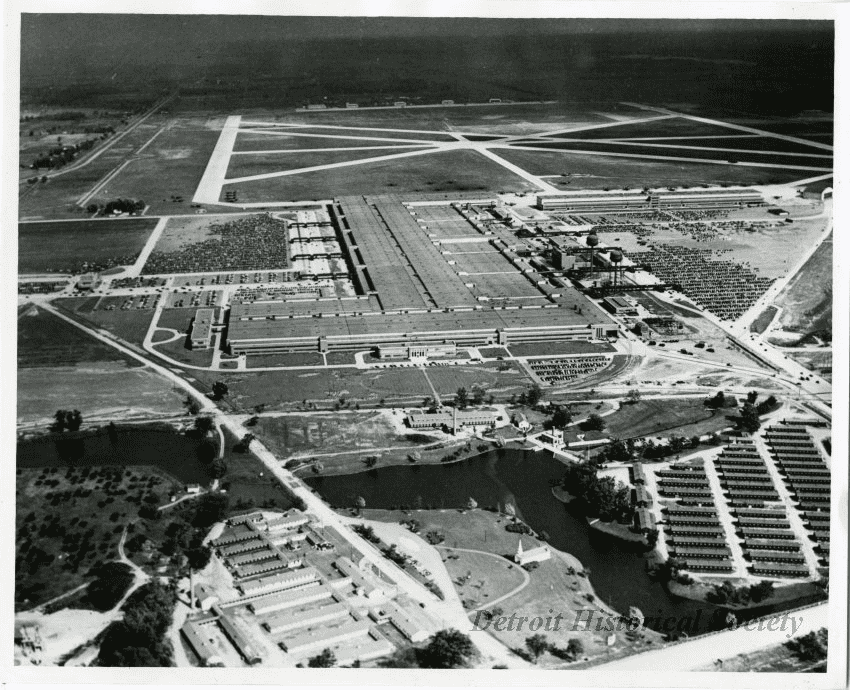
 
Some history of Willow Run
Of the million and one stories that emerged from WWII, it was America's industrial capacity that likely loomed the largest. There was nervousness among the allies at the start of the war and a smugness among the bad guys that America was like than ungainly kid who had not quite figured out how to use his arms and legs properly yet. It did not take long for that "kid" to become a beast and start producing so much stuff that the enemies refused to believe the numbers were real or sustainable.

Here's the rub.

They weren't just sustainable, they were growing and growing by leaps and bounds each year. Among all the stories of production, one stands particularly tall. We're talking about the Willow Run, Michigan factory that at its peak would push one B-24 bomber out the doors EVERY 55 MINUTES. The plant was far more the project of Edsel Ford than Henry (the old man had some real weird views) and it became one of the most impressive industrial operations in the world.

This was not just some assembly point, either. There were two halves to the 80 acre (under one roof!) building. Yes there was an assembly side but there was also a manufacturing side and that's where stuff as small as the rivets that hold the plane together got made. Yes, they made the rivets in the same plant as the airplanes.

This film is amazing and it's a bit of a well earned victory lap for Ford and the whole plant. Fantastic!

1728349824438.png

https://video.search.yahoo.com/sear...88202b5e6603ab305c45baa126bf5e46&action=click
 
Last edited:
I recently read this somewhere, don't remember where:

The B-17 was chosen to be the leading bomber early in World War II over the B-24. The B-24 was a newer design, faster, longer ranging, and carried a heavier bomb load. But the B-17, due to its low wing design, was considered better able to survive a crash landing. In event of a belly landing, pilots were instruced to "unfeather" feathered propellers. This to reduce damage to engine mounts as the props would simply bend back. The B-24, with its shoulder high wing, often broke apart in crash landings.

Photos of returning B-17s badly damaged attest to the fact that it was a "tough old bird."


Bob Wright
 
Having a few on sites which I'm not a member but not too bad. The peace of mind is worth it with scumbag hackers always fishing around for opportunity
After dumping Windows I stopped worrying about hackers and it's been something like 10 years and I have not done anything but keep Linux up to date and keep the resident firewall on.
 
Some history of Willow Run
Of the million and one stories that emerged from WWII, it was America's industrial capacity that likely loomed the largest. There was nervousness among the allies at the start of the war and a smugness among the bad guys that America was like than ungainly kid who had not quite figured out how to use his arms and legs properly yet. It did not take long for that "kid" to become a beast and start producing so much stuff that the enemies refused to believe the numbers were real or sustainable.

Here's the rub.

They weren't just sustainable, they were growing and growing by leaps and bounds each year. Among all the stories of production, one stands particularly tall. We're talking about the Willow Run, Michigan factory that at its peak would push one B-24 bomber out the doors EVERY 55 MINUTES. The plant was far more the project of Edsel Ford than Henry (the old man had some real weird views) and it became one of the most impressive industrial operations in the world.

This was not just some assembly point, either. There were two halves to the 80 acre (under one roof!) building. Yes there was an assembly side but there was also a manufacturing side and that's where stuff as small as the rivets that hold the plane together got made. Yes, they made the rivets in the same plant as the airplanes.

This film is amazing and it's a bit of a well earned victory lap for Ford and the whole plant. Fantastic!

View attachment 55939
https://video.search.yahoo.com/sear...88202b5e6603ab305c45baa126bf5e46&action=click
I took my very first A&P classes in 1968. We watched endless films such as this one for both propaganda and training purposes. These films, produced by the manufacturers and oil companies, were great, as was this film. I thoroughly enjoy watching this stuff.
And imagine... what we see at Willow Run was also happening throughout the country in other factories, producing Jeeps and airplanes and trucks and cannons and tanks. As Yamamoto said, America's industrial might was awesome. And he knew full well this industrial might would defeat Japan.

Thanks for letting me see this film.


.
 
Last edited:
I didn't see any smoke when the engines first fired. Those radials smoked bad for the first 10-15 seconds.
The problem with the radials is that crankcase oil would leak into the bottom cylinders overnight.
So most likely AI generated.
 
the caption under the video says it is takes and outtakes from the end of a movie called "American Romance" and so I was thinking about trying to find that movie and look at the end... the video just looks too good to me for that time period... lighting and another items are just not what one expects.
As for the industrial might of the U.S. in the 40's during WWII, someone a month or two ago posted about how Germany before we entered the war did research on our industrial strength and they determined that we would not be able to support a war effort industry because of all the men who would enlist... in their research they could not comprehend that our woman would go to work in the factories....
 

Latest posts

Back
Top