Any flying P61'S

warren5421

Single-Sixer
Joined
Jan 11, 2009
Messages
429
City & State/Province
Indy
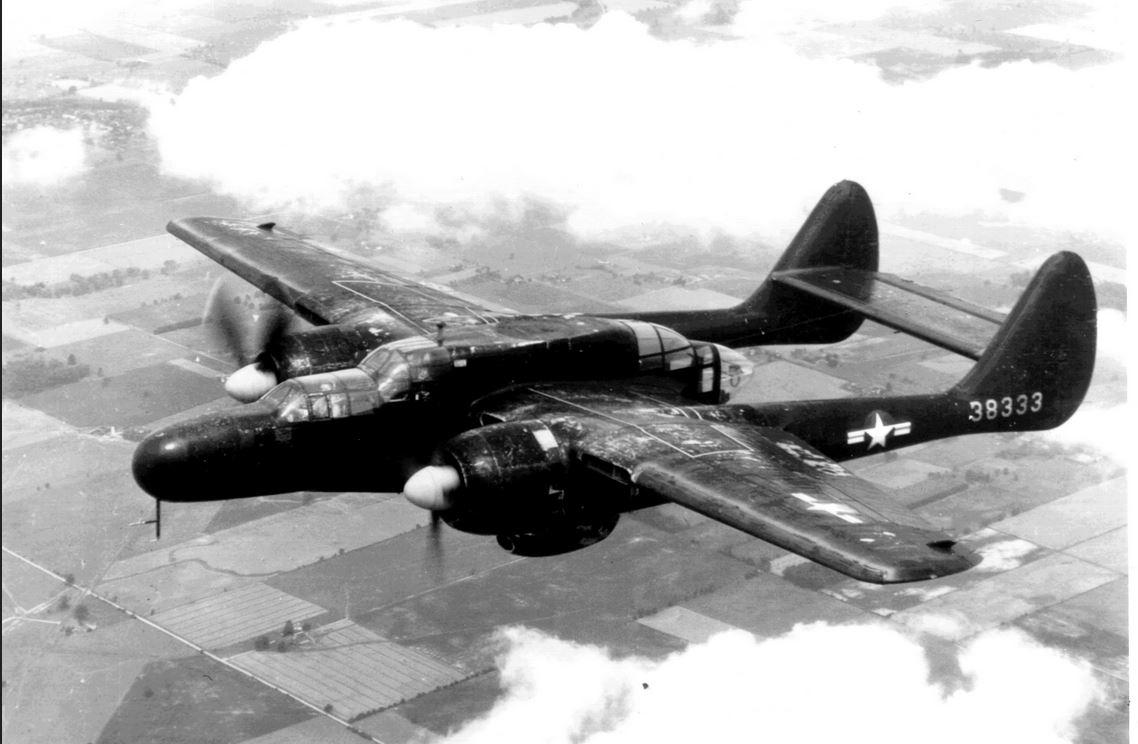
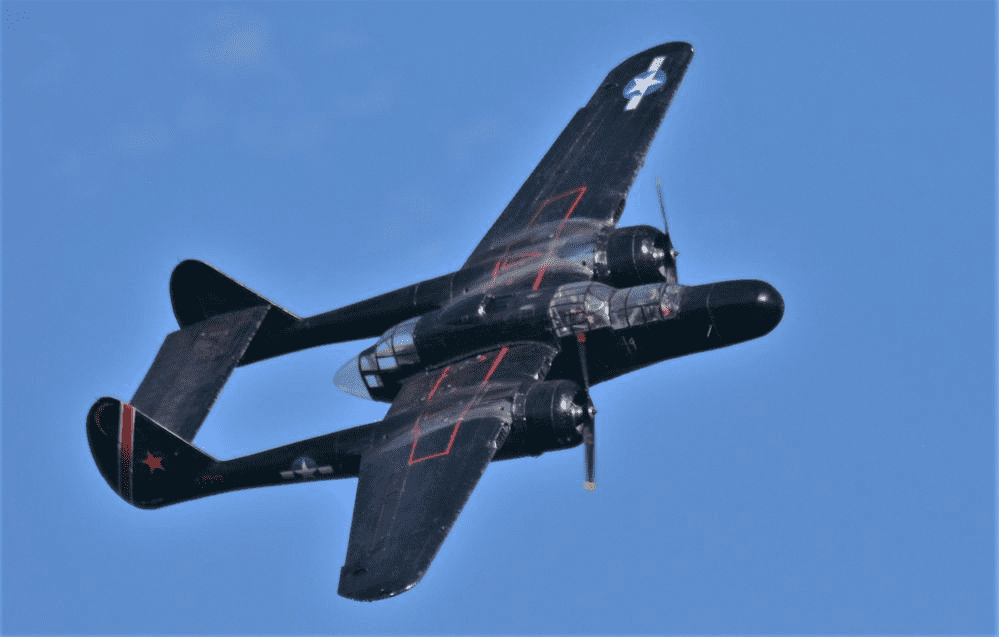
Question for you WWII airplain buffs! Is there any P61 Night Fighters still flying? Always liked the P38 then I seen an article about the P61 which was not a P38 but looked a lot like them but was a 2 seater.
 
From Wikipedia... Four P-61s are known to survive today.

  • P-61B-1-NO c/n 964 AAF Ser. No. 42-39445 is under restoration to flying status by the Mid-Atlantic Air Museum in Reading, Pennsylvania.[34][35] The aircraft crashed on 10 January 1945 on Mount Cyclops in Papua (province), Indonesia and was recovered in 1989 by the museum staff. The aircraft has been undergoing a slow restoration since then with the intention of eventually returning it to flying condition, with the civilian registration N550NF. When finished, it is expected it will be over 70% new construction. By May 2011, 80% of the restoration had been completed, with only the installation of the wings and engines remaining. As of June 2019, both engines have been overhauled and two brand new props have been hung. The museum has also started painting the aircraft.
  • P-61B-15-NO c/n 1234 AAF Ser. No. 42-39715 is on static display inside the Beijing Air and Space Museum at Beihang University in Beijing, China.[36][37] This aircraft was manufactured by Northrop Aircraft, Hawthorne, California, and accepted by the USAAF on 5 February 1945. It was sent to Newark, New Jersey, on 16 February 1945 and departed the US ten days later for the China Burma India Theater. It was then assigned to the Tenth Air Force, being allotted to the 427th Night Fighter Squadron on 3 March 1945. At the end of the war the Communist Chinese came to one of the forward airfields in Sichuan Province and ordered the Americans out, but instructed them to leave their aircraft. It has been reported that there had been three P-61s taken and sometime later the Chinese wrecked two of them. P-61B-15-NO c/n 1234 was stricken off charge by the USAAF on 31 December 1945.[38] P-61B-15-NO c/n 1234 was turned over to the Chengdu Institute of Aeronautical Engineering in 1947. When the institute moved to its present location, it did not take this aircraft with them, instead shipping it to BUAA (then called Beijing University of Aeronautics and Astronautics) in 1954 where it was placed on outside display with other aircraft as part of a museum. Sometime in 2008–09 the museum closed and the display aircraft were moved to a parking lot approximately 200 meters south. The outer wing sections of P-61B-15-NO c/n 1234 were removed during this transfer. It was confirmed in September 2012 that the museum's display aircraft were no longer at the parking lot. By April 2013 the P-61 had been reassembled and repainted in the new BASM building with the other aircraft that were previously outside.

  • P-61C-1-NO c/n 1376 AF Ser. No. 43-8330, is on display at the Steven F. Udvar-Hazy Center of the National Air and Space Museum in Chantilly, Virginia.[39] The aircraft was delivered to the USAAF on 28 July 1945. By 18 October, it was flying at Ladd Field, in Alaska conducting cold weather tests, where it remained until 30 March 1946. The aircraft was later moved to Pinecastle AAF in Florida for participation in the National Thunderstorm Project. Pinecastle AAF personnel removed the guns and turret from 43-8330 in July 1946 to make room for new equipment. In September the aircraft moved to Clinton County Army Air Base in Ohio, where it remained until January 1948. The Air Force then reassigned the aircraft to the Flight Test Division at Wright-Patterson Air Force Base in Dayton, Ohio. After being declared surplus in 1950 it was donated by the U.S. Air Force to the National Air Museum in Washington, D.C. (which became the National Air and Space Museum in 1966).

  • P-61C-1-NO c/n 1399 AAF Ser. No. 43-8353 is currently on display at the National Museum of the United States Air Force at Wright-Patterson AFB in Dayton, Ohio.[41] It is marked as P-61B-1-NO 42-39468 and painted to represent "Moonlight Serenade" of the 550th Night Fighter Squadron. The aircraft was presented to the Boy Scouts of America following World War II and kept at Grimes Field in Urbana, Ohio. On June 20, 1958, it was donated to the museum by the Tecumseh Chapter of the Boy Scouts of America in Springfield, Ohio. The aircraft has had a reproduction turret, fabricated by the museum's restoration group, installed.


On 3 October 1950, the P-61C was transferred to Park Ridge, Illinois, where it was stored along with other important aircraft destined for eventual display at the museum. The aircraft was moved temporarily to the museum's storage facility at Chicago's O'Hare International Airport, but before the museum could arrange to ferry the aircraft to Washington, D.C., the National Advisory Committee for Aeronautics asked to borrow it. In a letter to museum director Paul E. Garber dated 30 November 1950, NACA director for research I.H. Abbott described his agency's "urgent" need for the P-61 to use as a high-altitude research craft. Garber agreed to an indefinite loan of the aircraft, and the Black Widow arrived at the Ames Aeronautical Laboratory, at Naval Air Station Moffett Field in California, on 14 February 1951. When NACA returned the aircraft to the Smithsonian in 1954 it had accumulated only 530 total flight hours. From 1951 to 1954 the Black Widow was flown on roughly 50 flights as a mothership, dropping recoverable swept-wing test bodies as part of a National Advisory Committee for Aeronautics program to test swept-wing aerodynamics. NACA test pilot Donovan Heinle made the aircraft's last flight when he ferried it from Moffett Field to Andrews Air Force Base, arriving on 10 August 1954. The aircraft was stored there for seven years before Smithsonian personnel trucked it to the museum's Garber storage facility in Suitland, Maryland. In January 2006 the P-61C was moved into Building 10 so that Garber's 19 restoration specialists, three conservationists and three shop volunteers could work exclusively on the aircraft for its unveiling at the Steven F. Udvar-Hazy Center on 8 June. The aircraft was restored to its configuration as a flight test aircraft for swept-wing aeronautics, so the armament and turret were not replaced. A group of former P-61 air crews were present at the aircraft's unveiling, including former Northrop test pilot John Myers.[40]
 
As a matter of fact, the P-61 was a three seater. The gunner sat ikn the forward cockpit, just over the retracted nose wheel; the pilot above and behind him; and the radsr operator in the glazed "tail" behind the wing main spar. The radar operator could reverse his seat to face backward his seat and control the top turret, so he actually became the tail gunner. The top turret rotated 360* and could elevate 90* and was controled by both gunners. And the turret could be locked forward and all eight guns, 4 x 20mm, four .50 cal., could be fired by the pilot.

There was an attack version fo the Black Widow that had two crew members under a "bubble" canopy, but don't this was ever adopted.

Bob Wright

And................so far as I know, the 9th AF P-61s lacked the top turret. Had problems with stability at the time.
 
Last edited:
I remember reading that the P-61 could turn tighter than any other USAAF fighter, because it had control surfaces ("spoilers"?) that ran almost the full length of each wing. Don't know if that's true or not, but it's stuck in my memory!

As always FWIW, IIRC, YMMV, etc.
:)
 
Last edited:
As an Amazon Associate we earn from qualifying purchases. Product prices and availability are accurate as of the date/time indicated and are subject to change.
All you guys are sentenced to five days no shooting anything for NOT POSTING PICTURES!


Capturep61.JPG
 
Even though the Mid Atlantic Air Museum is restoring theirs to be airworthy, a recent post from one of the restorers(?) stated that due to octane rating of current avgas, they won't be able to, due to danger of not having enough power. This, to me, seems very strange. There are B-17's, B-29's, various Corsairs, Bearcats, Tiger Cats, Avengers, B-25's, P-47's, A-26's, not to mention almost 200 P-51's that still fly using modern avgas. The P-47, Corsair, Bearcat, Tiger Cat all use the same engine that the P-61 uses, and do not seem to have any problems either. I have always been one to say, if it is someone's property they are free to do with it what they want. In this case that would be to fly or not to fly, but the difference here is that they have received a lot of donations to their project. From the start it was stated, by the museum, that they were going to make it an airworthy aircraft. Not only airworthy, but to actually fly it. Now, if they do not fly it, then all those people who donated, me being one, have been lied to. That is wrong.
 
Even though the Mid Atlantic Air Museum is restoring theirs to be airworthy, a recent post from one of the restorers(?) stated that due to octane rating of current avgas, they won't be able to, due to danger of not having enough power. This, to me, seems very strange. There are B-17's, B-29's, various Corsairs, Bearcats, Tiger Cats, Avengers, B-25's, P-47's, A-26's, not to mention almost 200 P-51's that still fly using modern avgas. The P-47, Corsair, Bearcat, Tiger Cat all use the same engine that the P-61 uses, and do not seem to have any problems either. I have always been one to say, if it is someone's property they are free to do with it what they want. In this case that would be to fly or not to fly, but the difference here is that they have received a lot of donations to their project. From the start it was stated, by the museum, that they were going to make it an airworthy aircraft. Not only airworthy, but to actually fly it. Now, if they do not fly it, then all those people who donated, me being one, have been lied to. That is wrong.
That seems suspicious. Racing gasoline is octane rated up to 120 octane. Your day to day gas for your car is like 87 to 92. It's something like $18+ a gallon (almost California prices) so maybe it's too expensive for them if they have to go with something like that, especially with how much an aircraft like that would consume.
 
That seems suspicious. Racing gasoline is octane rated up to 120 octane. Your day to day gas for your car is like 87 to 92. It's something like $18+ a gallon (almost California prices) so maybe it's too expensive for them if they have to go with something like that, especially with how much an aircraft like that would consume.
Even though it limits power settings, 55" on a Mustang, 100LL is the fuel they use. This goes for the R2800's on the Corsair, Bearcat, Tigercat, P-47 etc. It is currently around $6.69 per gallon. The A-26 also uses the R2800, although I believe a different variant than the P-61. There are plenty of A-26's flying. My gut feeling is that they are, not to be mean, afraid to fly it. What I don't understand is why put all that work, all that money, tell the warbird community and all the fans of warbirds and especially the P-61, that they were building it to fly and then may not? Again, though, it is their property to do with what they want.
 
I think it is a BS excuse. All of the R2800 Warbirds of today use 100LL the same oct as 100/130 of WWII. I read that the high attitude escorts used 100/130 and the low level attacks used 80/87 in the ETO.

A little info of the R2800 notice the fuel grade of 100 octane.

2,000 hp (1,490 kW) was obtained from the R-2800 with 1 hp/1.4 cu in. (43.6 hp/L) of displacement. In 1939, when the R-2800 was introduced, no other aircooled engine came close to this figure, and even liquid-cooled ones barely matched it. The designing of conventional air-cooled radial engines had become so scientific and systematic by 1939 that the Double Wasp was introduced at a power rating that was not amenable to anything like the developmental power increases that had been common with earlier engines. It went to 2,100 hp (1,565 kW) in 1941 and to 2,400 hp (1,790 kW) late in the war, but that was all for production models. Experimental models, as always, were coaxed into giving more power, one fan-cooled subtype producing 2,800 hp (2,090 kW), and considerably more (up to 3,600 hp (2,685 kW)) on dynamometers. Technicians at the Republic Aircraft Corporation ran the engine at extreme boost pressures at 3,600 hp (2,685 kW) for 250 hours without any failure using common 100 octane avgas, but in general, the R-2800 was a rather fully developed powerplant right from the beginning
 
Back
Top