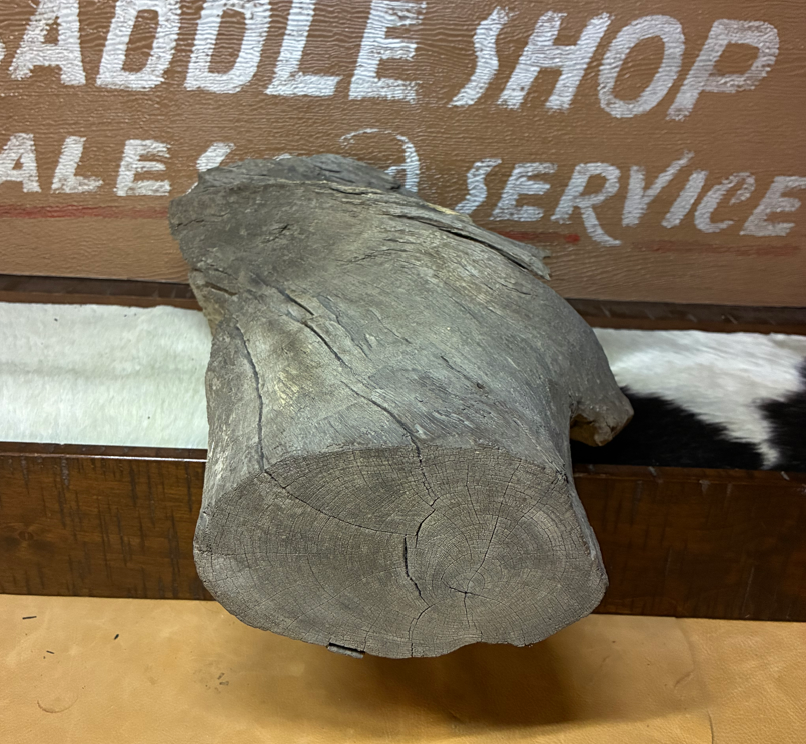
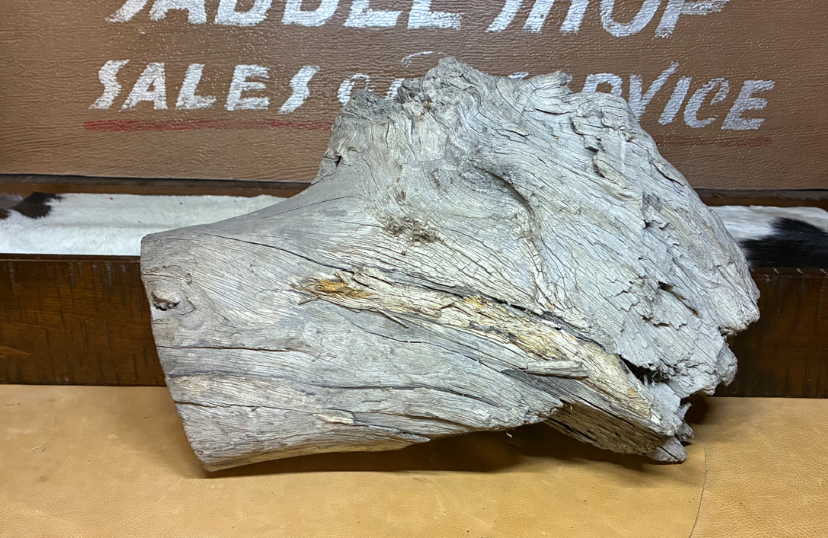
A chunk of wood and what to do with it...........

Joined
Dec 5, 2002
Messages
1,064
City & State/Province
Idaho Falls, ID
My uncle pulled this out of a strip pit back in southeastern Ohio probably back in the late 70s to early 80s. It sat at my grandfather's farm until his passing when I snagged it and have been carrying it around ever since. I've always struggled with what to do with it. My uncle says it's a chunk of Black Locust and I have to take him at his word as I have no clue. It is heavy, close to 15 pounds, and the grain is very tight at about 10 rings per inch. The measurements are around 14" by 9" by 5" and are the extremes of the measurements. Since it was a crotch piece I figured there is probably some nice grain under the surface that might make for a nice set of grip panels.

Thoughts or ideas? Both on what to do with it as well as the type of wood.
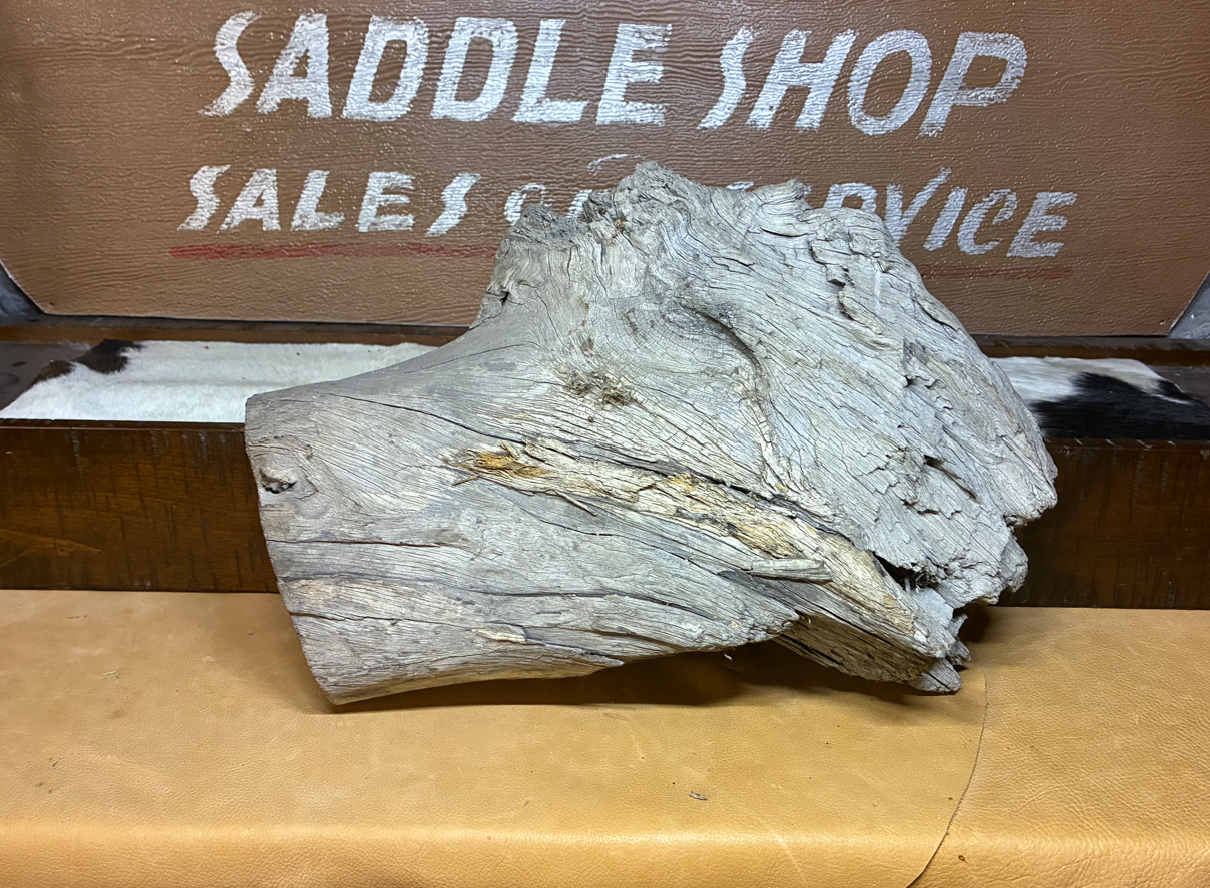
1785007267927.png

1785007298493.png

1785007320683.png
 
Go ahead and cross cut the ragged ends an inch or 2 at a time. You might get lucky, and if not you're not out anything except some of your time.

PS: I'd recommend using a handsaw for the cross cuts.
 
Last edited:
Are you saying north/south on this picture of east/west?

View attachment 110020

North to South (across the grain). I'd go ahead a cut off that small branch also. You want to end up with a reasonably log shaped piece that you can then start squaring up (rip sawing) a little at a time.to clean it up. If you have a bandsaw that's capable of ripping that size of log, and a jig to mount your work piece on, that job will go a lot faster and smoother. Examine every cut before cutting again. You're trying to make a squared up rectangular work piece that you can then cut grip blanks or whatever from.

Even if it ends up in the fireplace, you'll have learned something for the next time. :)

WARNING: DO NOT TRY TO DO ANY OF THIS WITH A TABLE SAW OR CHAINSAW.
 
Last edited:
You might get a couple of 'burl' plaques out of it but don't try to make the 'slices' too thin otherwise the slices may just crumble.
True 'black locust' will hold up well to weathering--I've used it for fence posts for decades BUT it will rot as opposed to osage orange (hedge) that will last almost for ever. I have a pile of black locust posts that we cut around 2010-11 and many of them are too rotten to use while 'hedge' posts seasoned that long are still good.
 
I'm with the "cut it and see" crowd. The link BP53 posted, the graining on black locust is beautiful You may even get some burl out of it, If you can get some grip size slabs out of it, there are several videos on stabilizing on the net. There are also some companies you can send it to have it done. Don't take this as a slap-down, but you may want to let that talented better half take a shot at doing something with it!
 
Last edited:
...too many checks and cracks and LONG ago dried out...seen better drift wood off the York River in Ontario...........back in the 60s,,,,,,,,, don't get your hopes up :rolleyes:

cut off the best looking part and make a desk set for your pens & memories:cool:
 
My uncle pulled this out of a strip pit back in southeastern Ohio probably back in the late 70s to early 80s. It sat at my grandfather's farm until his passing when I snagged it and have been carrying it around ever since. I've always struggled with what to do with it. My uncle says it's a chunk of Black Locust and I have to take him at his word as I have no clue. It is heavy, close to 15 pounds, and the grain is very tight at about 10 rings per inch. The measurements are around 14" by 9" by 5" and are the extremes of the measurements. Since it was a crotch piece I figured there is probably some nice grain under the surface that might make for a nice set of grip panels.

Thoughts or ideas? Both on what to do with it as well as the type of wood.

View attachment 109973
View attachment 109974
View attachment 109975
can you take a sharp knife or saw and cut crosswise across the cut end in the bottom photo. If you can then take a close up of the wood grain I can identify it for you. the way it is laying in the photo and the weathering makes it a little difficult to see the grain. The weight makes me think it could be black locust but if you could get me a better photo I can give you a better answer. I am a retired forester and grow black locust for fuelwood in my forest.
 
Cured black oak is generally too hard and dense for carving. Clean it up by removing the jagged edges, put some boiled linseed oil on it, set it on a shelf for a conversation piece. Or just make up a good story about it.🤠
It definitely not black oak, Quercus velutina. Maybe you had a mispelling.
 
After Taryn got the garage back to somewhat normal following her garage sale this weekend, we pulled out the saw and went at it. Yes Joey, Taryn did the cutting. To say it was tough would be the understatement of the day, and maybe week. Of course, the saw was not big enough to get all the way through, and I, she let me do this part, had to use a hand saw to finish it. The blade had heated up pretty good trying to cut through it so there were more than a few burnt spots. We took, and again by we I mean Taryn, 60 grit sandpaper to get it to this point.

1785112957304.webp

1785112990449.webp

1785113016449.webp
 
may not be solid enough for grips or anything structural but could be a candidate for a resin display project(s) to preserve your memories.

good luck! 🍻
 
Now cut the small part on the left east to west, see what it looks like. You will probably need to change blades, if that one got real hot it done. I would love to see what it looks like with the grain. There is some nice color in the end grain.
 
After Taryn got the garage back to somewhat normal following her garage sale this weekend, we pulled out the saw and went at it. Yes Joey, Taryn did the cutting. To say it was tough would be the understatement of the day, and maybe week. Of course, the saw was not big enough to get all the way through, and I, she let me do this part, had to use a hand saw to finish it. The blade had heated up pretty good trying to cut through it so there were more than a few burnt spots. We took, and again by we I mean Taryn, 60 grit sandpaper to get it to this point.

View attachment 110123
View attachment 110124
View attachment 110125
Hi thanks for doing that work so I can see it better. It is not Black Locust, Robinia pseudoacacia. I believe it to be an Elm species, Ulmus genus. The wiggly lines you see in the grain are a dead giveaway for elm. Those are wood cells that form a wavy line in the grain. Elm wood is beautiful when finished properly. You might be able to cut a useable piece out of it to make something special, like pistol grips. However, since I have no attachment to this it would be in my wood fired brick oven.
 
I figured it would have to be stabilized in order to have much use. I'm assuming the stabilization is completed after its cut into smaller slabs?
Yeah on that! The owner should take it to a saw-milll and have it sliced into about 1 1/2" lengthwise slabs and then stabilized. It should have beautiful grain and great for knife handles. I am a retired custom knife maker. I always used WSSI stabilizing service and years ago I was his first customer.
 
Back
Top