I always liked almost all the guns Bill Ruger created. I feel like he was the John Browning of our time .The ruger 77 was the pre64 Winchester of our time .Elmer Keith helped Bill develop many of his guns .The ruger black hawk the ruger 1 the ruger 77 they worked together to make the best guns of their tome

You are using an out of date browser. It may not display this or other websites correctly.
You should upgrade or use an alternative browser.
You should upgrade or use an alternative browser.
I miss Bill Ruger and the fine guns he created
- Thread starter dgr416
- Start date


he great certainly was and he had a great sense of what people wanted
I bought every ruger that I liked when I found them. I WISH I had not sold the full stock 44 mag it was beautiful .His pistols and rifles and shotguns were all classic .There are no new rugers that turn my eyes these days

gunman42782
Hunter
I know exactly how you feel. The new guns these days just feel like junk compared to the older ones. How many friggin plastic pistols can the market bear? Ruger was a gun guy, and he really understood what a lot of us wanted. Ruger is just a company now. Really ticked me off when they took the Sturm off of the guns and logo. I guarantee you Bill would not have approved of that. I guess it's the same old story though. I am sure there were folks not happy when we transitioned from cap and ball to metallic cartridges!
XenaRB
Bearcat
There’s nothing like owning and shooting one of Sturm Rugers firearms. From the Blackhawk to the Carbine to the M77’s. All high quality classic firearms.
Roger-
Roger-
I too miss the Sturm and the "S" from the logo. The logo is incomplete without it.I know exactly how you feel. The new guns these days just feel like junk compared to the older ones. How many friggin plastic pistols can the market bear? Ruger was a gun guy, and he really understood what a lot of us wanted. Ruger is just a company now. Really ticked me off when they took the Sturm off of the guns and logo. I guarantee you Bill would not have approved of that. I guess it's the same old story though. I am sure there were folks not happy when we transitioned from cap and ball to metallic cartridges!

buckeyeshooter
Blackhawk
The last new Ruger rifle I bought was mid 80's, when they moved on from the tang safety I quit buying them. Should have bought a few more. I have half a dozen single actions though, when the went 'new' with the small frame they no longer fit me hands.


I never had a gun of his day fail me either. Walmart was partly to Blame for the junk guns of today .They wanted them cheaper and cheaper. I LOVE the look AMd feel of good wood on a rifle too .Thompson center also had awesome wood in those days .I look st Henry rifles and it looks like pallet wood snd they are way over priced .Kids of today are really missing out on quality firearms. I am so glad I grew up when u did .

Armybrat
Hunter
The fit & finish of these two are just as good as my old three screws. (Am going to put some wood panels on the new BH)
The Single Seven birdshead is from 2018, the Single Six is 1959.
The 3 screw BH is from 1968, the NM BH is 2022.
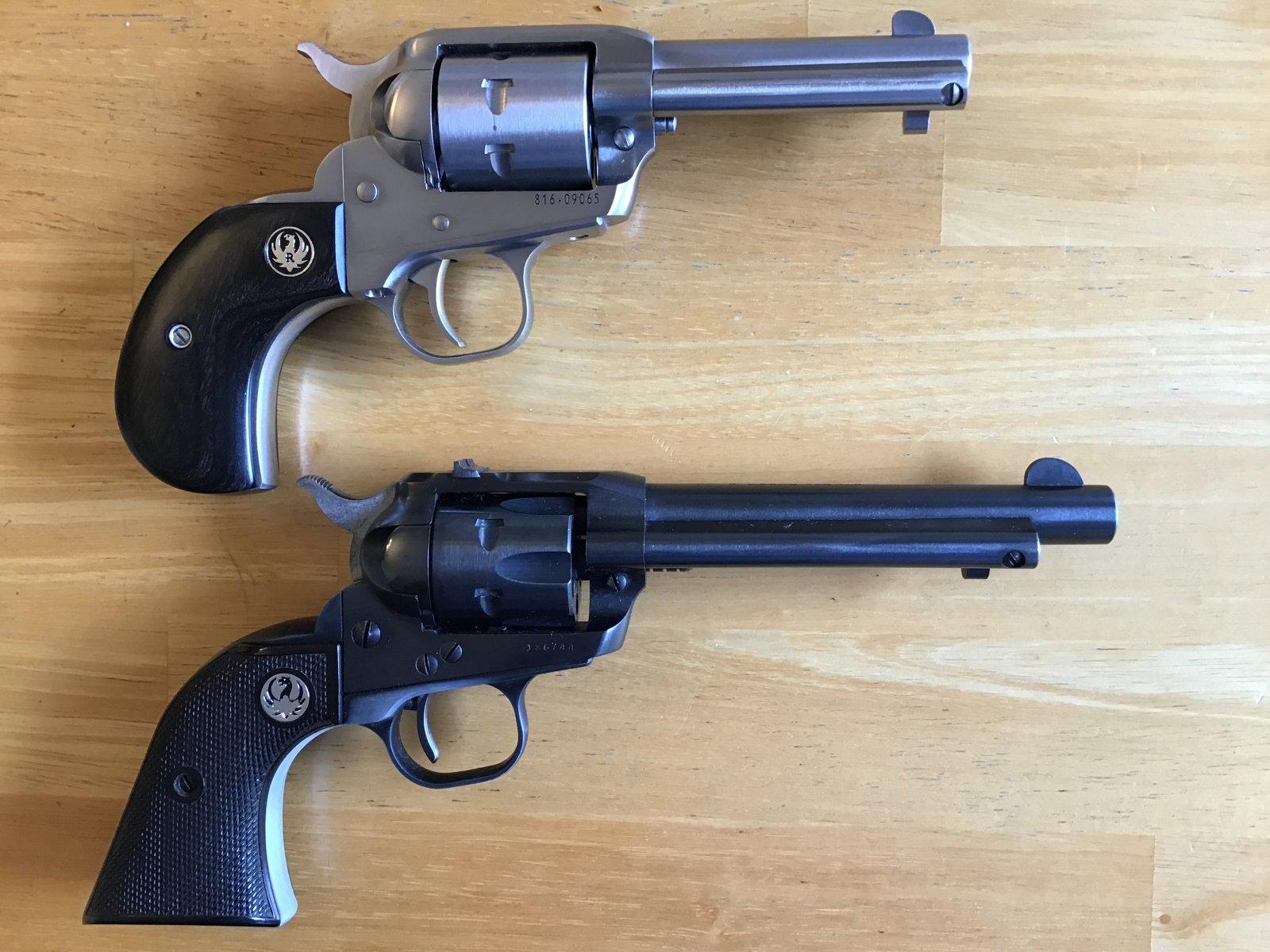
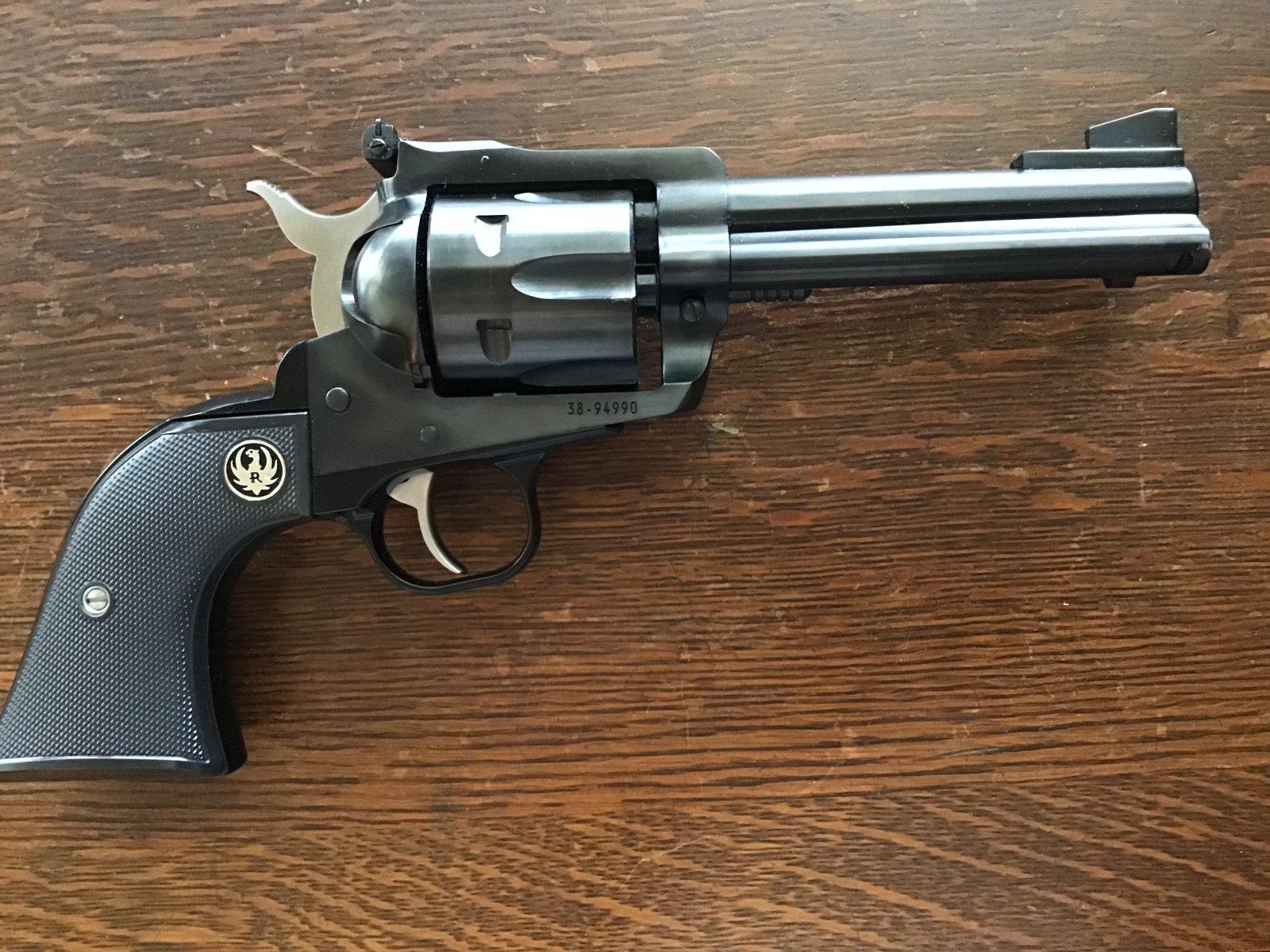
The Single Seven birdshead is from 2018, the Single Six is 1959.
The 3 screw BH is from 1968, the NM BH is 2022.

Count me in as well! They should have left that alone.I know exactly how you feel. The new guns these days just feel like junk compared to the older ones. How many friggin plastic pistols can the market bear? Ruger was a gun guy, and he really understood what a lot of us wanted. Ruger is just a company now. Really ticked me off when they took the Sturm off of the guns and logo. I guarantee you Bill would not have approved of that. I guess it's the same old story though. I am sure there were folks not happy when we transitioned from cap and ball to metallic cartridges!

Love Ruger! Their handguns, rifles and shotguns are great. Never had an issue with them, and own 6 presently.

Bill Ruger was the John M. Browning of his day. I am greatful I could acquire the Rugers I wanted. My most valued is the fruit of his last project., my Gold Label shotgun. Sadly they were not able to continue profitable production. I'd like to think Bill would have found a way if he could still run the company. When people ask my why I named my dog Ruger, I simply tell them that "Some of my favorite things are Rugers."
Xrayist
Single-Sixer
I agree. My first big bore revolver was a Blackhawk in .41 Mag. It was one of the first few hundred new models. Bought it in 1973. As funny as it may seem, I really miss the walnut grips on the Ruger single actions. I don't like the laminate, or plywood grips as I refer to them, don't like the plastic grips, with the exception of the Standard Autos. I miss the M77, especially the RS model, the No. 1 especially, and other wood stocked rifles. Thus ends my rant.
Armybrat
Hunter
Agree with that too.I agree. My first big bore revolver was a Blackhawk in .41 Mag. It was one of the first few hundred new models. Bought it in 1973. As funny as it may seem, I really miss the walnut grips on the Ruger single actions. I don't like the laminate, or plywood grips as I refer to them, don't like the plastic grips, with the exception of the Standard Autos. I miss the M77, especially the RS model, the No. 1 especially, and other wood stocked rifles. Thus ends my rant.
The first standard 10/22 I bought new in 1968 (on the day my first son was born) has a very nice grain walnut stock.
The two I bought in the late 1970s still had walnut stocks, but were very plain.
Nowadays they come with plastic or “hardwood”.

- Joined
- Feb 1, 2022
- Messages
- 1,029
Growing up as a po white kid in Montana, I envied the kids that had 10-22s and Ruger Mark II pistols. The “old guy” that used to take me hunting with him had a tang safety 7 mag that I thought was the best elk killing implement ever devised but the best I could afford was a Savage 110E chambered in the 7.
Now I have most of the guns that I dreamt of as a kid, many that I thought I’d never be able to own. Some of my favorites are still Rugers, the sleek and sexy No.1 is near the top of my list, especially my 303 British and my favorite chambered in the wonderful Holland and Holland Super 30. The RSMs and Mark II Express Rifles are amazing and show the love Bill had for fine Sporting arms. The Red Labels have given me plenty of enjoyment from quail in south TX to Grouse in Western MT. Still need a gold label!
The Blackhawks, RedHawks and Single Sixes always make me smile when they are in my Paws. So....Thank You Bill.
Cheers,
Cody
Now I have most of the guns that I dreamt of as a kid, many that I thought I’d never be able to own. Some of my favorites are still Rugers, the sleek and sexy No.1 is near the top of my list, especially my 303 British and my favorite chambered in the wonderful Holland and Holland Super 30. The RSMs and Mark II Express Rifles are amazing and show the love Bill had for fine Sporting arms. The Red Labels have given me plenty of enjoyment from quail in south TX to Grouse in Western MT. Still need a gold label!
The Blackhawks, RedHawks and Single Sixes always make me smile when they are in my Paws. So....Thank You Bill.
Cheers,
Cody
instructor
Single-Sixer
Not long-ago friend of mine offered to me at a very reasonable price what is commonly called "the American Express rifle" and it has a beautiful French walnut stock, controlled round feed action, rib which is machined as part of the barrel, typical African rear sight with one folding, forward sling mount with barrel band and it is balanced perfectly. Made in the early 90's with box and never been fired.
Caliber is 30-06 which is about as American as you can find in my opinion. These Ruger 77's were a bit on the expensive side when first introduced, but in reality, one of the finest bolt rifles made then and is still today a marvelous firearm in all regards. Yes, I definitely like Ruger firearms.
Caliber is 30-06 which is about as American as you can find in my opinion. These Ruger 77's were a bit on the expensive side when first introduced, but in reality, one of the finest bolt rifles made then and is still today a marvelous firearm in all regards. Yes, I definitely like Ruger firearms.
j p sixguns welldone
Single-Sixer
I agree. I'm still pissed about them taking the S out of the emblem it stood for something, and sure looked alot classier.
The ruger 77 was the smoothest bolt action made to me .The new ones bolt terrible .I could fire my ruger 77 in 338 win mag so fast at running game it was crazy .I once shot 4 does with it out at 250 yards and got all 4 with four shots .I really liked those guns .I have a rs 77 in 243 that I want ti make into a 260 rem which would be perfect for me now. I was going to make a 416 ruger out of one of my 338 win mags just don't Need it now .

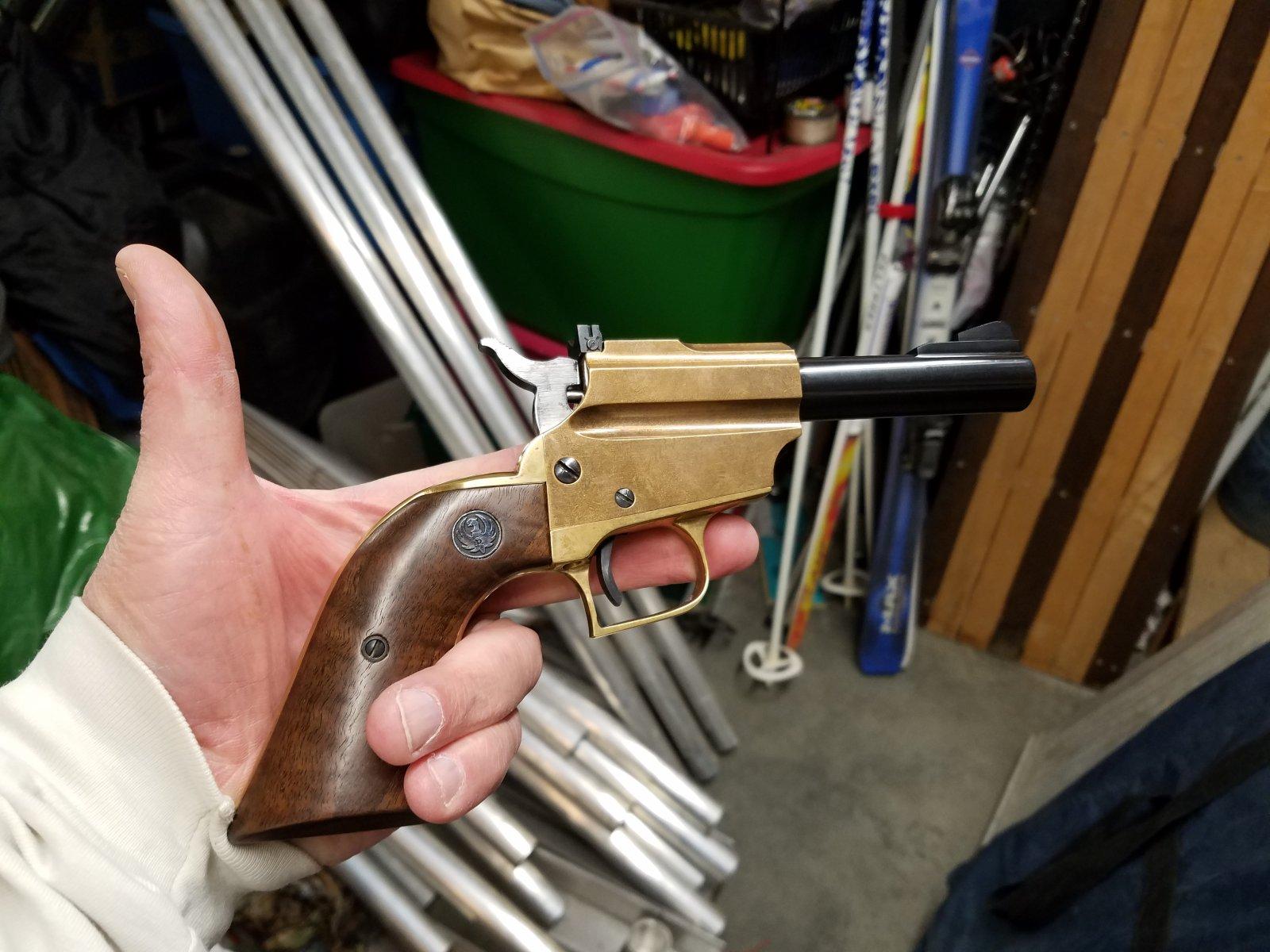
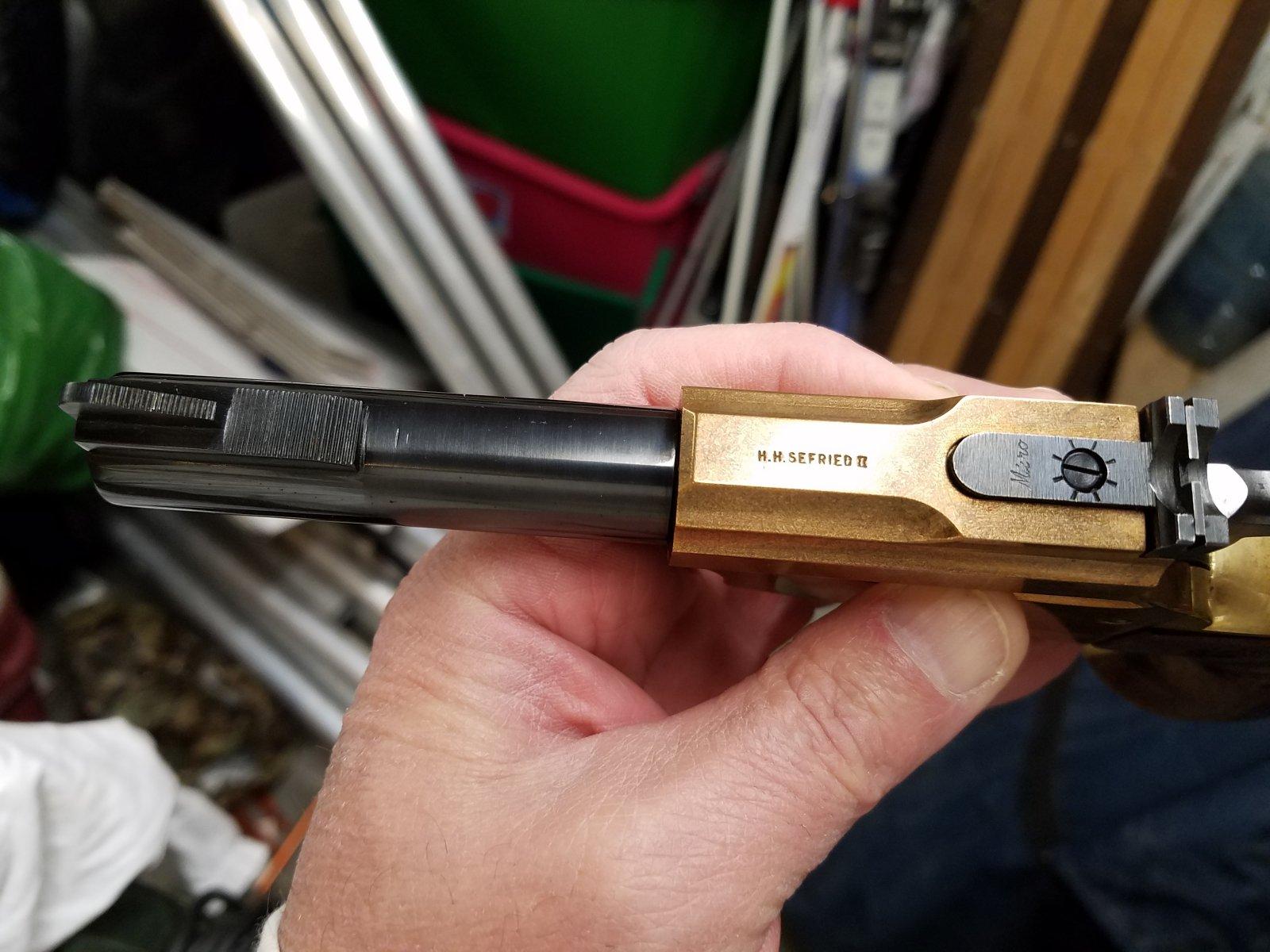
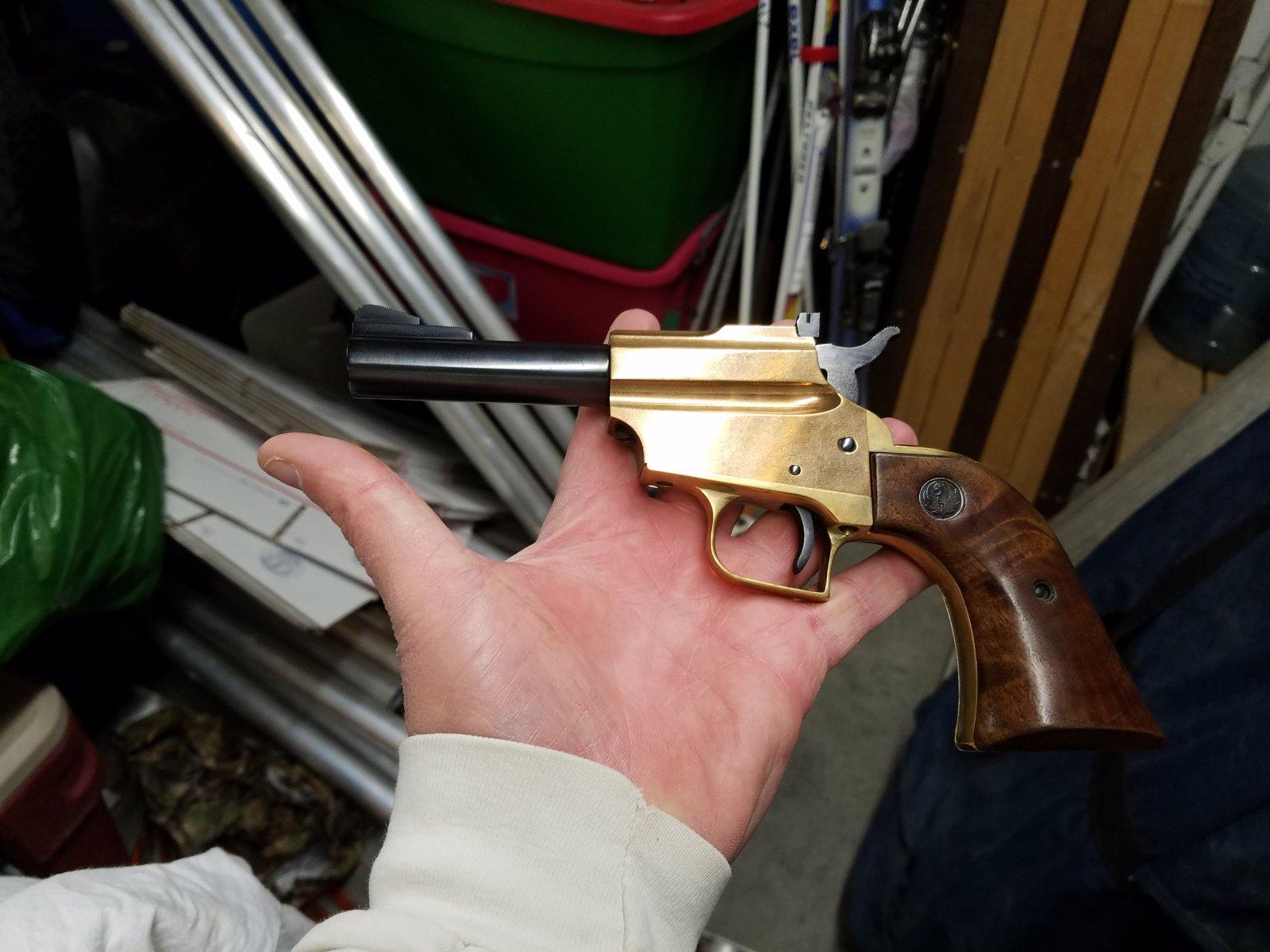
Bill Ruger was indeed a great American gun guy! but he had many great folks all around him. no doubt. but none more influential then Harry H. Sefried. master engineer and gun designer. bought into ruger in the late 50s some time. started work on break top single shots. prototype 22LR and hornet. never made into production. his Lockwork on the 1958 Super that came out in 1959 was perfection. Bill and Harry jointly developed the 1022, Deerstalker, Redhawk, ect...Harry's 1022 mag design still a master piece in its own right. designing of the Hawkeye pistol. (my personal favorite) and one of the coolest guns to own and shoot. im my option. Bill Rugers brilliance was surrounding himself with the best there was at the time. Harry H. Sefried was that guy. here's one of only two known H.H. Seyfried guns. Bill Ruger has one. and so do I. great read added below FNC.
Skip to content
YE CONNECTICUT GUN GUILD
CONNECTICUT'S PREMIER RESOURCE FOR FIREARMS COLLECTING AND PRESERVATION
Primary Navigation Menu
HARRY SEFRIED, GUN DESIGNER AND FORMER YCGG PRESIDENT
Starting on page 61 of R.L Wilson's monumental book, RUGER & HIS GUNS is a wonderful story of the development of the Ruger Deerstalker as told by gun designer and former YCGG president Harry Sefried. The Deerstalker was later renamed the Ruger Carbine. Harry's tale is several pages long, be sure to read the parts before and after the excerpt we have selected for this article.
The experimental cartridges that Harry cites in his story have not been lost to posterity; indeed, they are intact and reside in an extensive private cartridge collection in New England.
We thought that that the members would enjoy learning about this obscure bit of Ruger lore so, here on these pages we have a collective of three elements; Harry Sefried's wonderful story, plus a summary from the custodian of the cartridges and finally photos of the "hotter cartridges" described in both accounts.
As told by Harry; from RUGER & HIS GUNS;
A few years later, we decided it would be nice to have a hotter cartridge for the .44 Magnum Carbine. Bill asked me to look into that; so I necked down the .44 into a .357 bullet, into something you could fit into a Model 1892 Winchester. This special cartridge (called the "38-44 Magnum") was something very similar to the old .38-40. It could be loaded a little hotter, but we didn't have enough cartridge case capacity to do anything spectacular. We ended up making two special cartridges, one chambered in a .44 cartridge necked down to .357, and the other a .44 necked down to .40 caliber (to take a .38-40 bullet, which is actually .40 caliber). For the case, I took the brass from a .45-70, and cut the rim off in a lathe, turning it down to be compatible with the .44 magnum rim diameter, so I could use the same bolt, extractor and everything else, though it had a bigger chamber by quite a bit.
We found the .40's energy above and beyond the .30-30 Winchester. Bill and I went to a meeting with the fellows from Winchester-Olin, and we tried to get them to manufacture the cartridge. I was using Hercules 2400 powder, and about 100 percent filling the case, which gave us reasonable pressures and beautiful energy. It had the advantage that you couldn't overload it with 2400.
They decided they couldn't possibly load it to that capacity, and would have to do only 90 percent, which would make it less powerful than the .30-30. Bill, Jr. took a Bighorn Sheep with either the special .357 0r .40 cartridge. The hot one was the .40 caliber. We were on the verge of something very spectacular, but Winchester didn't want to compete with their own .30-30.
Summary from the conservator;
Gun designer Harry Sefried worked closely with Bill Ruger in the 1960-1980 time period. Some of his work includes the Hawkeye, the Security Six and Redhawk stainless revolvers, Mini14, 10/22 rotary magazine and the .44 Magnum Carbine. I became friends with him the few years before he died in 2005 and learned much about the art and technology of gun design. As a cartridge collector I was also quite interested in the design work he did on rounds to increase the power of the Carbine.
The mechanism required a round of about .44 Magnum length and case diameter. Initial work used .44 Magnum cases necked to .40 and .357. Getting rid of the rim allowed for a fatter case body, initially based on the .284 Winchester case, and then the .45-70 with the rim reduced to a groove, again necked to .40 and .357. They were pleased with the .40/.45-70 design and approached Winchester to load it for them commercially. Winchester declined, ostensibly on the grounds that the case would have to be powder filled beyond acceptable limits. Harry felt it was because the new round was more powerful than the old Winchester standby .30-30 and would threaten their market with the deer hunters.
Harry was also experimenting with a round for a box magazine fed version of the Carbine. Remington's Mike Walker designed a .30 caliber round for him on a shortened .300 Savage case (same head diameter as the .30-06, .308 Winchester, etc.) with about the same overall length as the .44 Magnum. He was running them through a Winchester Model 1910 magazine in .401 Self Loading size.
Nothing ever came of the Carbine enhancement project, and it all ended up in his overflowing basement where I discovered it one day.
Harry was always going to find his notes on the project so we could do a more precise write up, but that never happened. Just one funny story (of which Harry was full of) involving the Carbine, Bill Ruger and a porcupine overhead in a tree. They were looking for some poor animal to test it out on and Bill told Harry to shoot it, while he stood underneath to watch the effect. The porcupine exploded showering Bill with all kinds of unsavory parts and pieces, much to his extreme displeasure. Harry laughed himself silly.
Photos of the experimental cartridges;
44 Mag rimless, .45-70 rimless loaded with .44 bullets, .40 on .308 cases, .40/.44 Mag, .357/.44 Mag
Made from necked-down 45/70 brass with the rim removed and an extraction groove added. .40/45-70 and .357/45-70.
Pressure test, cutaway cases, unloaded and various bullet types loaded in the .357/45-70 with the rim removed and an extraction groove added.
Short .300 on various cases, Harry said round was developed by Remington's Mike Walker for use in clip fed mag for the Carbine, Harry was using a magazine from the Winchester .401 Self Loader for his experiments.
looks like Hawkeye don't it!
Skip to content
YE CONNECTICUT GUN GUILD
CONNECTICUT'S PREMIER RESOURCE FOR FIREARMS COLLECTING AND PRESERVATION
Primary Navigation Menu
HARRY SEFRIED, GUN DESIGNER AND FORMER YCGG PRESIDENT
Starting on page 61 of R.L Wilson's monumental book, RUGER & HIS GUNS is a wonderful story of the development of the Ruger Deerstalker as told by gun designer and former YCGG president Harry Sefried. The Deerstalker was later renamed the Ruger Carbine. Harry's tale is several pages long, be sure to read the parts before and after the excerpt we have selected for this article.
The experimental cartridges that Harry cites in his story have not been lost to posterity; indeed, they are intact and reside in an extensive private cartridge collection in New England.
We thought that that the members would enjoy learning about this obscure bit of Ruger lore so, here on these pages we have a collective of three elements; Harry Sefried's wonderful story, plus a summary from the custodian of the cartridges and finally photos of the "hotter cartridges" described in both accounts.
As told by Harry; from RUGER & HIS GUNS;
A few years later, we decided it would be nice to have a hotter cartridge for the .44 Magnum Carbine. Bill asked me to look into that; so I necked down the .44 into a .357 bullet, into something you could fit into a Model 1892 Winchester. This special cartridge (called the "38-44 Magnum") was something very similar to the old .38-40. It could be loaded a little hotter, but we didn't have enough cartridge case capacity to do anything spectacular. We ended up making two special cartridges, one chambered in a .44 cartridge necked down to .357, and the other a .44 necked down to .40 caliber (to take a .38-40 bullet, which is actually .40 caliber). For the case, I took the brass from a .45-70, and cut the rim off in a lathe, turning it down to be compatible with the .44 magnum rim diameter, so I could use the same bolt, extractor and everything else, though it had a bigger chamber by quite a bit.
We found the .40's energy above and beyond the .30-30 Winchester. Bill and I went to a meeting with the fellows from Winchester-Olin, and we tried to get them to manufacture the cartridge. I was using Hercules 2400 powder, and about 100 percent filling the case, which gave us reasonable pressures and beautiful energy. It had the advantage that you couldn't overload it with 2400.
They decided they couldn't possibly load it to that capacity, and would have to do only 90 percent, which would make it less powerful than the .30-30. Bill, Jr. took a Bighorn Sheep with either the special .357 0r .40 cartridge. The hot one was the .40 caliber. We were on the verge of something very spectacular, but Winchester didn't want to compete with their own .30-30.
Summary from the conservator;
Gun designer Harry Sefried worked closely with Bill Ruger in the 1960-1980 time period. Some of his work includes the Hawkeye, the Security Six and Redhawk stainless revolvers, Mini14, 10/22 rotary magazine and the .44 Magnum Carbine. I became friends with him the few years before he died in 2005 and learned much about the art and technology of gun design. As a cartridge collector I was also quite interested in the design work he did on rounds to increase the power of the Carbine.
The mechanism required a round of about .44 Magnum length and case diameter. Initial work used .44 Magnum cases necked to .40 and .357. Getting rid of the rim allowed for a fatter case body, initially based on the .284 Winchester case, and then the .45-70 with the rim reduced to a groove, again necked to .40 and .357. They were pleased with the .40/.45-70 design and approached Winchester to load it for them commercially. Winchester declined, ostensibly on the grounds that the case would have to be powder filled beyond acceptable limits. Harry felt it was because the new round was more powerful than the old Winchester standby .30-30 and would threaten their market with the deer hunters.
Harry was also experimenting with a round for a box magazine fed version of the Carbine. Remington's Mike Walker designed a .30 caliber round for him on a shortened .300 Savage case (same head diameter as the .30-06, .308 Winchester, etc.) with about the same overall length as the .44 Magnum. He was running them through a Winchester Model 1910 magazine in .401 Self Loading size.
Nothing ever came of the Carbine enhancement project, and it all ended up in his overflowing basement where I discovered it one day.
Harry was always going to find his notes on the project so we could do a more precise write up, but that never happened. Just one funny story (of which Harry was full of) involving the Carbine, Bill Ruger and a porcupine overhead in a tree. They were looking for some poor animal to test it out on and Bill told Harry to shoot it, while he stood underneath to watch the effect. The porcupine exploded showering Bill with all kinds of unsavory parts and pieces, much to his extreme displeasure. Harry laughed himself silly.
Photos of the experimental cartridges;
44 Mag rimless, .45-70 rimless loaded with .44 bullets, .40 on .308 cases, .40/.44 Mag, .357/.44 Mag
Made from necked-down 45/70 brass with the rim removed and an extraction groove added. .40/45-70 and .357/45-70.
Pressure test, cutaway cases, unloaded and various bullet types loaded in the .357/45-70 with the rim removed and an extraction groove added.
Short .300 on various cases, Harry said round was developed by Remington's Mike Walker for use in clip fed mag for the Carbine, Harry was using a magazine from the Winchester .401 Self Loader for his experiments.
looks like Hawkeye don't it!
Attachments
Last edited by a moderator:
bisleyfan41
Blackhawk
Thanks for that FNC! Great read!
Thank you for this great article. It would be a real pity not to let the world of such great experiments.Bill Ruger was indeed a great American gun guy! but he had many great folks all around him. no doubt. but none more influential then Harry H. Sefried. master engineer and gun designer. bought into ruger in the late 50s some time. started work on break top single shots. prototype 22LR and hornet. never made into production. his Lockwork on the 1958 Super that came out in 1959 was perfection. Bill and Harry jointly developed the 1022, Deerstalker, Redhawk, ect...Harry's 1022 mag design still a master piece in its own right. designing of the Hawkeye pistol. (my personal favorite) and one of the coolest guns to own and shoot. im my option. Bill Rugers brilliance was surrounding himself with the best there was at the time. Harry H. Sefried was that guy. here's one of only two known H.H. Seyfried guns. Bill Ruger has one. and so do I. great read added below FNC.
Skip to content
YE CONNECTICUT GUN GUILD
CONNECTICUT'S PREMIER RESOURCE FOR FIREARMS COLLECTING AND PRESERVATION
Primary Navigation Menu
HARRY SEFRIED, GUN DESIGNER AND FORMER YCGG PRESIDENT
Starting on page 61 of R.L Wilson's monumental book, RUGER & HIS GUNS is a wonderful story of the development of the Ruger Deerstalker as told by gun designer and former YCGG president Harry Sefried. The Deerstalker was later renamed the Ruger Carbine. Harry's tale is several pages long, be sure to read the parts before and after the excerpt we have selected for this article.
The experimental cartridges that Harry cites in his story have not been lost to posterity; indeed, they are intact and reside in an extensive private cartridge collection in New England.
We thought that that the members would enjoy learning about this obscure bit of Ruger lore so, here on these pages we have a collective of three elements; Harry Sefried's wonderful story, plus a summary from the custodian of the cartridges and finally photos of the "hotter cartridges" described in both accounts.
As told by Harry; from RUGER & HIS GUNS;
A few years later, we decided it would be nice to have a hotter cartridge for the .44 Magnum Carbine. Bill asked me to look into that; so I necked down the .44 into a .357 bullet, into something you could fit into a Model 1892 Winchester. This special cartridge (called the "38-44 Magnum") was something very similar to the old .38-40. It could be loaded a little hotter, but we didn't have enough cartridge case capacity to do anything spectacular. We ended up making two special cartridges, one chambered in a .44 cartridge necked down to .357, and the other a .44 necked down to .40 caliber (to take a .38-40 bullet, which is actually .40 caliber). For the case, I took the brass from a .45-70, and cut the rim off in a lathe, turning it down to be compatible with the .44 magnum rim diameter, so I could use the same bolt, extractor and everything else, though it had a bigger chamber by quite a bit.
We found the .40's energy above and beyond the .30-30 Winchester. Bill and I went to a meeting with the fellows from Winchester-Olin, and we tried to get them to manufacture the cartridge. I was using Hercules 2400 powder, and about 100 percent filling the case, which gave us reasonable pressures and beautiful energy. It had the advantage that you couldn't overload it with 2400.
They decided they couldn't possibly load it to that capacity, and would have to do only 90 percent, which would make it less powerful than the .30-30. Bill, Jr. took a Bighorn Sheep with either the special .357 0r .40 cartridge. The hot one was the .40 caliber. We were on the verge of something very spectacular, but Winchester didn't want to compete with their own .30-30.
Summary from the conservator;
Gun designer Harry Sefried worked closely with Bill Ruger in the 1960-1980 time period. Some of his work includes the Hawkeye, the Security Six and Redhawk stainless revolvers, Mini14, 10/22 rotary magazine and the .44 Magnum Carbine. I became friends with him the few years before he died in 2005 and learned much about the art and technology of gun design. As a cartridge collector I was also quite interested in the design work he did on rounds to increase the power of the Carbine.
The mechanism required a round of about .44 Magnum length and case diameter. Initial work used .44 Magnum cases necked to .40 and .357. Getting rid of the rim allowed for a fatter case body, initially based on the .284 Winchester case, and then the .45-70 with the rim reduced to a groove, again necked to .40 and .357. They were pleased with the .40/.45-70 design and approached Winchester to load it for them commercially. Winchester declined, ostensibly on the grounds that the case would have to be powder filled beyond acceptable limits. Harry felt it was because the new round was more powerful than the old Winchester standby .30-30 and would threaten their market with the deer hunters.
Harry was also experimenting with a round for a box magazine fed version of the Carbine. Remington's Mike Walker designed a .30 caliber round for him on a shortened .300 Savage case (same head diameter as the .30-06, .308 Winchester, etc.) with about the same overall length as the .44 Magnum. He was running them through a Winchester Model 1910 magazine in .401 Self Loading size.
Nothing ever came of the Carbine enhancement project, and it all ended up in his overflowing basement where I discovered it one day.
Harry was always going to find his notes on the project so we could do a more precise write up, but that never happened. Just one funny story (of which Harry was full of) involving the Carbine, Bill Ruger and a porcupine overhead in a tree. They were looking for some poor animal to test it out on and Bill told Harry to shoot it, while he stood underneath to watch the effect. The porcupine exploded showering Bill with all kinds of unsavory parts and pieces, much to his extreme displeasure. Harry laughed himself silly.
Photos of the experimental cartridges;
44 Mag rimless, .45-70 rimless loaded with .44 bullets, .40 on .308 cases, .40/.44 Mag, .357/.44 Mag
Made from necked-down 45/70 brass with the rim removed and an extraction groove added. .40/45-70 and .357/45-70.
Pressure test, cutaway cases, unloaded and various bullet types loaded in the .357/45-70 with the rim removed and an extraction groove added.
Short .300 on various cases, Harry said round was developed by Remington's Mike Walker for use in clip fed mag for the Carbine, Harry was using a magazine from the Winchester .401 Self Loader for his experiments.
looks like Hawkeye don't it!
Semper Fidelis,
Soup
Similar threads
- Replies
- 6
- Views
- 378


- Replies
- 0
- Views
- 255
- Replies
- 10
- Views
- 637

- Replies
- 7
- Views
- 292
- Replies
- 25
- Views
- 805

