
I have two #1's Both are Varmint models. One is .243 Win the other is .25-06 Rem. They both shoot well, but fall short of one MOA. Any suggestions for improving accuracy?


#1's aren't popular in my area but to be truthful, I've never heard a #1 owner brag about accuracy.


... I'm in the camp that the No.1 is ideally suited to big bore cartridges fired at short distances 50-75 yards (<100yds) with iron sights. I don't like the looks of a No.1 with a scope, and think longer range performance is better handled with a scoped bolt-action...


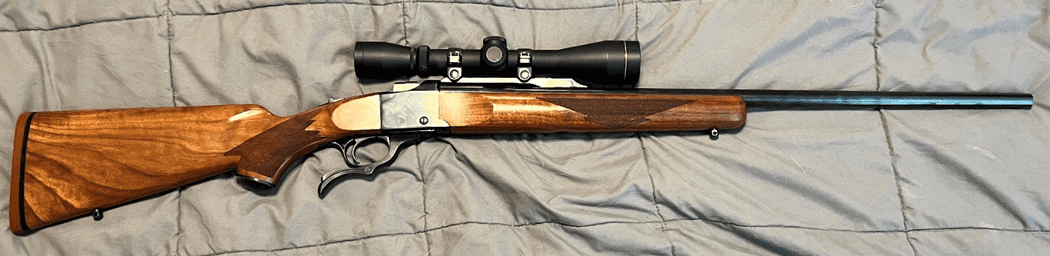

.257 WeatherbyDon't sell the No. 1 short. There are a lot of posts in this thread, including my own, of them shooting sub-MOA. With the first on in my post I was shooting clovers at 100 yds, with the occasional shooter caused flyer. As for a reasonable price, what caliber are you looking for?
Don't know what you consider reasonable, but brand new (if you can find them) that caliver is a $1600-$1800 gun....257 Weatherby

I beg to differ. Even my two #1Bs in 30-06 that don't group worth a damn are fun to shoot. One's best rrsults are 2.0" and the other 2.5" and guess what? The will kill deer very very dead. The longest shot I've taken with them as game was about 250 yrds. One shot and down. All my Ruger #1s are red pad guns from the mid 70s to the around 1978 or so except one from 1994 which has a black pad and a Ruger made barrel. The rest all have Wilson barrels which I think compounds the known problems with the #1.I've always wanted a Ruger 1 but never found one in the caliber I wanted at a reasonable price. Maybe a good thing. A rifle that can't shoot 1 MOA is no fun. I'm disappointed.
Perhaps the most accurate three rifles I ever owned were as follows. .22 PPC, 6mm ppc and 6mmBR.I have two #1's Both are Varmint models. One is .243 Win the other is .25-06 Rem. They both shoot well, but fall short of one MOA. Any suggestions for improving accuracy?

MOA/Sub MOA are 21st century expectations!!! 30+ years ago 3-5moa was decent and anything under 2 was a benchrest gun.I have two #1's Both are Varmint models. One is .243 Win the other is .25-06 Rem. They both shoot well, but fall short of one MOA. Any suggestions for improving accuracy
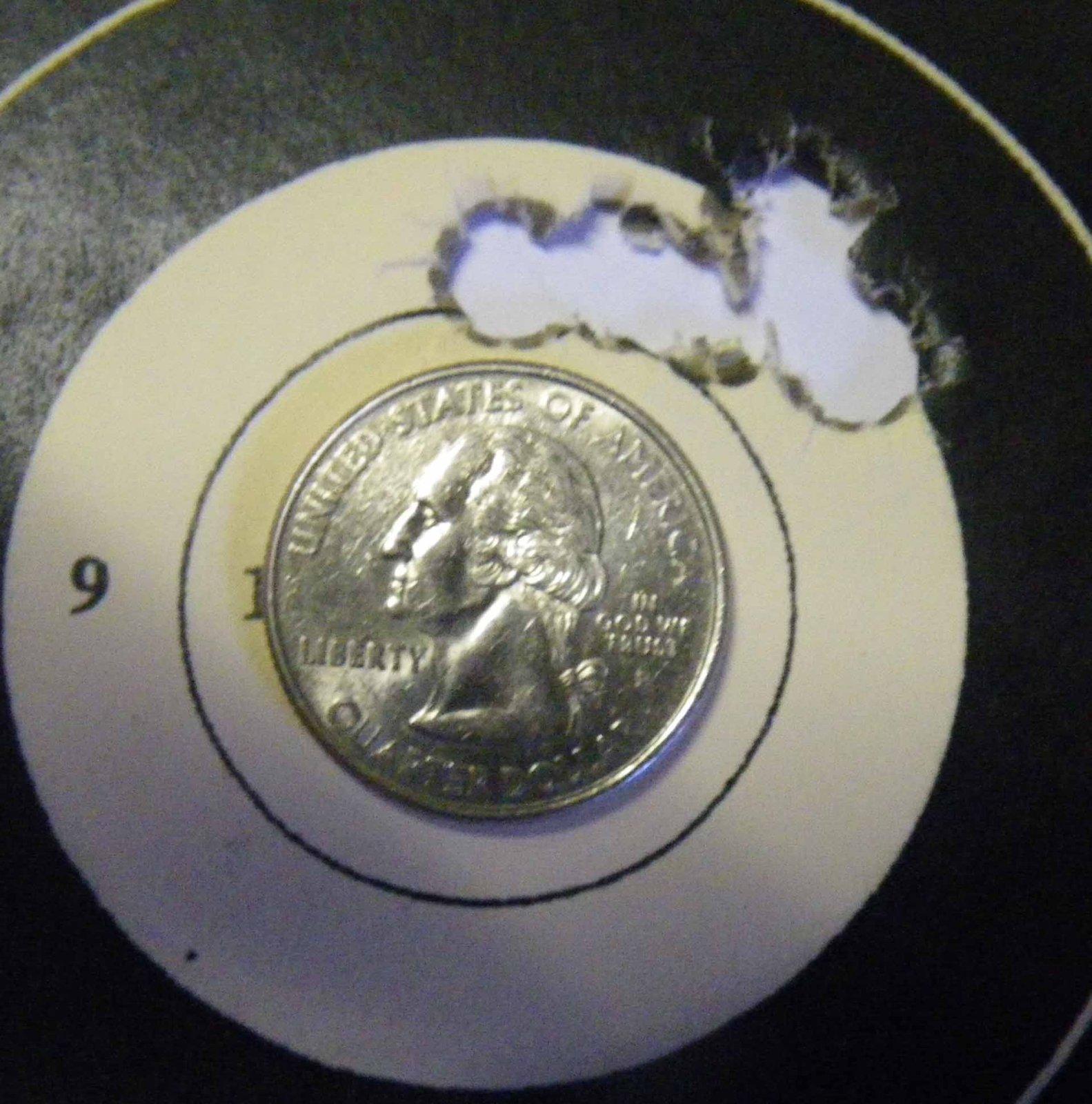
All well and good. BUT! The Number One is NOT and bench rest target gun. Apples and oranges here. On barrels, I only have one Ruger #1 with a Ruger made barrel. It's an "S" model and with handloads it likes .25" groups are rather common with many more in the .375" to .50". The rifle is completely unaltered and comes as is from the factory. The rifle is chambered to the .300 Win. mg, The load used is a 200 gr. Speer Hot core at nearly 2900 FPS. FWIW, I have three more #1s in .300 Win. mag. and every one will run to .50" with ease. Two are "S" models and one is a "B" model. The load in question also shoots about the same in a Winchester M70. All five rifles have 26" barrels. If you have to ask, yes, I like the .300 Win. Mag a lot.Perhaps the most accurate three rifles I ever owned were as follows. .22 PPC, 6mm ppc and 6mmBR.
I might add at 200 yards my 6mm ppc will group 1/2 inch providing the wind is not blowing like crazy. 1/4 inch in the normal grouping at 100 yards even on days when the wind is as high as 10mph. For longer ranges the 6mmbr will give you higher velocity.
The concept of the "short" cartridge certainly has proved that it made a tremendous improvement in accuracy. Powder burning is more efficient and the cartridge being shorter in length has less "lean" in the chamber. In the longer older designs the case is much more difficult to manufacture without any run out.
If you want more accuracy out of the two calibers mentioned the custom made barrel is the only way to go. You will most likely get a higher quality barrel, you can get a tighter chamber on request, and the barrel will probably be made more straight. Part of the high cost of a custom barrel is that they throw away barrels that are too far off spec as far as being straight. Factory made barrels are almost never thrown away, they are bent straight in a press and when the barrel heats up it warps even more and the a groups open up. Few people know that the perfectly straight barrel does not exist even in a custom made barrel.
Also the larger diameter of a barrel the less vibration and the shorter the barrel the less vibration that is why you see such short barrels in some Benchrest competitions. Do not expect miracle's out of barrels less in diameter than 7/8 of an inch.
Trigger pull:
I have often said that 1/2 your accuracy comes from a good trigger. Its no accident that benchrest guns have 1 oz and 2 oz triggers and the people that have them practice to the point that they can master such a light trigger because of so much of the competition that they do. Once you have a trigger that is over 2 oz. the accuracy decreases for each more ounce that you have to fight when you attempt to pull the trigger. No matter how heavy your gun is or how carefully you grasp it the gun will move to some degree when attempting to pull even a 1 oz trigger. I am not attempting to brag but I have gotten to the point in competition that when I accidently do not put my finger squarely on the trigger face I already know I just opened up my group before the bullet even hits the target that is how critical mastering of even a light trigger is. Now think about how difficult it is to master even a 1 lb trigger in comparison.
The stock:
Factory stocks are mostly made from the injection molding process and they are flimsy and bend and even warp in hot and cold weather and no amount of fancy bedding tricks are going to do you much good. The laminated wood stock or the composite synthetic stock is a different world altogether. Of course none of this comes cheap, especially with today's out of control outrageous prices. I bought a bench rest gun off of my buddy and he had over $1,000 in just the stock in its "unfinished form" , he had to finish the outside of the stock, pillar bed it and float the barrel and then glass bed it, all of which took him a lot of time and effort before he could even use it.
The bullet:
Sadly with the fantastic demand for ammo the quality of bullets even from such formerly prestigious makers such as Sierra has really fallen off. Last summer I tested some 6mm Sierra bullets alongside some custom made bullets from a home town maker, made in his basement. Now do not laugh this guys bullets shot 1/4 inch at 100 yards and the Sierra's shot 1/2 inch. And they were even cheaper in price than the Sierra's. Unfortunately he is behind 2 years on orders, why wouldn't he as he does not make garbage. To make it even worse he suffered a heart attack so the bullets on back order may never be delivered if he does not recover sufficiently.
A mirage strap will often help as well as it breaks up heat waves coming off of a hot barrel.
And then there is the scope.
In optics there is never a free ride, you really get what you pay for. Do not expect a $300 scope to shoot like one that costs $2,000. Tracking and optical clarity are light years bettered in the top end target scopes. You will not have as much parallax in the high end scope or as much pin cushion , barrel distortion, problems in tracking or spherical aberration.
The Ruger No. 1 Rifle.
Unfortunately the Ruger No. 1 is based on a design that is well over 100 years old and has a much slower lock time than modern bolt action rifles. It takes a tremendous amount of practice and mastery of the slower lock time action to equal that of the quick speed lock time of more modern bolt guns.
I once installed a double set trigger in one of my Anschutz rifles because it had a much lighter trigger pull but I got even worse accuracy because its lock time was slower than my original trigger.
Having said all that you can get good accuracy out of a set trigger and out of the slower lock time of the Ruger No.1 or even the slow lock time of say a 98 Mauser action but its just one more problem I do not want to put up with. For an old guy I need all the breaks I can get when shooting and slow locktime is not one of them.


